Hair Extension Distributor Supply for Wholesalers and Beauty Supply Stores, SKU by Spec Code
We supply each of your SKUs as a spec code: one confirmed row of fields, with a retained sample kept on our side. Every batch of a code is checked against that same retained sample, and every pack is labelled with its code.
A human hair extensions supplier to distributors, wholesalers and beauty supply stores, including hair extension distributors in the USA and other markets, across seven lines on one account.
A spec code on every pack · Each row checked against its retained sample · Your SKU numbers beside our codes- Body wave bundlesSKU [yours]Spec · [Code A]
- Body wave bundlesSKU [yours]Spec · [Code B]
- Bulk human hairSKU [yours]Spec · [Code C]
- Tape-inSKU [yours]Spec · [Code D]
- Tape-inSKU [yours]Spec · [Code E]
- Tape-inRestockedSKU [yours]Spec · [Code F]
- Genius weftSKU [yours]Spec · [Code G]
- I-tipSKU [yours]Spec · [Code H]
- Nano tipSKU [yours]Spec · [Code I]


Hair Extension Lines for Store Shelves and Distributor Stock — 7 Lines
Body wave bundles in a run of lengths. Tape-in panels in the shades that sell every week. Bulk hair your braiding customers come in for. Wefts and I-tips your salon customers order again and again.
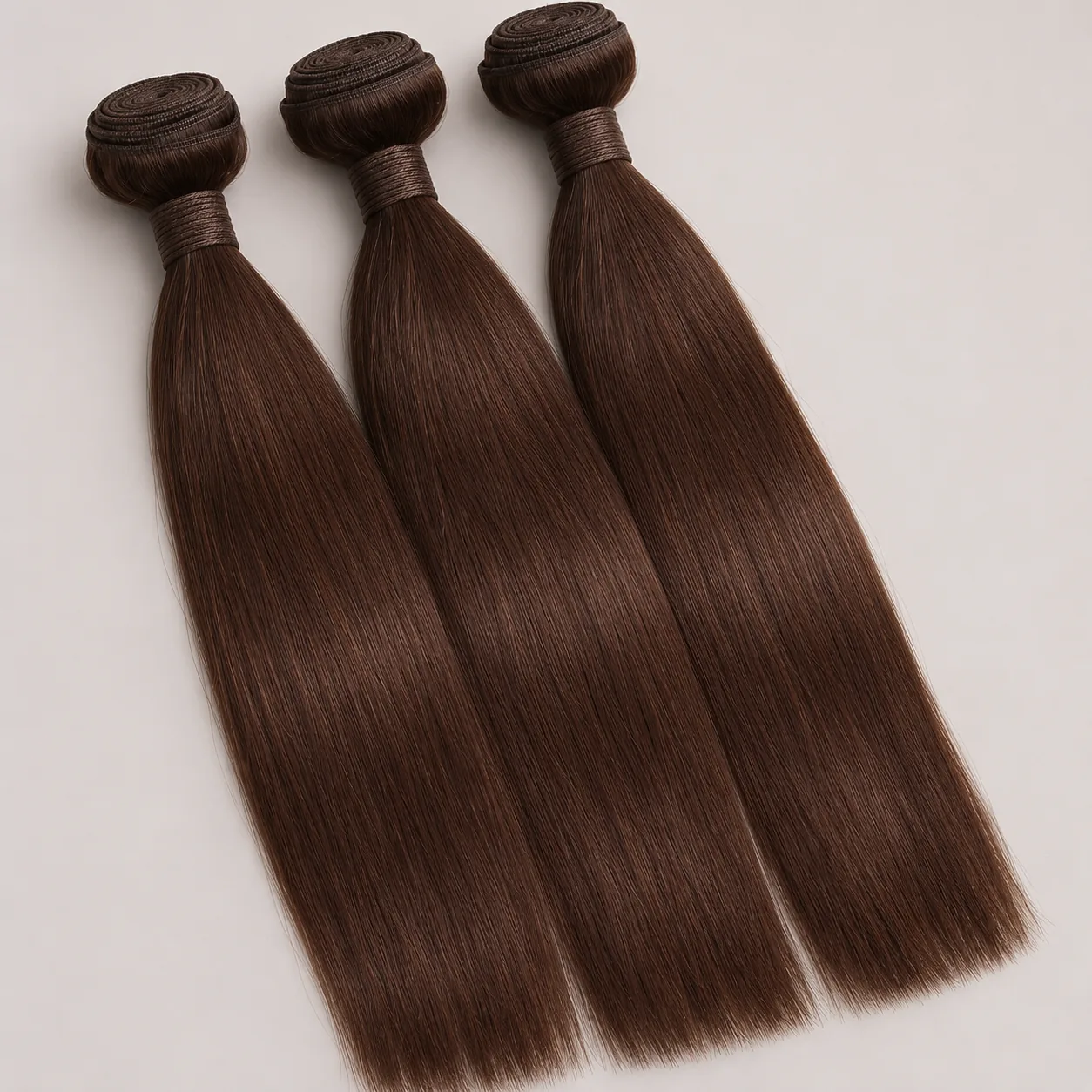
Human Hair Bundles
Spec · [Code]Sewn wefts sold per pack, in straight, body wave or deep wave texture, used in sew-ins and wig work.
Line page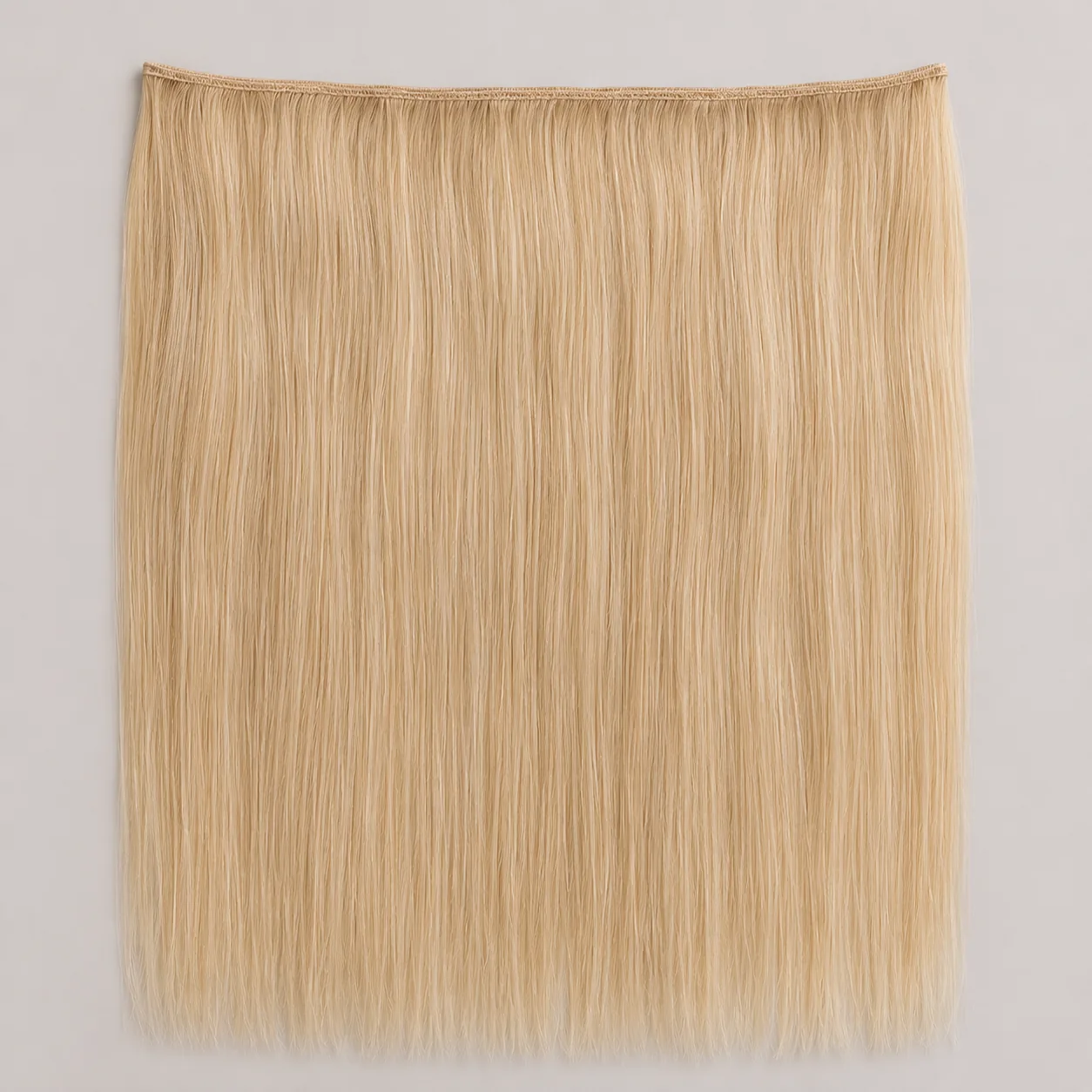
Genius Weft Hair Extensions
Spec · [Code]A thin seam that cuts at any point across the width, for customers who cut wefts to the head.
Line page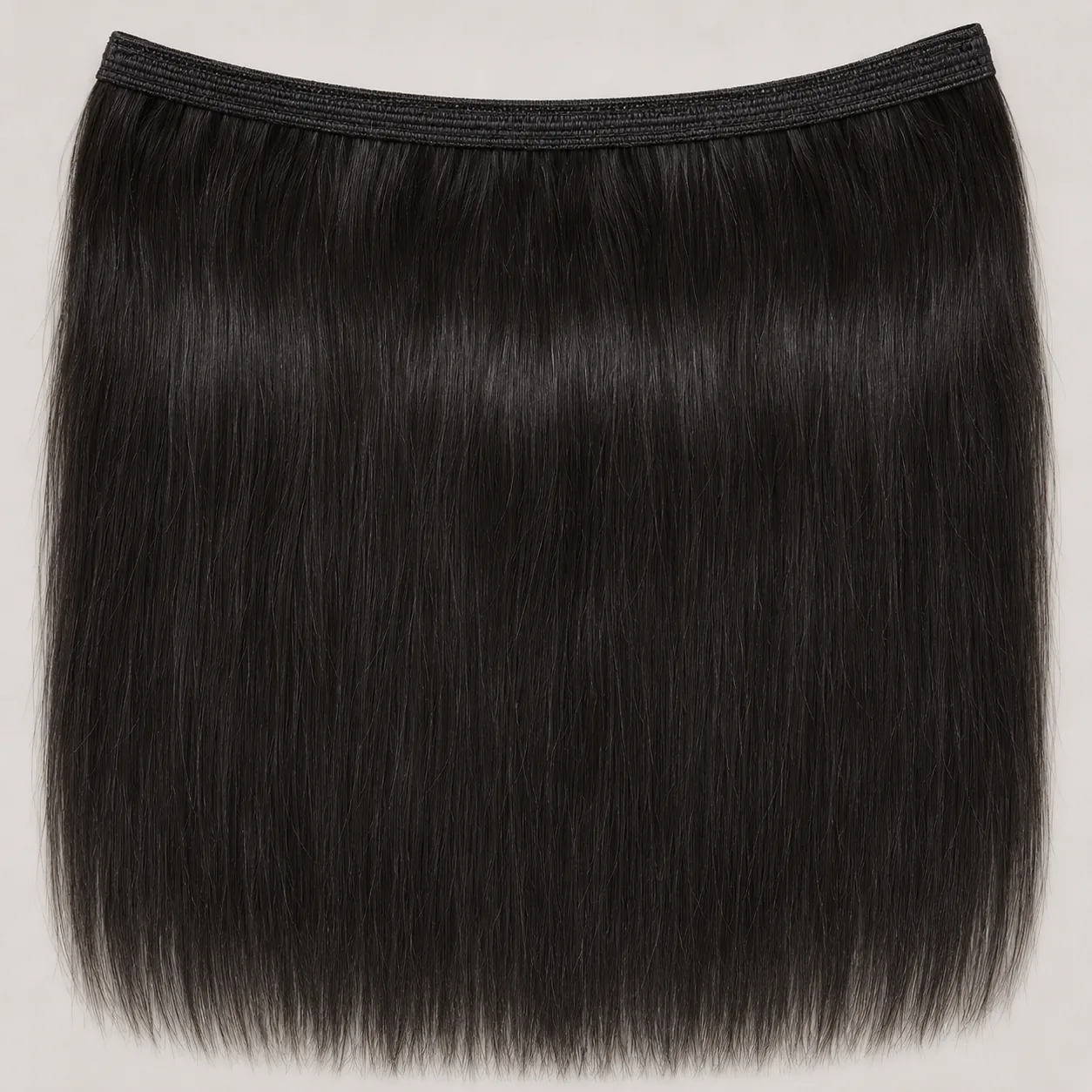
Machine Weft Hair Extensions
Spec · [Code]A wider stitched seam, sold full width for sew-in and beaded installs.
Line page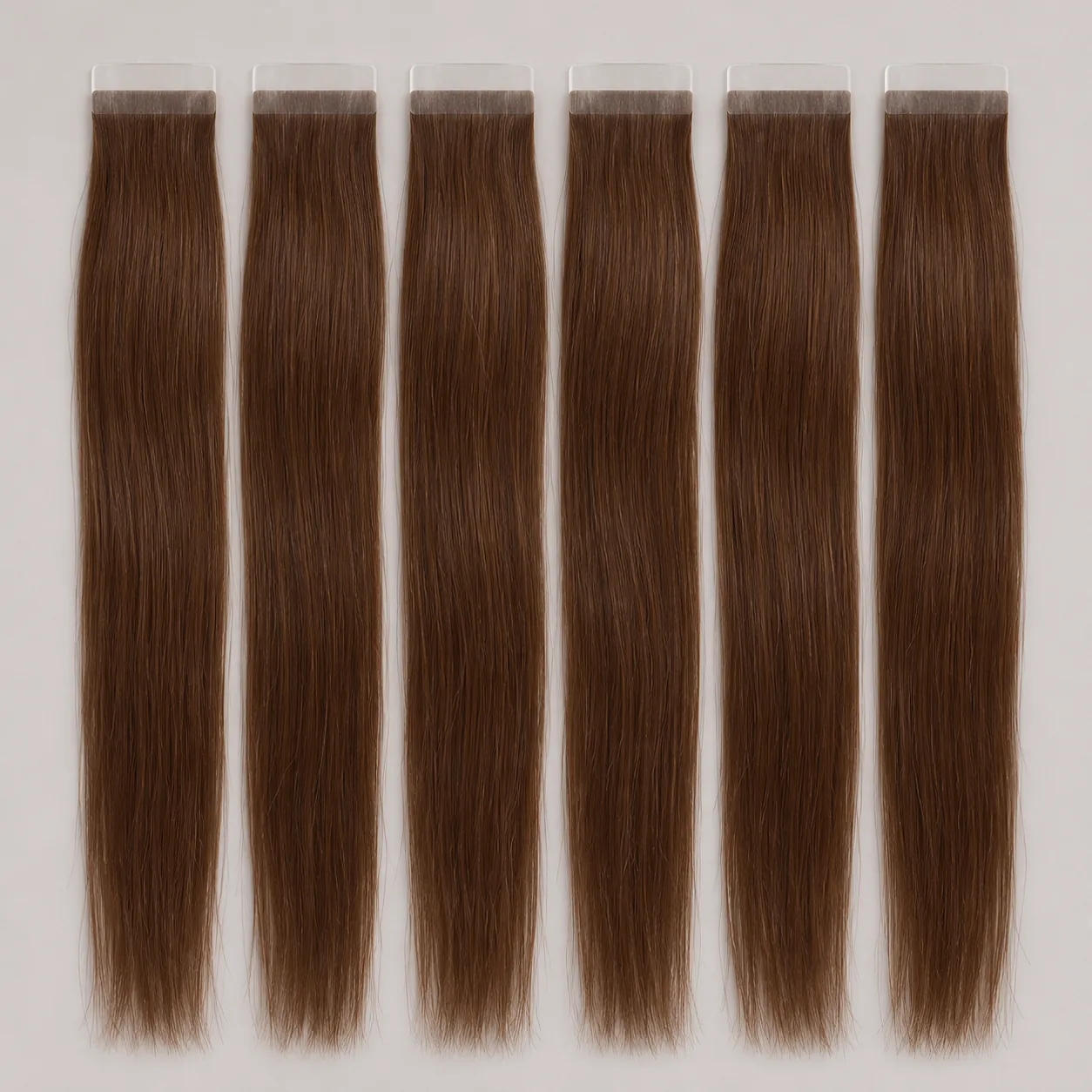
Tape-In Hair Extensions
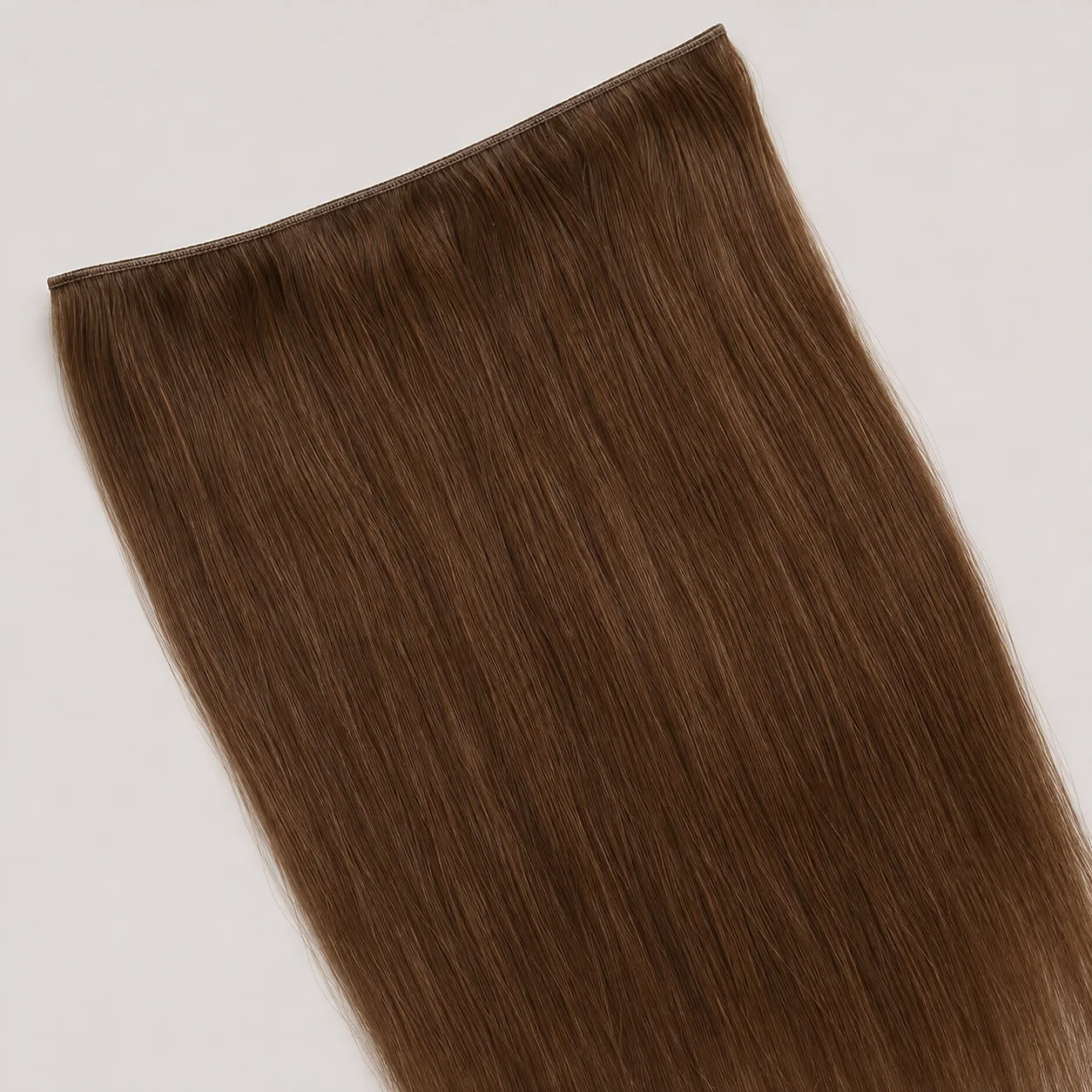
Spec · [Code]Taped panels in the tape type and fitting style on your row.
Line page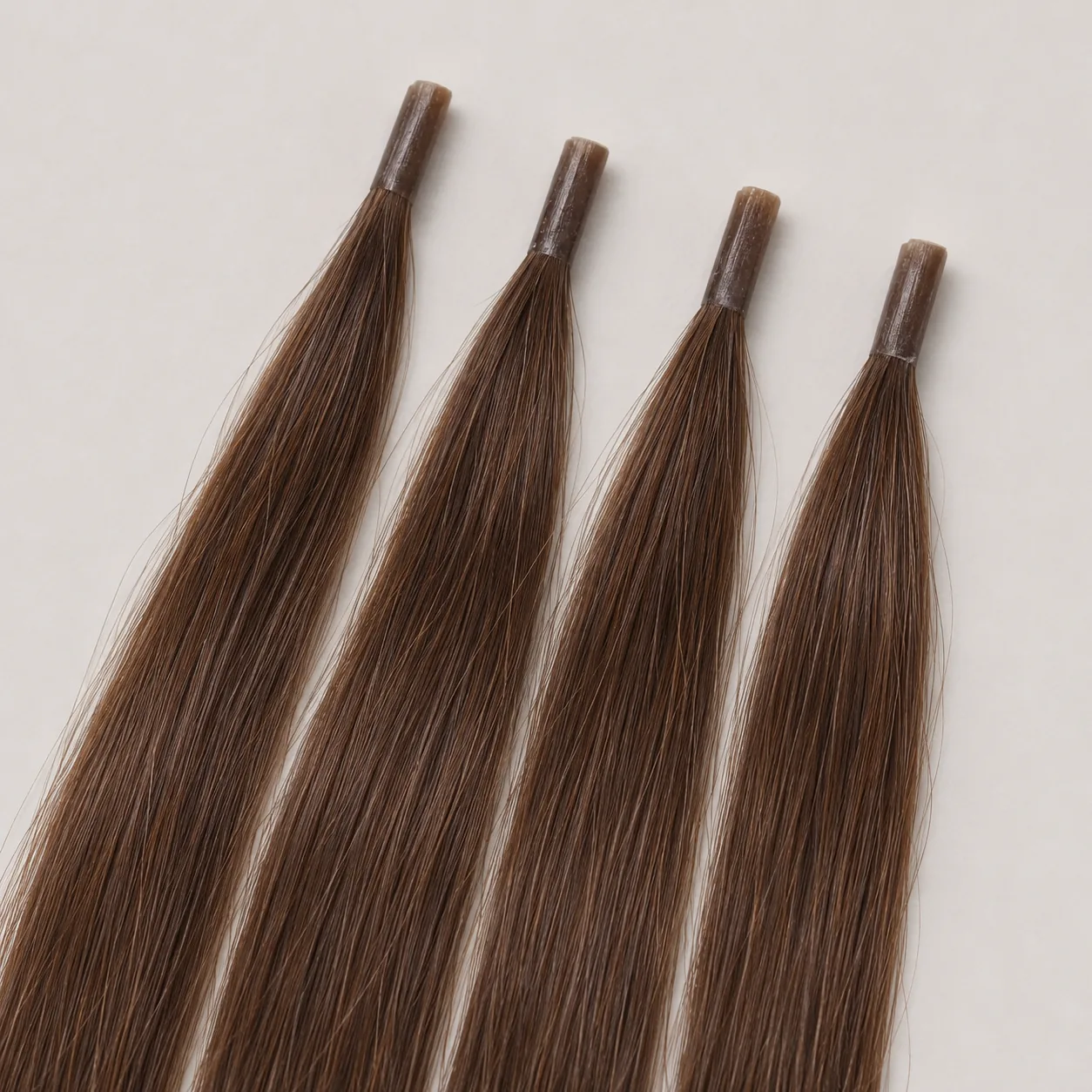
I-Tip Hair Extensions
Spec · [Code]Single strands with a straight sealed tip for micro rings.
Line page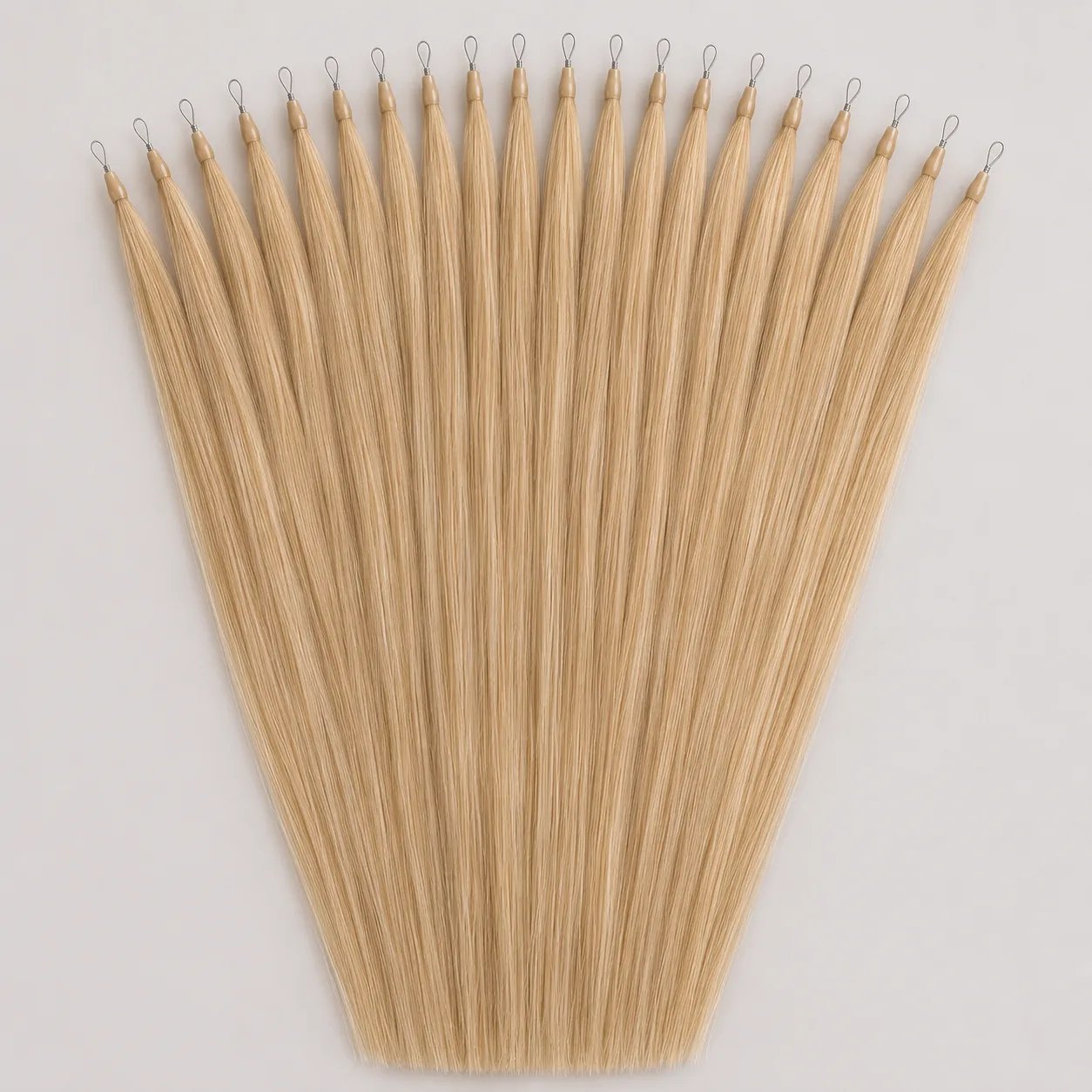
Nano Tip Hair Extensions
Spec · [Code]Single strands for nano rings, with a tip shorter and finer than an I-tip, for fine hair.
Line pageBulk Human Hair
Spec · [Code]Hair with no weft or tip, sold by weight, bound at the root end; for braiding, wig making and repairs.
Line pageK-Tip and U-Tip
Spec · [Code]Heat-fitted keratin tips, ordered through a sample request.
K-Tip and U-Tip


Store SKUs as Spec Codes — The Fields Behind Every Shelf Item
On our side, an SKU is a spec code, and behind it sits one confirmed row: length, weight, colour, texture, hair type and product line, with weft width, tip type or tape type added on structured lines.

- Length
Shorter
- Weight
Lighter
- Colour
A warmer shade
- Texture
A looser wave
- Hair type · lineRemy, Virgin or Raw; the product line
- StructureWeft width, tip type or tape type
Those fields are exactly where shoppers spot a difference between two packs of one item. Each is written on the row before sampling, approved on the sample you keep, and held for later batches by the code's retained sample.
Your SKU numbers beside our codes
Put your own SKU number on each row as a note, and it is kept beside that row's spec code on the account spec sheet. Pack labels show the spec code only, and restocks run on spec codes; your SKU number is there so you can find the code from your own system.
The account spec sheet as your SKU master
Your contact sends your account spec sheet whenever you request it: each code with its full row and your SKU note, ready to hold against your stock list. Rows, codes and notes on any account serve that account's orders alone and are never shown to another buyer.


- Low
- An empty slot names its own reorder
Hair Extension Supplier for Beauty Supply Stores — Restocking From the Shelf
A beauty supply store sells over the counter to shoppers who come back for the same item, so the restock list is written from the gaps on the shelf.
- In from the shelf
- The shelf holds bundles in several lengths, wefts and tape-ins in the shades local customers buy, and bulk hair for braiders. Each pack is labelled with its spec code, so an empty slot already names what to reorder.
- The reorder message
- Someone walks the aisle, notes the low slots and reads the code off the last pack in each. Those codes and quantities go to your contact in one message, and a reorder sheet comes back for you to confirm before anything is made. New shelf items join the same message as new rows, sampled before they get codes.
- The handover · a shopper comes back
- The handover that matters in a store is the counter. A shopper who returns comes back holding the pack they bought, and the code on it ties that pack to the row it was ordered to.
- At unpacking
- When the box arrives, each pack goes to the slot carrying its code. Unpacking ends with new packs beside the remaining ones in every slot, all under one code, and the approved samples kept in the back with their code tags.


Hair Extension Distributors — Restocking From a Stock List, Codes Passed Downstream
A hair extension distributor or wholesaler buys in volume and sells on to stores, salons and stylists, so the restock list is written from the warehouse stock list.
| Your SKU | Spec code | Line · sold to | Low |
|---|---|---|---|
| [SKU] | [Code A] | Bundles · stores | |
| [SKU] | [Code B] | Bulk hair · stores | |
| [SKU] | [Code C] | Tape-in · salons | Onto the restock |
| [SKU] | [Code D] | I-tip · stylists |
- In from the stock list
- That list spans several lines: bundles and bulk hair for stores, tape-in, wefts and tips for salons and stylists. Each entry carries your SKU number, and the account spec sheet holds the matching spec code.
- The restock
- When an entry runs low, its code goes onto the restock. A distributor's restock usually carries many codes across several lines, bound for one destination.
- The handover · packs leave your warehouse
- The handover in distribution is the moment packs leave your warehouse. The label travels with each pack to your customers; it shows only the spec code and carries no name of ours.
- When a store or salon reorders from you, they can quote that code, and you find your SKU beside it on the spec sheet. Selling under your own brand is covered on the Private Label page.
Code only · no name of ours
- At booking in
- When a restock lands, the warehouse reads each label against the packing list and books packs in under your SKU numbers. Booking in ends with every location holding packs of a single code, ready to pick.


Send Your SKU List
A spreadsheet, photos or a plain list of what you stock, with your SKU numbers, is enough. Your contact writes it up as spec rows for you to confirm.
Sampling a Shelf Range — Many Rows in One Sample Request
A new range usually starts with several items at once.
One request, many rows
One sample request can carry many rows across several lines, and each row gets its own sample; for a second copy of a row, say so in the notes.
Keeping an item you already sell
To keep an item you already sell, post a pack from your stock as the reference to the address your contact gives, and the row is sampled to it.
From sample to code
Each sample is labelled with its row, so a whole range can be laid out without mix-ups. When you approve a row, the code is written onto your returned spec sheet, and the code swing tag arrives with that row's first order for your approved sample.
The Hair Extension Samples page covers the request form.


Multi-SKU Restock — Pack Labels, Packing List and Held Rows by Code
A store or distributor restock rarely carries one code. It carries everything that ran low since the last order, often across every line you stock.
- [Code A]Tape-inChecked
- [Code B]BundlesChecked
- [Code C]Genius weftChecked
- [Code D]I-tipHeld · photos sent
- [Code E]Bulk hairChecked

Sending the codes
You send codes, a quantity for each and a destination.
Your contact answers with a reorder sheet spelling out the full row behind each code, and production waits for your confirmation; the Wholesale Hair Extensions page walks through that sheet.
If a code is missing from your account, or the SKU note you attach points to a different row, your contact checks with you before that line goes further.
Made and checked code by code
Each code is made to its confirmed row and checked against its retained sample before dispatch. How that check keeps one code consistent across batches is set out in the next section.
A code label on every pack
Every pack in the box is labelled with its own spec code, whatever line it belongs to, so a box holding dozens of codes can still be sorted pack by pack.
Spec · [Code]One packing list by code
The restock's packing list gives each code its own entry, with the pre-shipment check result written against it. It is the document your receiving team works from.
Receiving the restock
Your team works down the packing list, reading each pack label against an entry. The account spec sheet turns each code into your SKU number, and the packs go to that SKU's shelf slot or warehouse location.
If a pack looks different from its neighbours, set it beside the approved sample for its code.
Existing codes and new items together
New rows can join a restock beside your existing codes, each following its own rule; the Build a Mixed Order page shows how to lay out a sheet with many lines.
When one row is held back
If one code fails its pre-shipment check, that row does not leave with the rest.
Your contact tells you first and sends photos; the row is then remade or swapped so it meets its confirmed spec.
You decide what happens to the other codes:
- Ship the matched codes now
They can ship now. A store short on a fast seller may take the matched codes straight away.
- Wait and travel together
Or the whole restock can wait and travel together once the held row matches. A distributor packing one consignment for a customer may prefer to wait.
Either way, the held row arrives under its usual code.
- Ship the matched codes now
What you hold at the end
- A confirmed reorder sheet
- A packing list with a check result per code
- A box in which every pack maps to a slot on your shelf or a location in your stock
Same SKU Every Batch — One Retained Sample per Code
For a store or a distributor, an SKU only works if the fifth restock matches the first. We hold each code to one physical reference.
- One reference for every batch
- When you approve a row, we keep a retained sample for its code, tagged with that code. The first order and every restock after it are checked against that same piece before dispatch, so a code stays tied to the hair you approved however many times it is reordered.
- A code keeps its row
- A new colour, texture, length, weight, weft width or structure goes on as a new row with its own code. The code on your shelf label keeps the row it was approved with, so that slot keeps receiving the same item.
- Each restock made to the row
- Our partner workshops start each restock once you confirm the reorder sheet, working to the confirmed row behind every code.
- The reference on your side
- Your approved sample for each code carries its code swing tag, and a new pack can be laid beside it in your own light at any time.
 Retained · Spec · [Code A]
Every batch is set beside it
- First order[Code A]
- Weight
- Length
- Colour · against the retained sample
- Texture
- Tape edge and root direction
- Second restock[Code A]
- Weight
- Length
- Colour · against the retained sample
- Texture
- Tape edge and root direction
- Third restock[Code A]
- Weight
- Length
- Colour · against the retained sample
- Texture
- Tape edge and root direction
- Fourth restock[Code A]
- Weight
- Length
- Colour · against the retained sample
- Texture
- Tape edge and root direction
- Fifth restock[Code A]
- Weight
- Length
- Colour · against the retained sample
- Texture
- Tape edge and root direction


What is compared on each line
The general check is on the home page. Beyond it, each structured line is set beside its retained piece on what shows on a shelf.
Tape-in
Tape edge and root direction.
Wefts
Seam thickness and stitching along the width.
I-tips and nano tips
Tip seal and shape, with a few single strands weighed.
Bundles
Full length and fullness at the ends.
Bulk hair
Length profile and the bound root end.
Results are written under the code on the packing list.


Packs of one code that look alike from restock to restock.
Spec · [Code A]Shopper Returns Traced by Spec Code — Label, Photos, Retained Sample
When a shopper brings a pack back to your counter, or a salon returns one to your warehouse, two things need answering: what the pack was ordered to be, and whether it matches. The label answers the first; our retained sample answers the second.
Shorter than last time
LengthLighter
WeightA different shade
ColourA looser wave
TextureA seam that sheds
Structure

- At your shop
Read the code off the returned pack
The spec code label is still on the pack when it comes back. Note the code alongside the complaint in the shopper's own words.
Look up the row behind the code
Your account spec sheet shows the full row for that code, with your SKU number beside it. Most complaints map to one field: a short pack to length, a thin pack to weight, a shade or wave complaint to colour or texture, a shedding seam or a loose tip to the structure fields.
Compare it with your approved sample
Before contacting us, lay the returned pack beside your approved sample for that code in the same light. You see straight away whether the pack differs from what you approved, or whether the shopper is comparing it with hair from somewhere else.
- To your contact
Send photos and the code
Photograph the returned pack in good light with the label in view. Send the photos, the code and the field the complaint concerns to your contact, plus a shot beside your approved sample if you took one. We work from photos and the code, and the pack stays with you.
- On our side
We compare it with the retained sample
Your contact takes the retained sample for that code and looks at it against your photos on the field you named, then returns a picture setting our retained sample beside your photo of the returned pack, so both sides look at the same comparison.
Retained · [Code] / your photo Agreeing how that row is handled
With the comparison in front of you both, your contact agrees with you how that row is handled.
- Back to the shopper
Answering the shopper
You can tell the shopper, field by field, what the item is meant to be, and show the comparison if that helps.
Returns from your own customers
For a distributor, the route is the same when a store or salon you supply returns a pack: they quote the code from the label, and you bring it to us with the photos.


Any returned pack can be traced to its confirmed row and compared with its code's retained sample, using only the label and your photos.
Adding SKUs — New Lengths, Shades and Lines as New Codes
A range grows: a bundle that sells is added in a longer length, a tape-in shade joins the ones on sale, a bundle colour is added in genius weft. Each addition becomes a new row and, once confirmed, a new code with its own retained sample, while existing codes keep restocking to their rows.

New length, weight or weft width
Confirmed in writing.
In writingNew colour or texture
Sampled and approved on physical hair.
New sampleExisting colour on another line
Sampled in the new structure, coloured from the original code's retained sample.
New sampleNew tape type, or a switch of structure
A new tape type, or a switch between I-tip and nano tip or genius and machine weft, is sampled again.
New sample
Note your SKU number on each new row. Older codes stay on your spec sheet, so an item you rested for a season can come back by its code.
SKU Fields by Line — What Each Store or Distributor Row Carries
Every row carries hair type, length, texture and colour. The rest depends on the line.

| Line | Line-specific fields | How they are recorded |
|---|---|---|
| Human hair bundles | Pack weight, fullness at the ends | Grams or ounces, your choice; length measured straight or in natural wave, per your row; fullness to your reference pack |
| Bulk human hair | Weight, length profile | Length taken from the bound end to the tips; profile to your reference bundle |
| Tape-in | Weight, tape type, fitting style | In the units and terms on your row; double-sided or single-sided |
| Genius weft | Weight, weft width | In the units on your row |
| Machine weft | Weight, weft width | In the units on your row |
| I-tip | Strand weight, strands per pack | Both per your row; ring type as a note |
| Nano tip | Strand weight, strands per pack | As I-tip; a lighter strand can be a second row sampled alongside |
Texture names are used on bundle rows; other lines follow your reference.
Supply Range — Made to Confirmed Rows, Shipped to Your Destination
These are the edges of what we supply, and why each sits where it does.
Each restock is made on confirmation
Our partner workshops make every order to the confirmed rows on your reorder sheet, so each batch follows the current row behind each code.
Orders ship to your destination
Destination is one item on your quote, with who you are, your buyer type, product lines, rows, estimated quantities and repeat plan. Hair extension distributors in the USA give their destination like any other buyer, and the restock ships there once made and checked.
Tip rows are supplied as hair
I-tip and nano tip rows ship as strands; the ring type your customers use goes on the row as a note, and rings come from your usual ring supplier.
Hair type describes processing
Remy, Virgin and Raw are recorded as how the hair was handled, so your SKU names can describe it the same way.
Your own brand
Branded packaging runs through the Private Label page.

The shelf restock and the stock-list restock above both sit inside these edges.
Related Pages — Wholesale Account, Mixed Orders, Private Label, Salons
Wholesale Hair Extensions
The account and reorder sheet for all seven buyer types; this page follows the store and distributor restock.
Wholesale account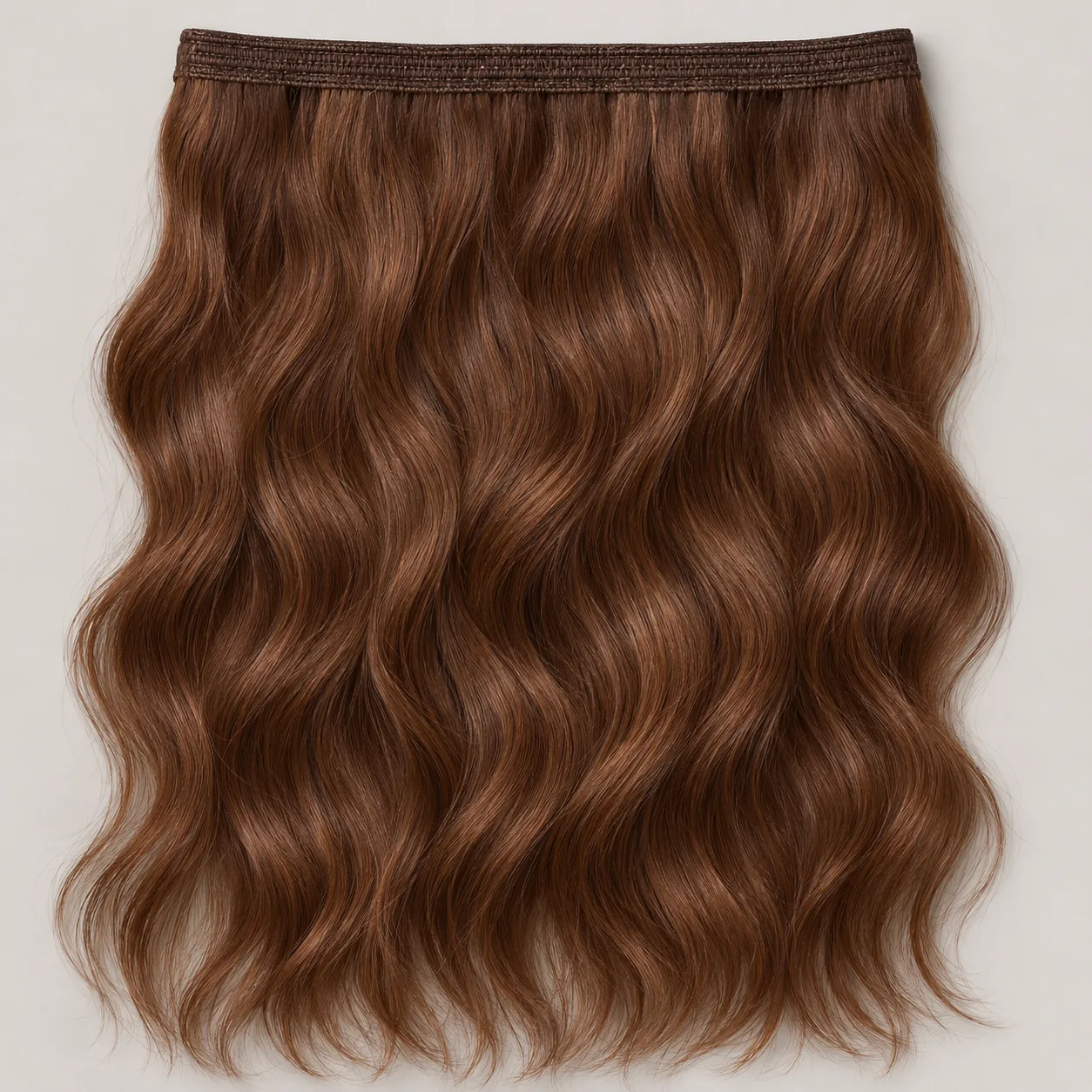
Build a Mixed Order
Laying out many lines on one sheet; this page covers packing, receiving and shelving a many-code restock.
Build a Mixed Order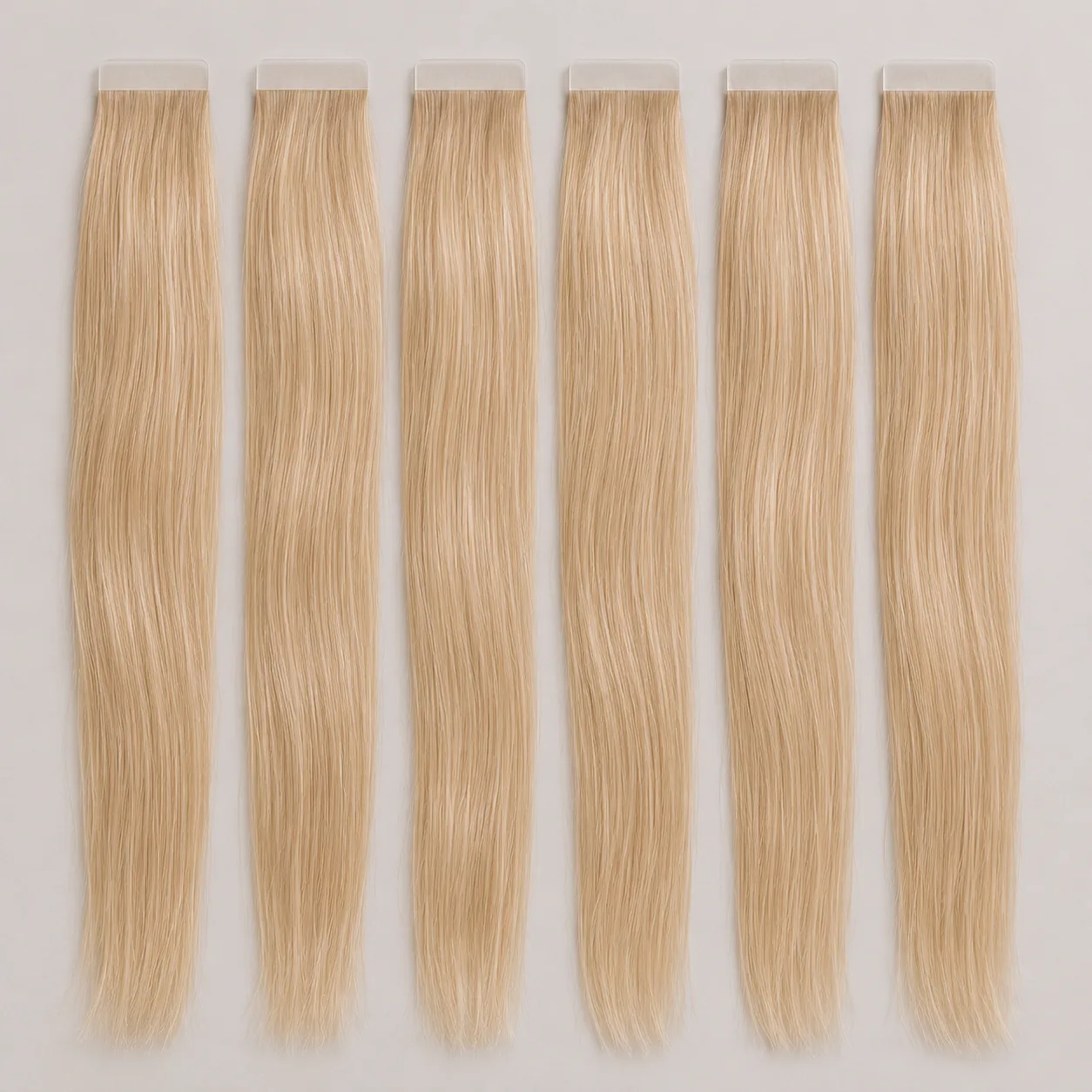
Hair Extensions for Salons
A code per client; this page works with a code per shelf item.
Salons and stylists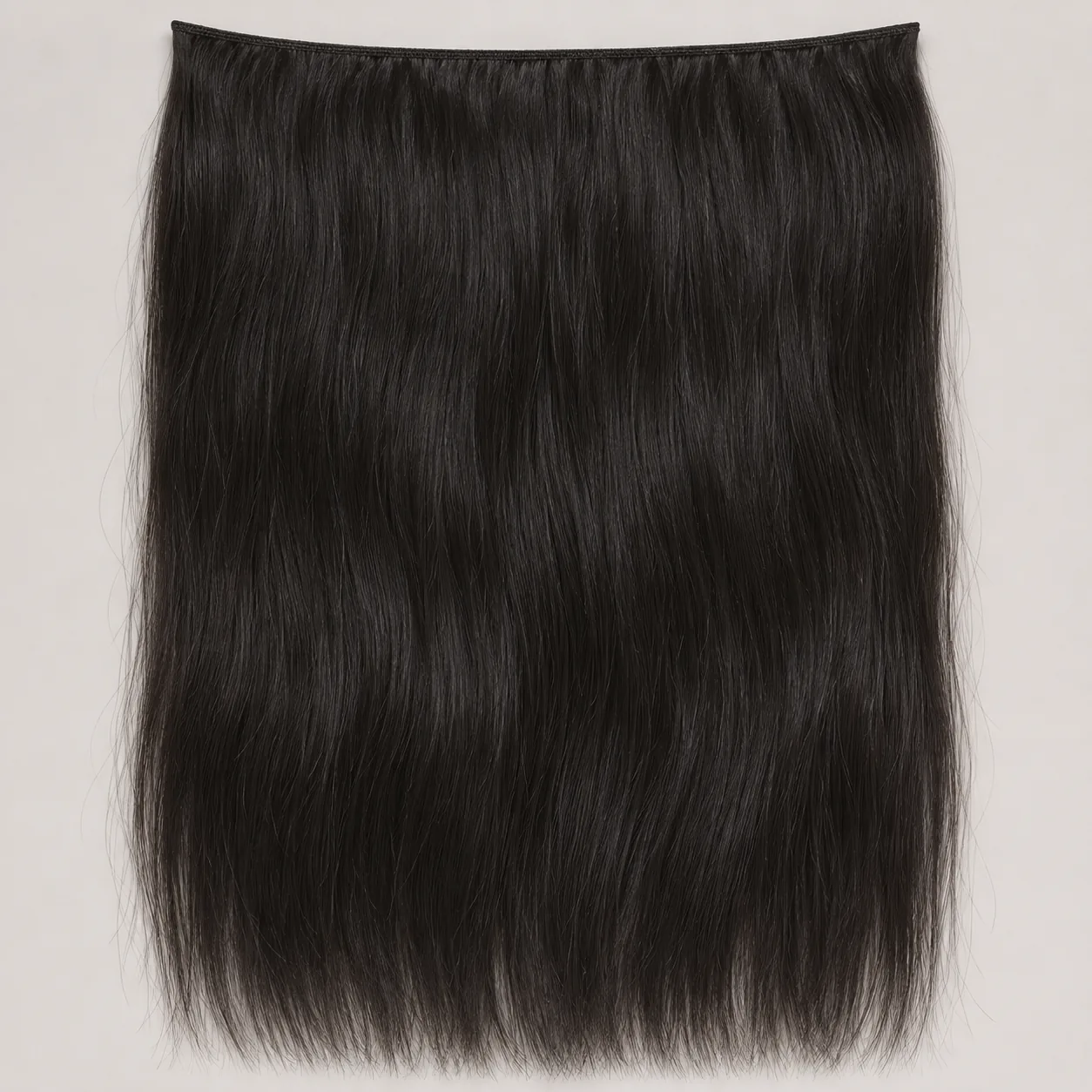


Send Your SKU List or Stock List
Send the items you stock or plan to stock as a spreadsheet, a photo of your stock list or a plain message, with your SKU numbers and a rough quantity for each.
- Stock list
- Contact
You can also Request Samples or Get Wholesale Quote.