
Request Hair Extension Samples Made to Your Spec Rows
Order hair extension samples before your first wholesale order. You list the hair you want as spec rows, we send the rows back to you as a spec sheet to check, and once you confirm the sheet, one sample is made for each row and labelled with the row it belongs to.
Or look through the product lines first.
- Your spec sheet returned to you, and confirmed by you, ahead of sampling
- One sample for each row, labelled with its row on the spec sheet
- Rows from several lines sampled on one request
- A spec code written onto your spec sheet when you confirm a row
- One contact on our sales team from request to repeat order
From Request to Sample Parcel — What Happens After You Submit
You send the request.
Use the sample request form, or send your rows on WhatsApp as a spreadsheet, photos or plain text. One contact from our sales team takes it from here through to quotes and repeat orders.
Your contact writes it out as a spec sheet.
Each item you asked for becomes a spec row, set out in the fields its line uses. Where you asked for more than one sample of a row, the sheet says so against that row.
Row ALineHair typeLengthWeightRows with a gap come back marked.
If a row is missing a field, for example a bundle row with no length method or a nano tip row with no strand weight, it is marked on the sheet and sent back to you. That row is not sampled until the field is filled in.
Row CBundlesLength method · markedYou confirm the sheet.
Go through each row, compare it with your request, and correct anything that reads wrong. This is the point to change a length, add a row or drop one.
Confirmed by youYou post any colour reference.
If a row is matched to your client's hair or a reference bundle, the reply includes the address to send it to, and that row is made once the reference has arrived.
The samples are made, one per row.
Each sample is made to its row and labelled with that row before it is packed. Extra samples you asked for on a row carry the same row label.
Row AThe parcel ships.
Your contact tells you which rows are in it. That list, your confirmed sheet and the labels in the box should all agree.
What this gives a first-time buyer.
You see how we read your request before any hair is made. The returned spec sheet is your proof, and an incomplete row is shown to you rather than filled in by guesswork.


Four Things You Hold at Each Step — Spec Sheet, Labels, Code Tag
A sample request leaves four things in your hands, in this order.

The returned spec sheet.
Ahead of any sampling, your contact returns your request written out as spec rows, each one in the fields for its line. You compare it line by line with your own request. Any row with a field missing comes back marked.

The labelled samples.
The parcel holds one sample for every row you confirmed. Each sample carries a row label naming the row on your spec sheet it was made to. When the parcel goes out, your contact tells you which rows are in it.

The updated spec sheet.
When you confirm a sample, your contact sends the spec sheet back again with a spec code written against that row. The sample in your hands becomes your approved sample, and we keep a retained sample for the same code.

The code tag.
A swing tag with the spec code travels with the first bulk shipment of that row. It goes on the approved sample you kept. The retained sample on our side carries the same tag.
Each one matches the next: the row on the returned sheet, the label on the sample, the code on the updated sheet, the tag on the approved sample.
Sample Request Scope — Our Part, Your Part, What We Hold Back
| Our part | Your part | What we hold back |
|---|---|---|
| Write your request out as spec rows and send the sheet back to you | Send your rows in the form you already use, through the web form or WhatsApp | Making a sample from a row you have not confirmed on the sheet |
| Mark rows that are missing a field and return them to you | Fill in the marked fields | Sampling a row while a field is still open Field open · not sampled |
| Give you the address for any colour reference you post to us | Post your client's hair or a reference bundle when colour has to match | Treating a colour as settled before you have seen it on physical hair |
| Make one sample per row, with a row label on each | Check every sample on physical hair, with your stylists where needed | Sending one row's sample to stand in for another row |
| Tell you which rows are in the parcel when it ships | Count the samples and match each label to your sheet | Giving a row its code while it is still unconfirmed |
| Remake a row you mark as wrong, as a revised row | Say which row and which field is off | Approving a remade row on your behalf |
Rings for I-tip and nano tip stay with your stylists: tip samples go out loose, with your ring type noted on the row.
Fitting, cutting and testing a sample on a client or a training head is your stylists' work.

-
Hair Extension Samples by Line — What Arrives for Each Row
A sample request can cover any of our lines in one go: tape-in, both weft types, I-tip and nano tip, bundles and bulk human hair.
- Row · tape-in
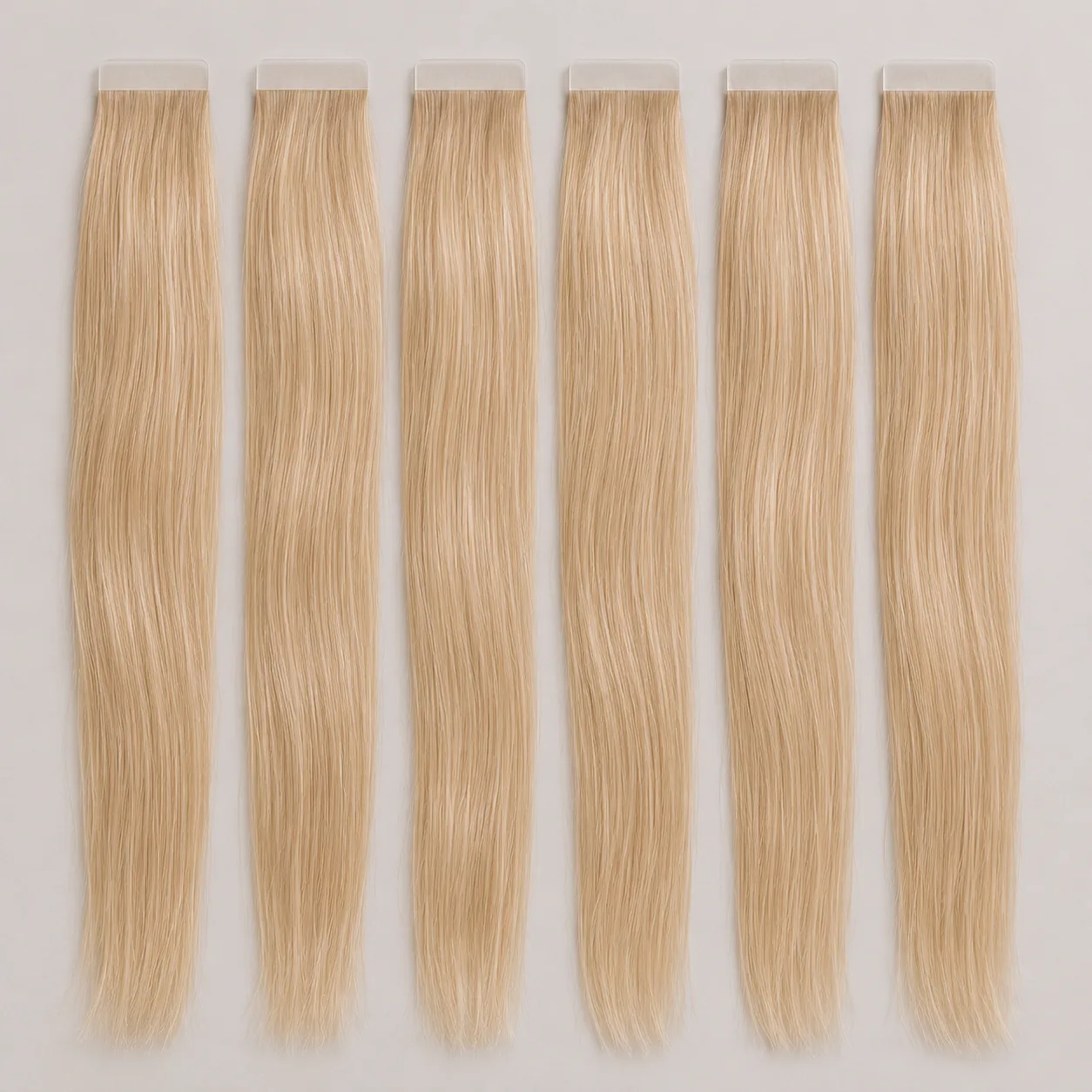
Tape-in
Tape panels built to the tape and the fitting you wrote down. Panel checks are set out on the Tape-In Hair Extensions Wholesale page.
Sample this line - Row · genius weft
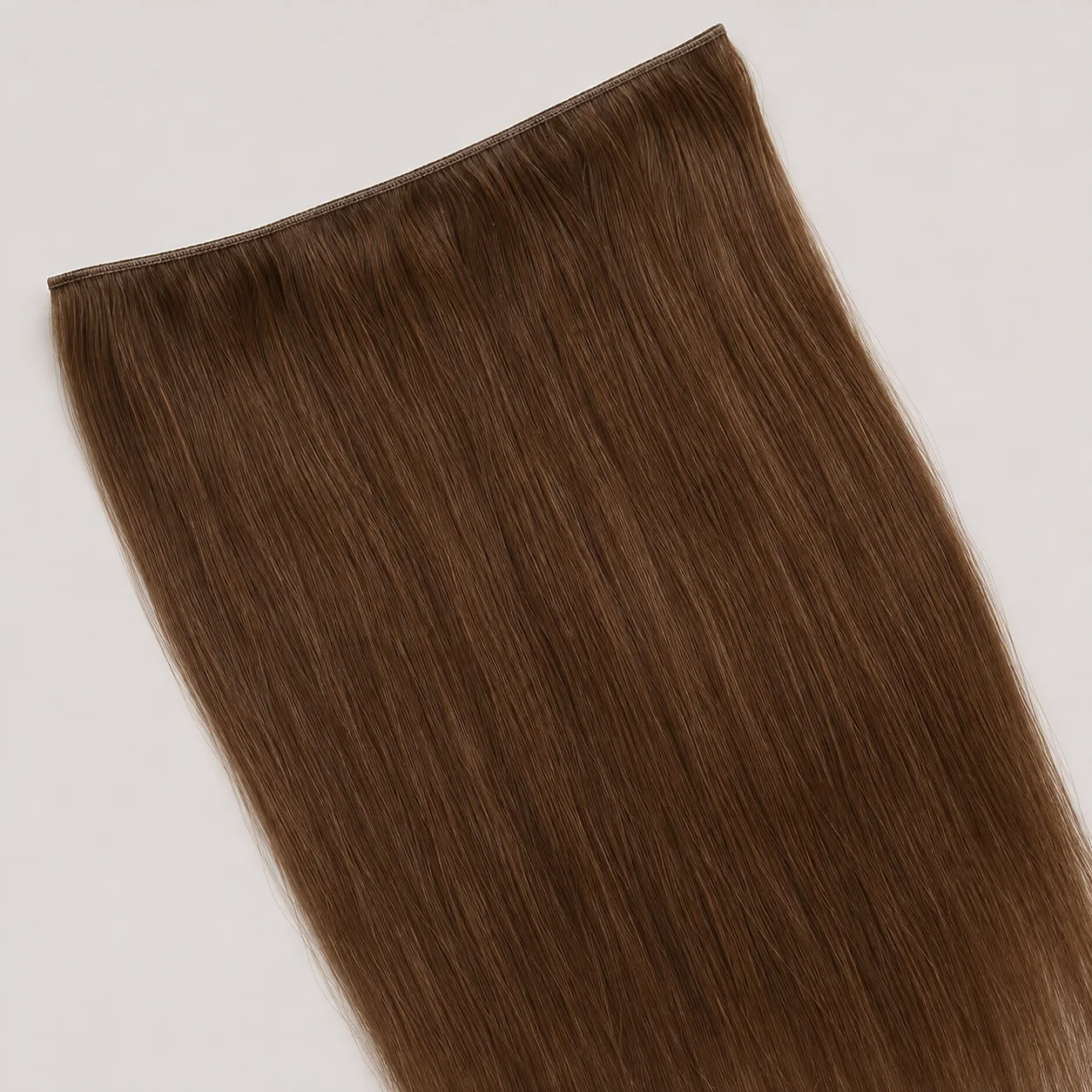
Genius weft
One full-width weft per row, left uncut for your stylist to cut. The test cut is described on the Genius Weft Hair Extensions Wholesale page.
Sample this line - Row · machine weft
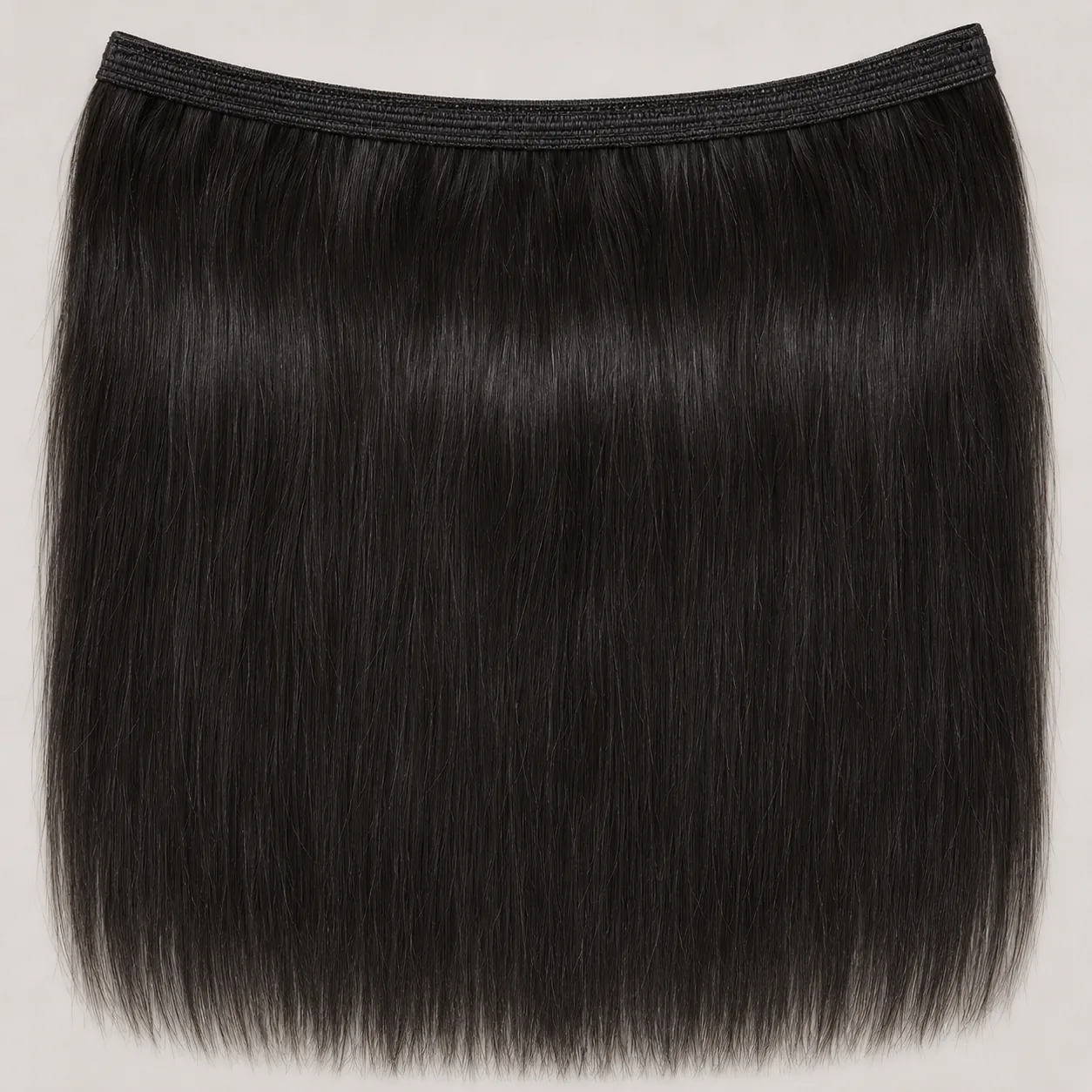
Machine weft
One full-width weft per row, uncut. Stitch-line checks are on the Machine Weft Hair Extensions Wholesale page.
Sample this line - Row · I-tip
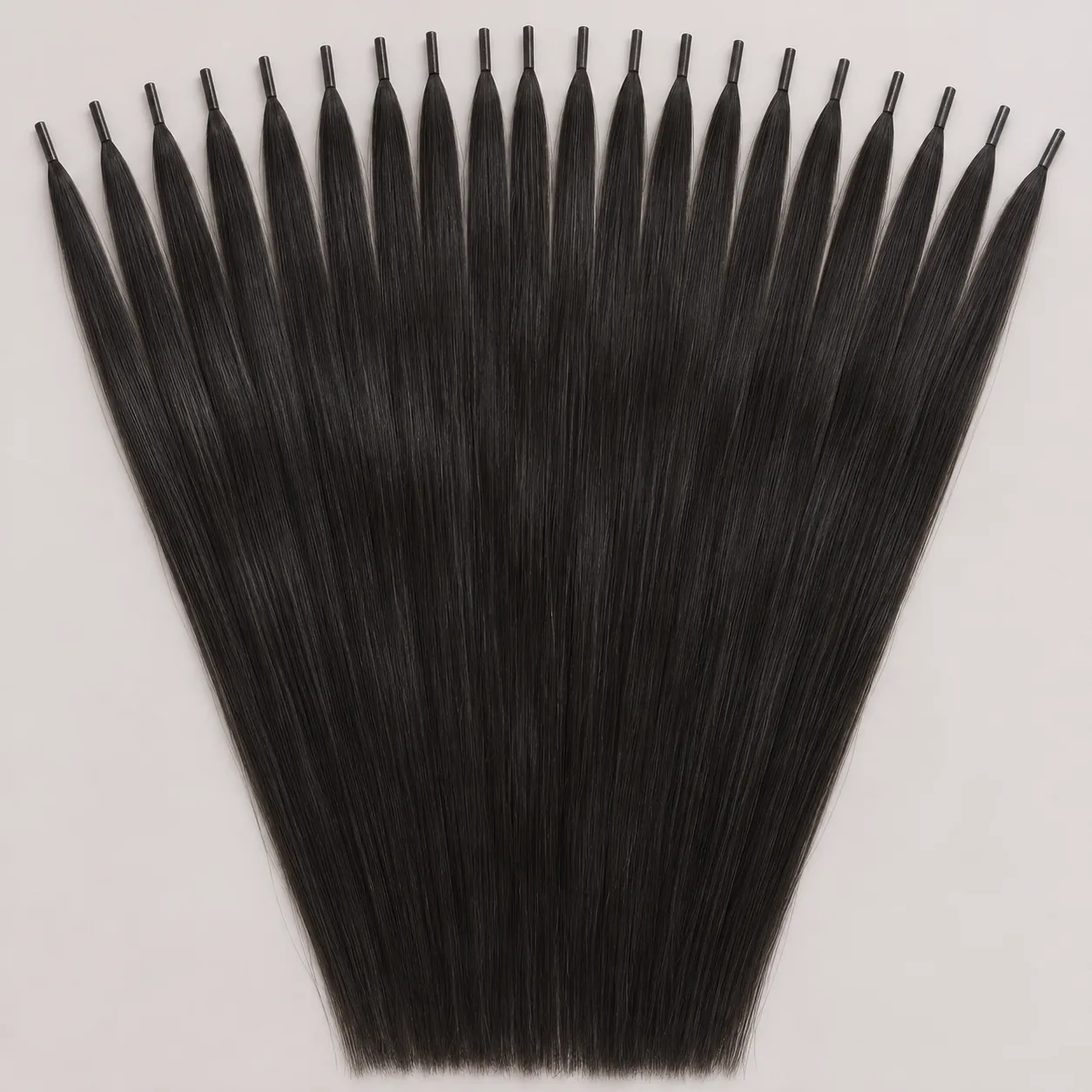
I-tip
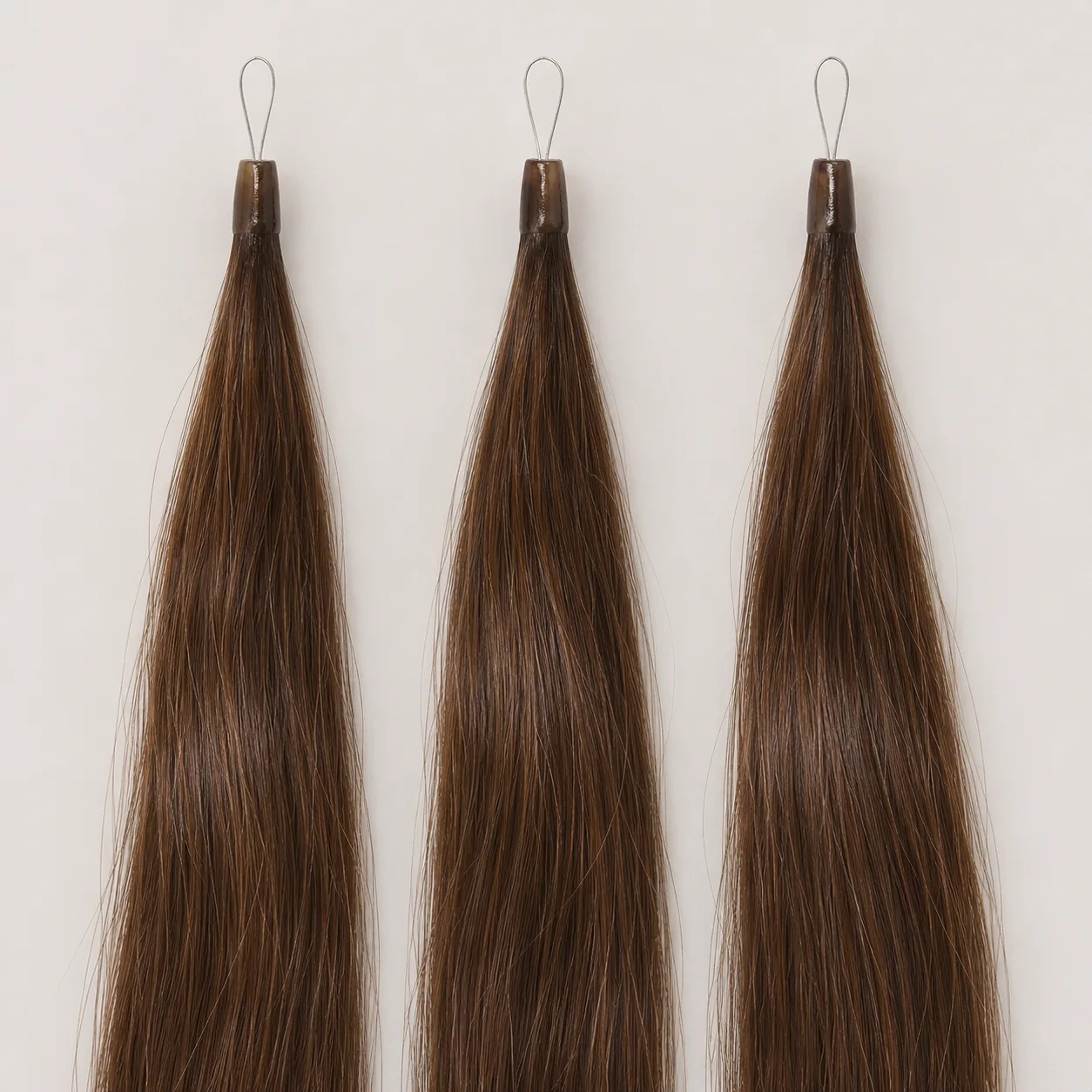
A set of whole strands per row, sent loose with no ring fitted. Tip seal and ring checks are explained on the I-tip line page.
Sample this line - Row · nano tip
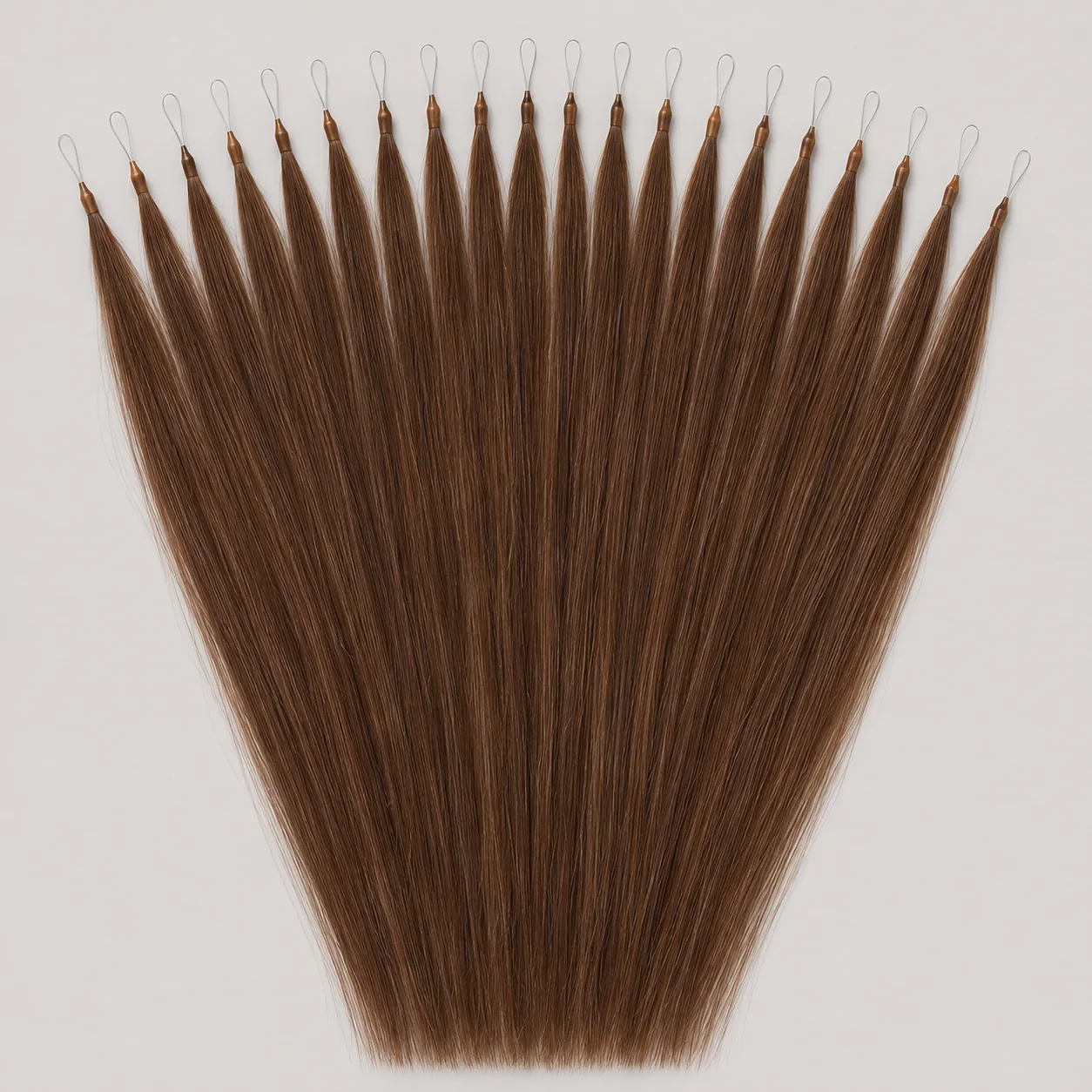
Nano tip
Loose strands per row, no ring fitted, ready for your own nano rings. The ring and parting checks are explained on the nano tip line page.
Sample this line - Row · bundles
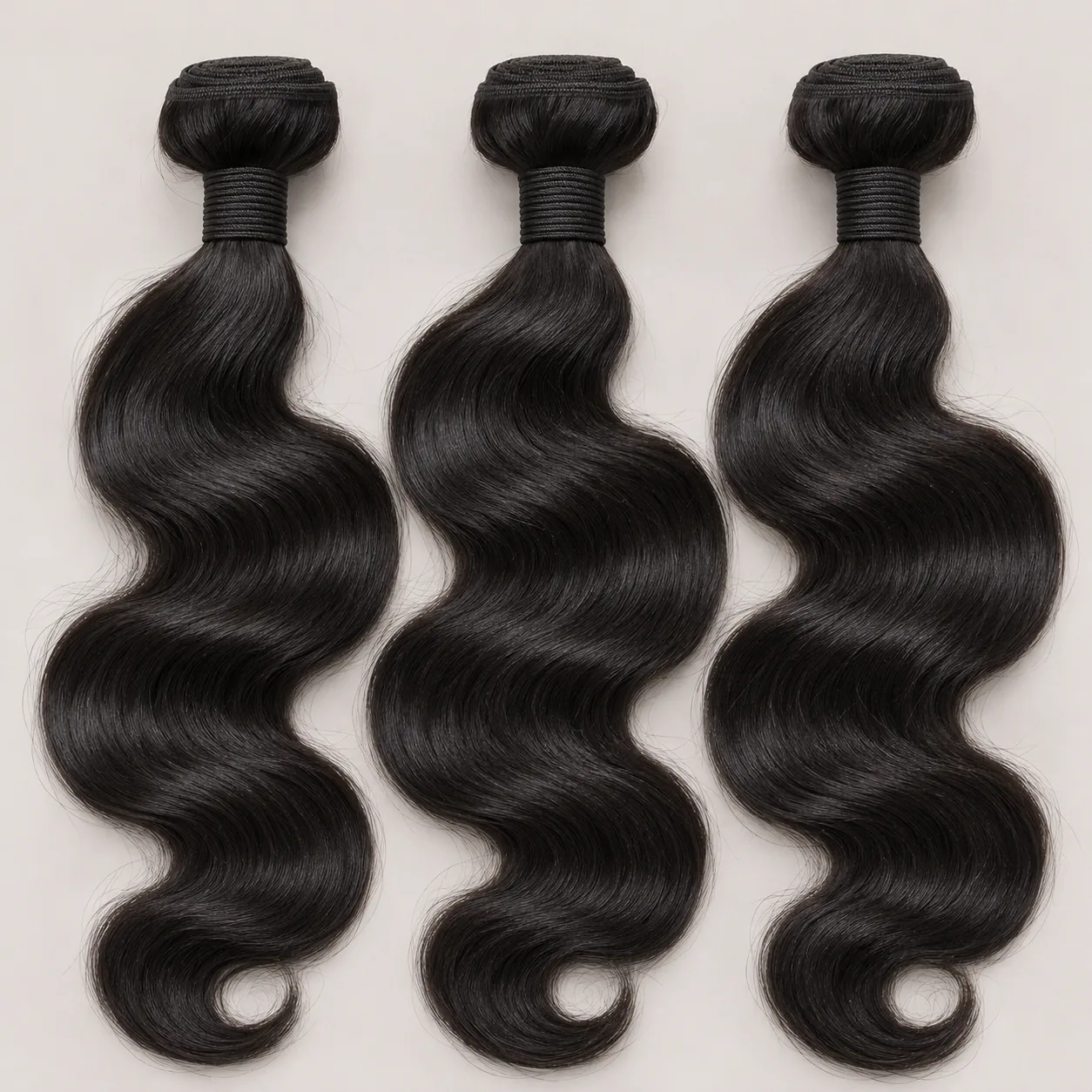
Human hair bundles
One whole pack per row, unopened and uncut. Pack checks are covered on the Human Hair Bundles page.
Sample this line - Row · bulk
Bulk human hair
One whole bunch per row, still tied at the root end. Bunch checks are covered on the Bulk Human Hair page.
Sample this line

Sample Request Fields — What Goes in Each One
The form uses the same fields as a spec row, so each answer carries straight onto your spec sheet. A row with every field filled in can be sampled as soon as you confirm the sheet.
Name, company and contact details.
Who you are, and the WhatsApp number or form reply your contact should answer, in English.
Customer type.
Pick the one that describes you: salon, independent stylist, extension studio, wig-making studio, distributor or wholesaler, beauty supply store, or private label brand.
Country or region.
Where the samples and later orders will be sent.
Products of interest.
Pick the lines you want sampled. The list runs from tape-in and the two weft types to I-tip, nano tip, bundles and bulk hair, with K-Tip and U-Tip included. Each line you pick becomes at least one row.

Hair type.
Remy, Virgin or Raw, chosen by how the hair has been processed.
Length.
Write the length and how you measure it. For bundles, state the method: measured pulled straight, or measured as it naturally falls. For bulk hair, measure from the tie to the ends and describe the length spread, or attach a photo of your reference bunch.
Weight.
Write weight in the unit you already use, grams or ounces. For bundles that is weight per pack. For I-tip and nano tip, give the weight of a single strand and the number of strands per pack. For tape-in and wefts, use the form your stock list already uses.
Texture.
Bundles can be named straight, body wave or deep wave. For every other line, describe the texture or send a photo or piece of the texture you want matched.
Colour.
Describe the shade and say what reference you can post: a piece of your client's hair, a bundle in the shade, or the spec code of a row you have already confirmed with us.
Sample quantity.
Each row gets one sample unless you ask otherwise. If you need more than one of a row, for two stylists for example, note it against that row.
Notes.
The structural details go here. For tape-in, the tape type and whether you fit double-sided sandwich or single-sided. For wefts, the weft width and whether you sew in on a braided track or use a beaded row. For I-tip and nano tip, the ring type you use, and the ring colour for nano. A ring or fitting note is recorded on the row and does not make it a new row.
Hair Extension Sample Colours — A Swatch From Your Client or Shelf
Sample colours are matched to physical hair, so a colour row works from a swatch of the shade itself. There are three ways to give us the shade:
A swatch of your client's hair.
A salon or stylist cuts a small piece from the client the extensions are for and posts it to us.
A reference bundle.
A distributor, beauty supply store or brand sends a bundle in a shade it already sells or wants to add.
A code you already hold.
If a shade already has a confirmed code on one of your rows, write that spec code in the colour field and its retained sample becomes the reference.


Your contact gives you the address for the reference in the reply to your request. If one swatch is the reference for several rows, for example one client's colour wanted on both tape panels and a genius weft, list each row separately and name the same swatch on each.
Each colour sample is made in the structure of its row, so you judge the shade on the panel, weft, strand or pack itself, next to your swatch or your client's hair. How a confirmed shade is then held for every later order is set out on the home page under remote colour matching.


Side-by-Side Rows — Lengths, Weights and Structures on One Request
These pairs and sets go on one request, each item as its own row.
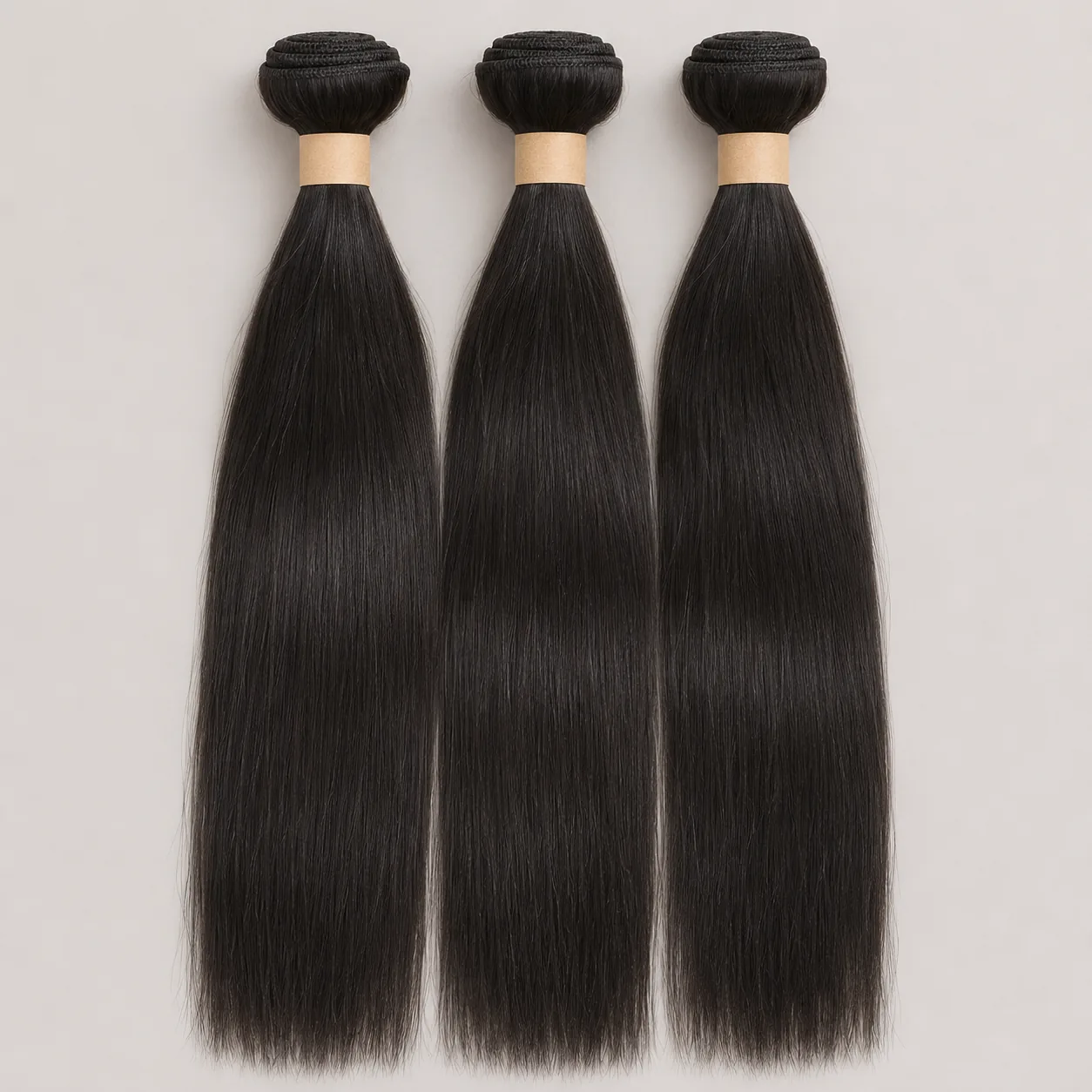
A bundle length set.
Several lengths of one texture, colour and hair type, one row per length.
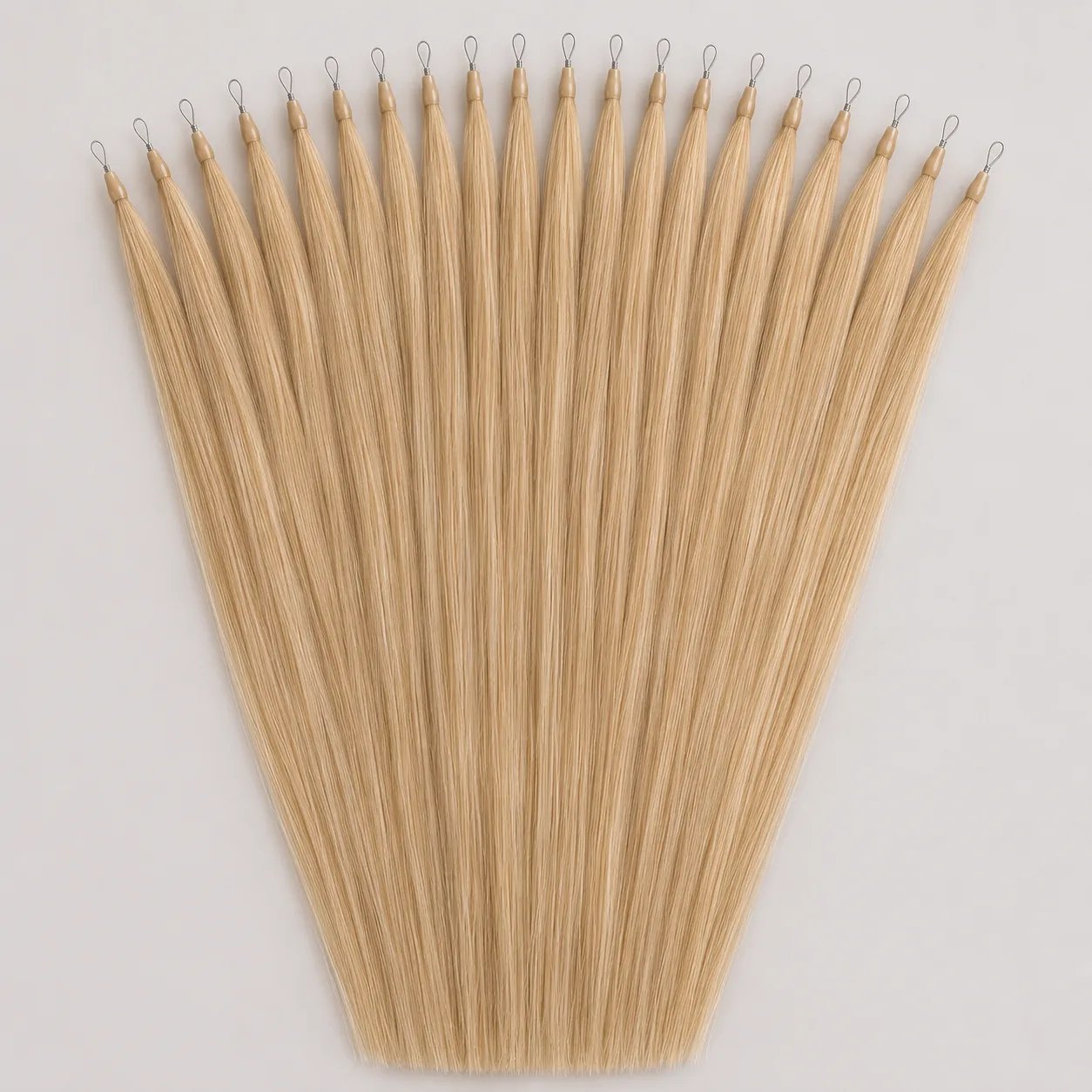
Two strand weights for fine hair.
Nano tip rows that differ only in single-strand weight.
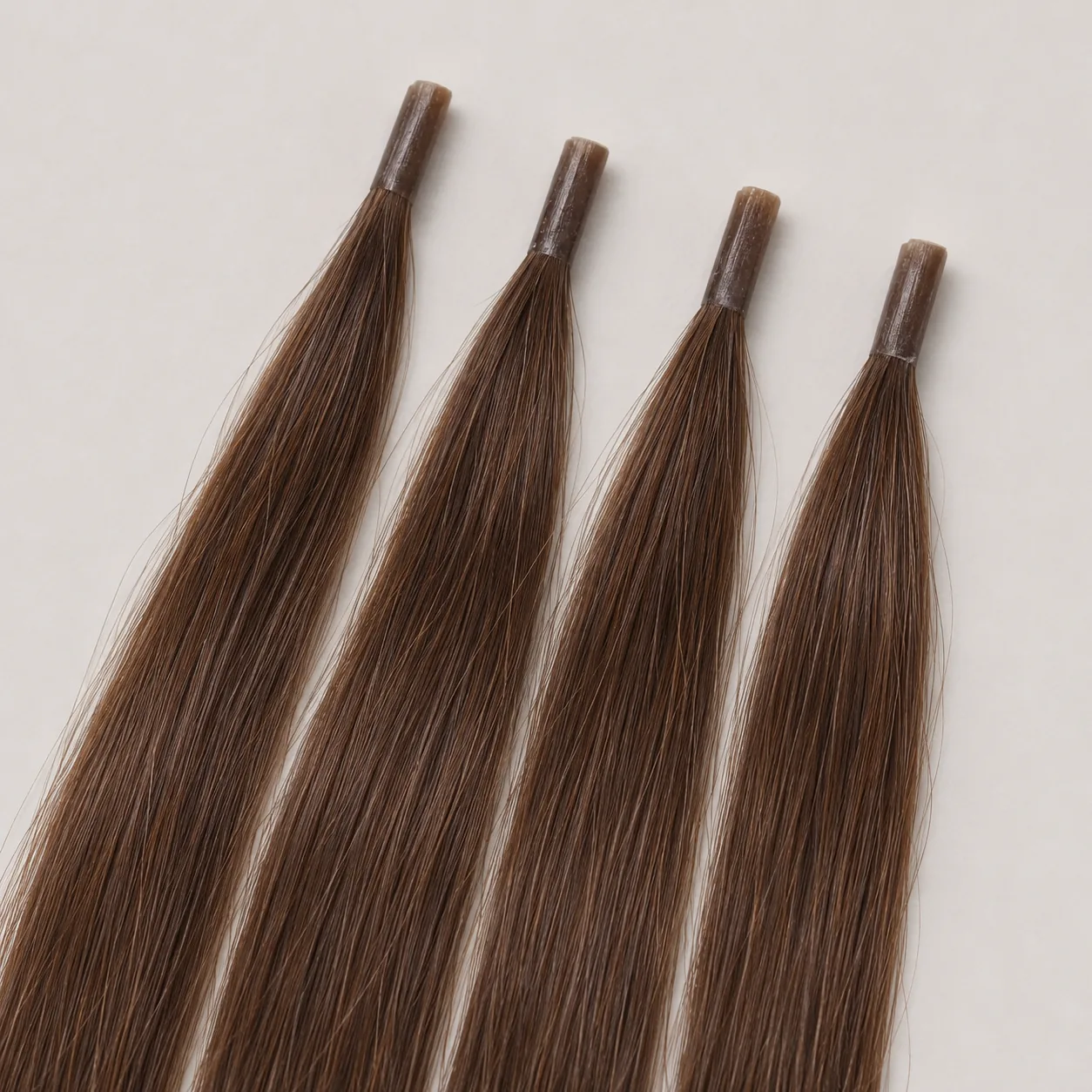
I-tip and nano tip.
The same length, weight and colour sampled in both tip sizes.
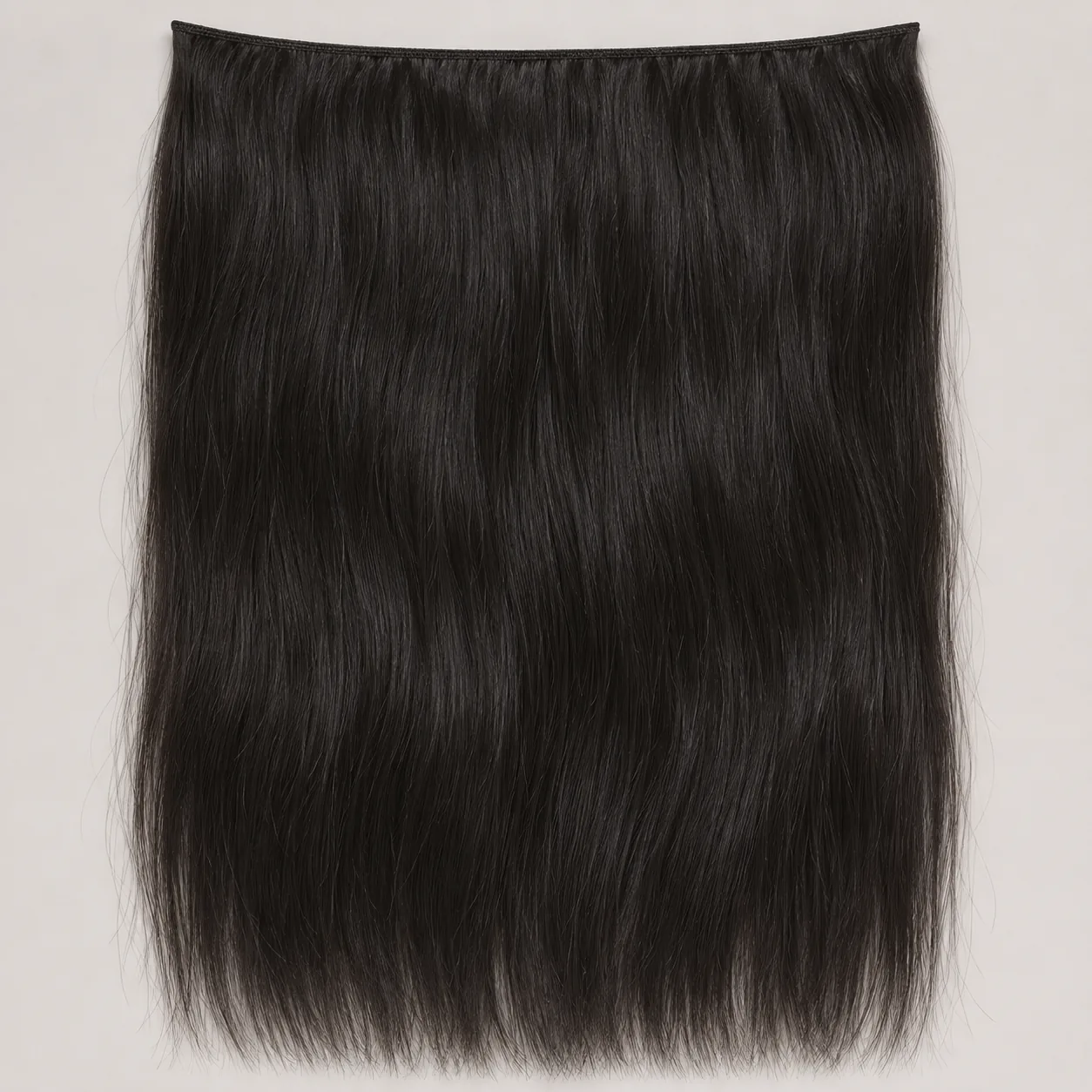
Genius weft and machine weft.
The same hair sampled in both weft types, to compare seams.
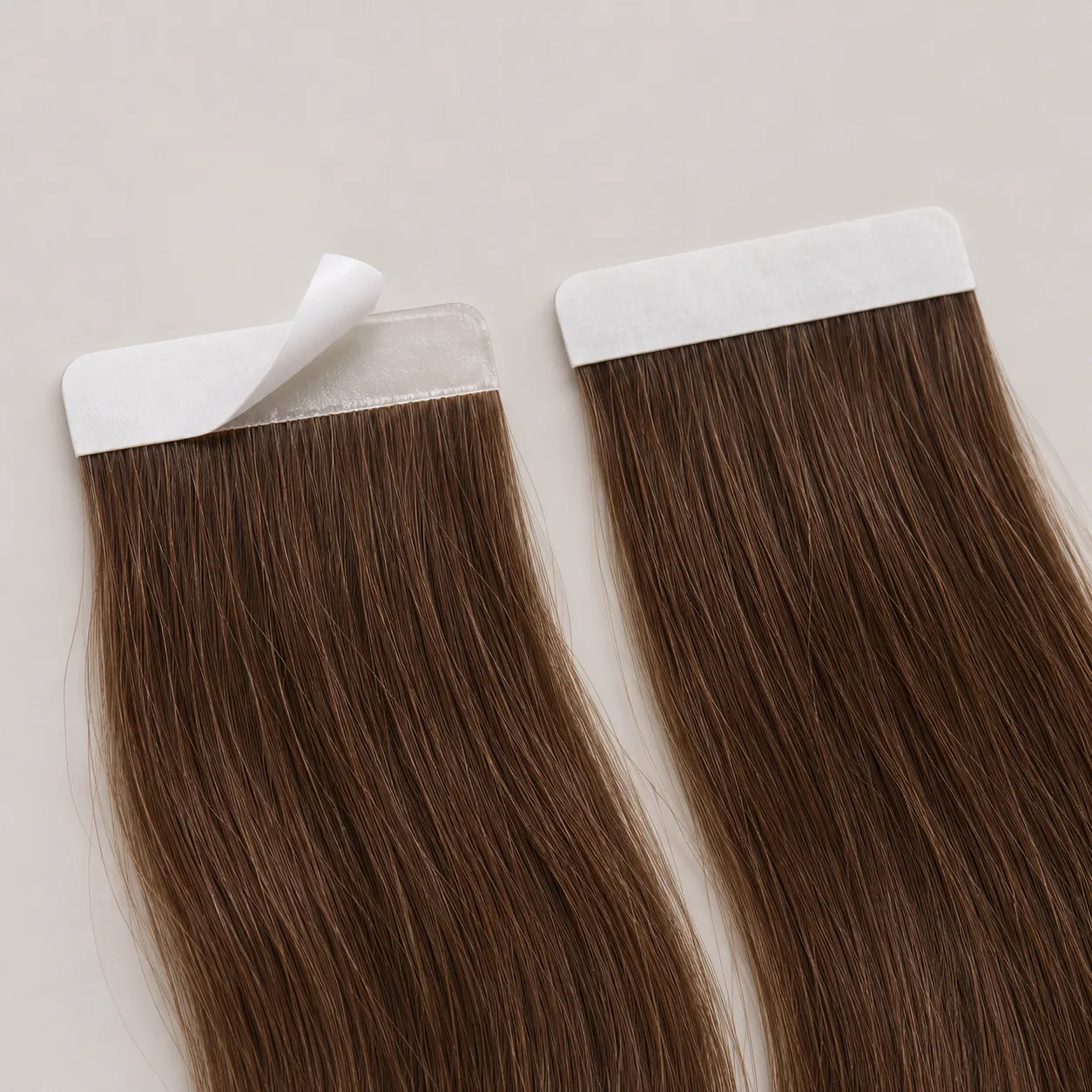
Double-sided and single-sided tape.
One row for each fitting method.
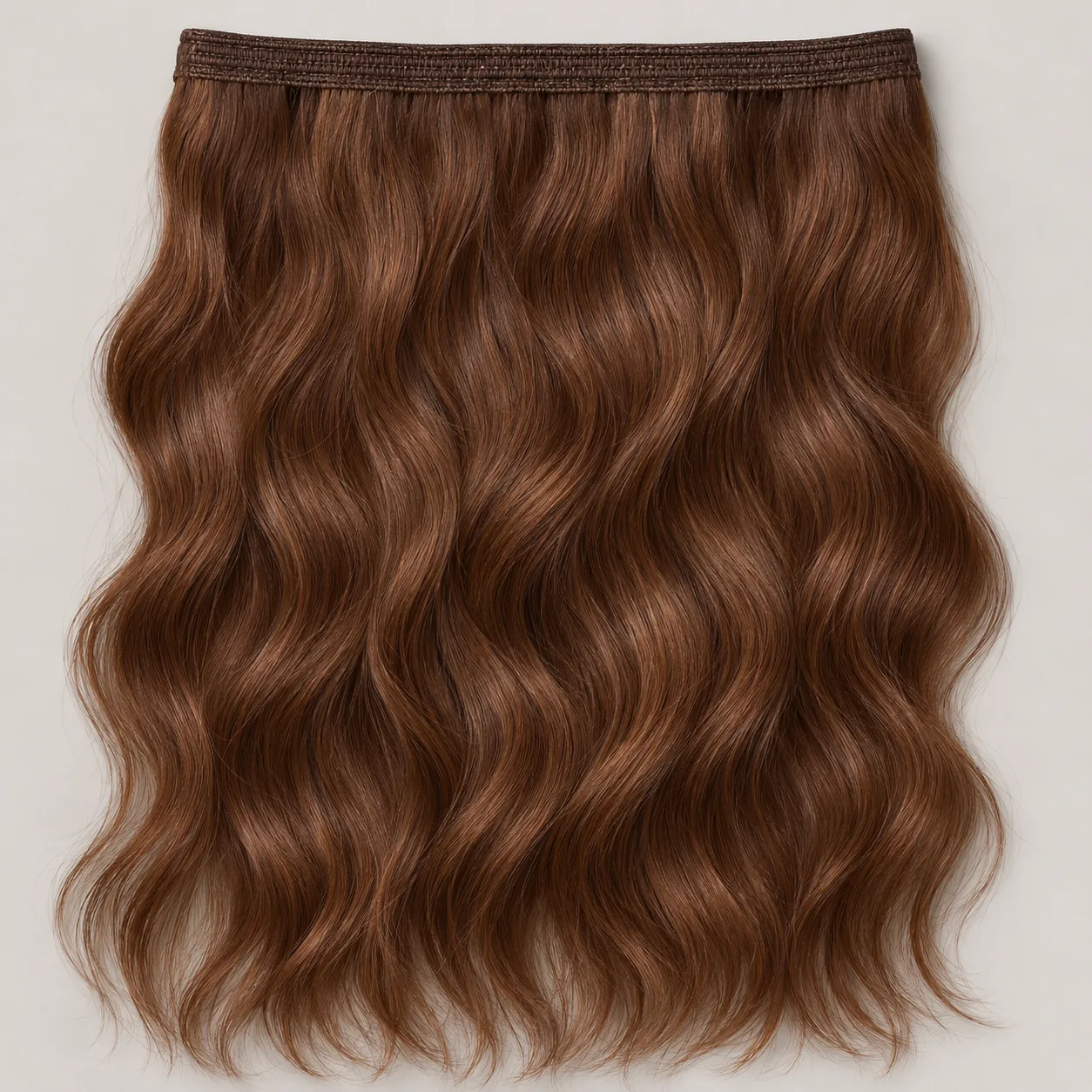
One shade across structures.
A confirmed colour placed on a new line, re-sampled on that structure. Cross-line matching is explained on the Human Hair Extensions page.
First Sample Requests by Buyer Type — Rows Each Buyer Usually Sends
Hair extension samples for first-time buyers: hair salons and extension studios, independent stylists, wig-making studios, private label brands, beauty supply stores, distributors and wholesalers.

- Hair salons
A client's shade in the line the salon fits most.
Often with the client's hair posted as the colour swatch.
- Independent extension stylists
Client shades in the method the stylist fits.
Such as tape-in or nano tip, with the ring type in the notes.
- Extension studios
Rows in each method the studio offers.
So every stylist judges the line they fit.
- Distributors and wholesalers
A column of best-selling shades across a few lines.
Written up from their stock spreadsheet.
- Beauty supply stores
Bundle length sets in shelf colours they already carry.
Matched from a reference bundle.
- Wig-making studios
Bulk hair rows by length and length spread.
Sometimes with bundle rows for wig making.
- Private label brands
The whole first range, line by line.
As set out under private label sample requests.


Send Your Sample Rows
Fill in the sample request form with your lines and rows, or send the spreadsheet or photos you already have on WhatsApp.
Expect the spec sheet back first. Sampling starts on the rows you confirm.
Send your rows through the sample request form below, or as a spreadsheet, photos or plain text on WhatsApp. The first reply is your spec sheet, which you check and confirm before sampling starts.
Send your rows on WhatsAppChecking Your Samples on Arrival — Labels First, Then the Hair

Count and match.
There should be one sample for every row on the sheet, plus any extra samples you asked for on a row. Read each row label and find its row on the sheet. If a sample has no row, or a row has no sample, tell your contact before you start judging the hair.
Judge each sample against its own row.
Structure, length, weight, texture and colour are the five points to look at on every sample.
Use the line checks for the structure.
Each line has its own hands-on checks, and those are set out on the line pages: the tape edge and root direction on the Tape-In page, the test cut on the Genius Weft page, the stitch line and comb test on the Machine Weft page, the tip seal and your own ring on the I-Tip page, fitting your nano rings and parting fine hair on the Nano Tip page.
Keep the labels on.
Leave each row label attached while your stylists or your team look at the samples. Quote the label when you report back.
Report row by row.
Write back with a decision for each row: confirmed, or not confirmed with the field that is off.

Confirming Each Sample Row — What Gets Locked In
Confirming a sample fixes that row for every order that follows.
When you confirm a row.
Tell your contact which row you confirm. The row becomes a confirmed spec and is given a spec code. Your contact sends the spec sheet back to you with that code written against the row. The sample you hold becomes your approved sample. We keep a retained sample for the same code, and it is the reference that row is checked against before every shipment: weight, length, colour and texture, plus the tape edge, seam or tip for structured lines.
When the first bulk order of that row ships.
A swing tag carrying the spec code goes out with it. It belongs on your approved sample, and the retained sample on our side carries the same tag. From then on you have the same code in three places you control: the updated spec sheet, the tag on your approved sample and the pack labels on the goods.
What this gives you.
The sample you approve is the one later shipments are compared with, shown on your updated spec sheet and on the code tag that comes with each row's first bulk shipment.


- Spec code · updated spec sheet
- Spec code · tag on your approved sample
- Spec code · pack labels on the goods
Changing a Sample Row — Revised Rows and New Rows

When a sample is not right.
Tell your contact which row and which field is off: the structure, length, weight, texture or colour. Your contact writes the correction as a revised row on your spec sheet, and once you check it, the row is sampled again. Before a row has ever been confirmed there is no approved sample to work from, so every correction at this stage is made as a new sample, including a length or weight that is only slightly out. Nothing on that row is coded until you confirm it.
When you change your mind about a confirmed row.
A different colour or texture is set up as a new row with a new sample. A different length or weight is set up as a new row that can be confirmed in writing. The original code keeps its spec in both cases.


Confirmed Samples to a Wholesale Quote — Codes on Every Line
Confirmed rows can be quoted. Each quote line carries the spec code of the row it prices, so the quote and your updated spec sheet match code by code.
To prepare the quote your contact needs six things:
Company and buyer type
Already on your sample request.
Product lines
The lines your confirmed rows belong to.
Spec rows
The confirmed codes you want to order, plus any new rows you want to add.
Estimated quantity
For each row.
Destination
Where the order will be delivered.
Repeat plan
The rows you think you will order again, so the retained samples for those rows are kept ready and production can be arranged with our partner workshops.
Confirmed rows from different lines can go onto one order, with each row listed separately. The Wholesale Hair Extensions page covers quotes, mixed orders and repeat orders by code.
Private Label Sample Requests — Your Approved Sample Sets the Spec
Sampling a first range.
A brand usually puts its whole first range on one request: each product line it plans to sell, in each length, weight and colour it plans to list. Each item is its own row and sample, approved on physical hair before any of it is ordered.
What your approval fixes.
When you confirm a row, its spec is fixed by the approved sample you keep. Every batch shipped under your label on that code is checked against the retained sample for the same code. Adding a shade or a structure to the range later means a new row and a new sample, and the codes already in your range stay as they are.
Packaging and labels.
Packaging and label direction is discussed per order with your contact.
Who sees your material.
The spec rows, packaging and label files you send are used for your orders only. They are never used for, or shown to, other buyers. A line on your spec sheet and on each quote states that its contents serve your own orders and no one else's.


Sample Request Contact — One Person From Request to Quote
Your sample request goes to one contact on our sales team.
Your spec sheet
The same person sends back your spec sheet.
Shipping notice
The same person tells you when the samples ship.
Confirmed rows and your quote
The same person records the rows you confirm and later prepares your quote.
Form or WhatsApp, in English
You can reach your contact through the web form or on WhatsApp, in English, Mon–Sat, 09:00–18:00 (GMT+8).

