Hair Extension Samples
Every field on a sample request and how a sample parcel is checked, for any buyer.
Salon extension work is ordered one client at a time. Each client's shade is sampled from the swatch you post, confirmed against their own hair, and kept on record under a spec code.
Sample from your client's hair · One spec code per shade · Every row checked before shipping
 Client [#]Tape-in · double-sided
 Client [#]Genius weft · cut to head shape
 Client [#]Nano tip · fine hair
The lines cover the methods salons fit, each matched to the kind of client hair it suits.
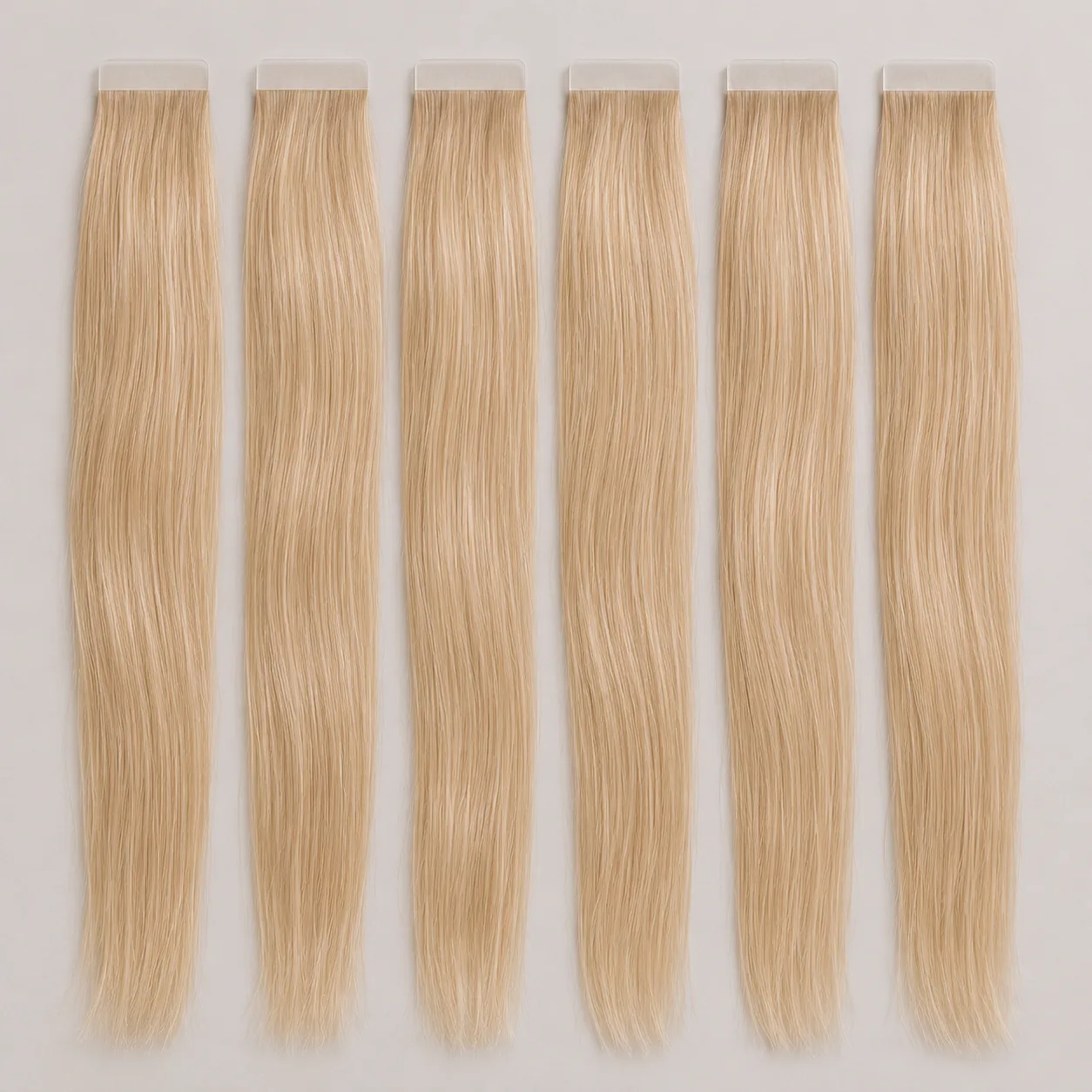
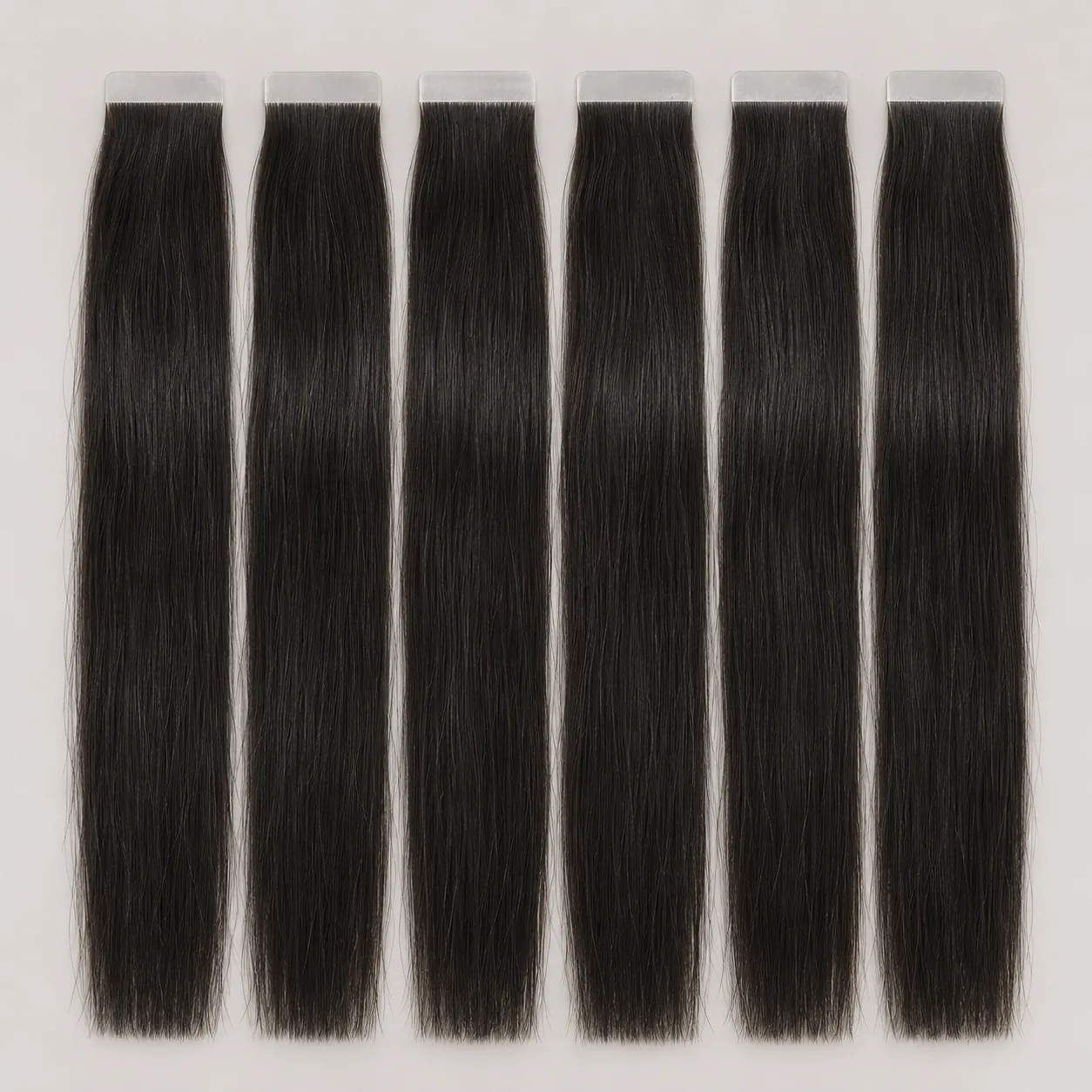
Panels taped around a fine slice of the client's own hair, double-sided, or single-sided for fine hair. Chosen when a client wants hair that lies flat, goes in fast and stays in for semi-permanent wear.
Line page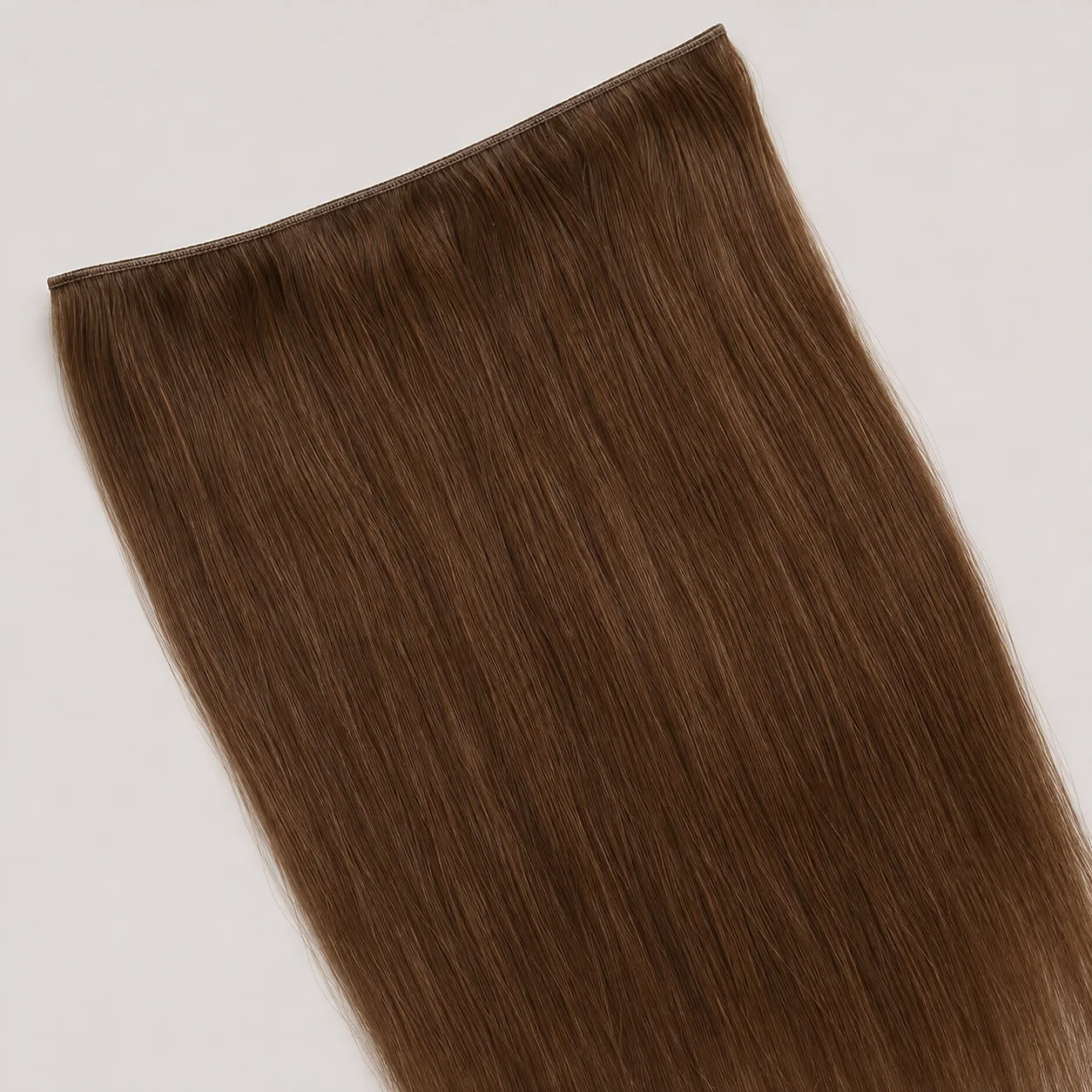
A thin, flat seam your stylist can cut anywhere across the width. For sew-in or beaded rows cut to the client's head shape.
Line page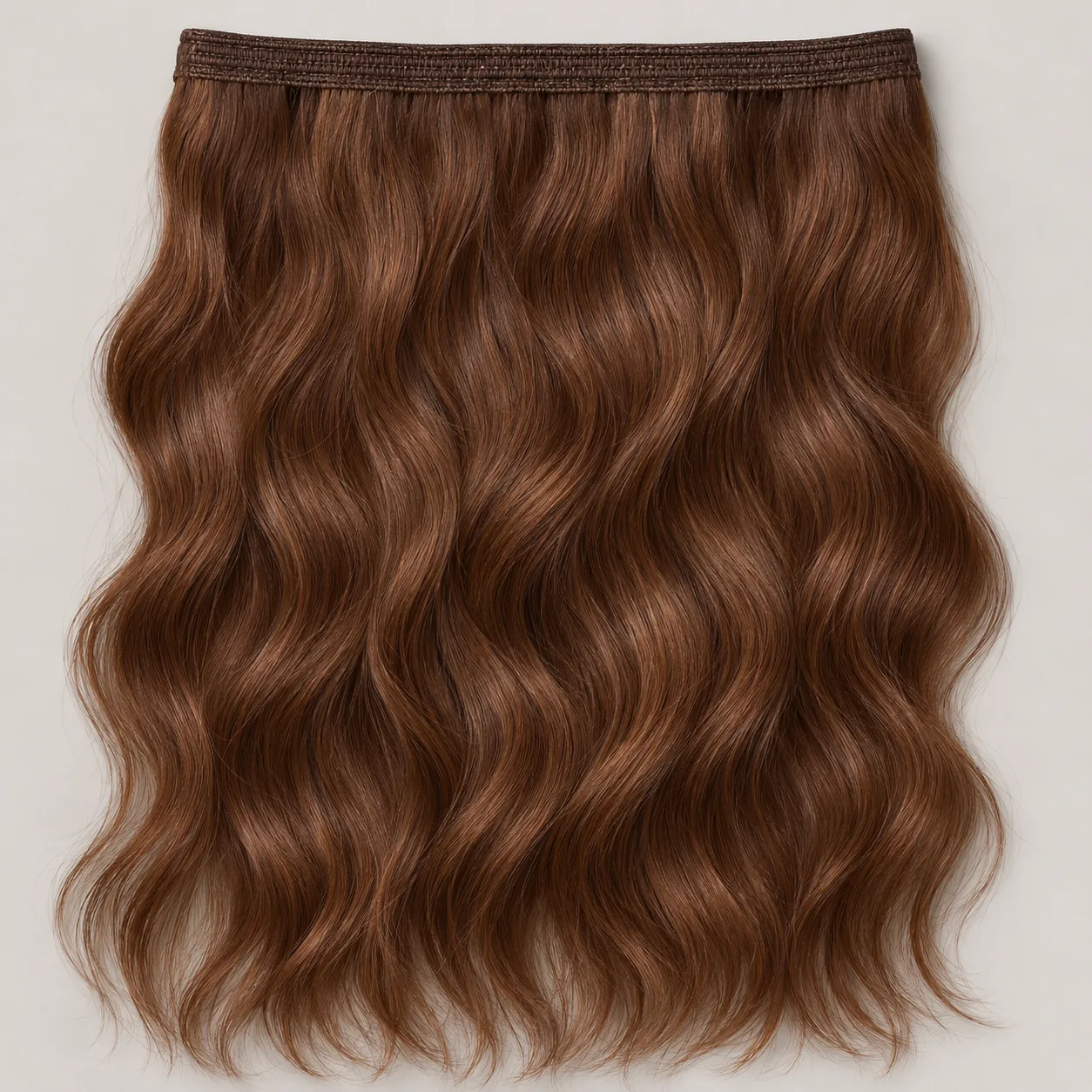
A machine-stitched weft with a wider seam. For sew-in and beaded installs kept at full width.
Line page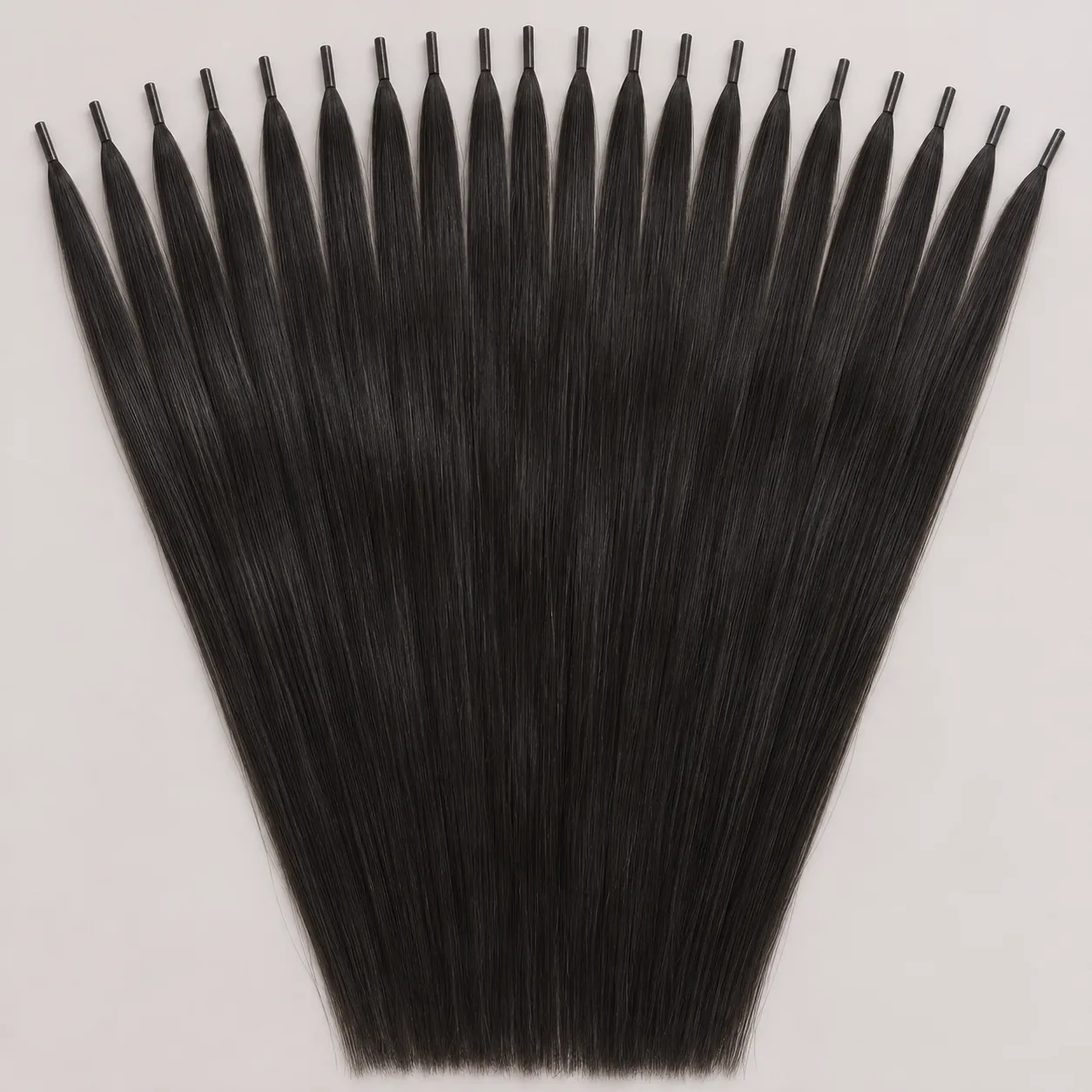
A straight, pre-sealed tip closed into a micro ring one strand at a time. Suits clients with normal to thick hair.
Line page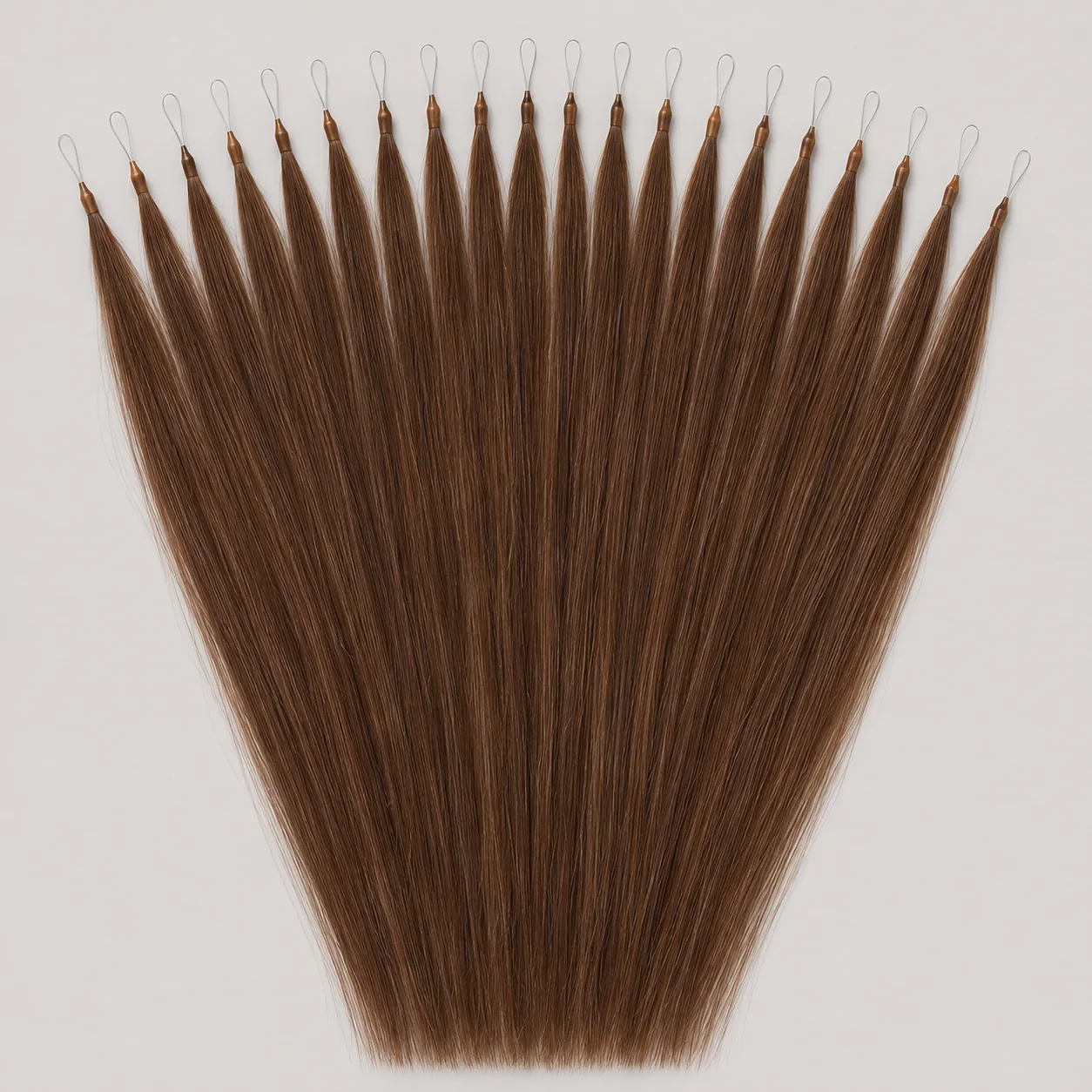
A shorter, finer tip for smaller nano rings. For fine, soft client hair.
Line page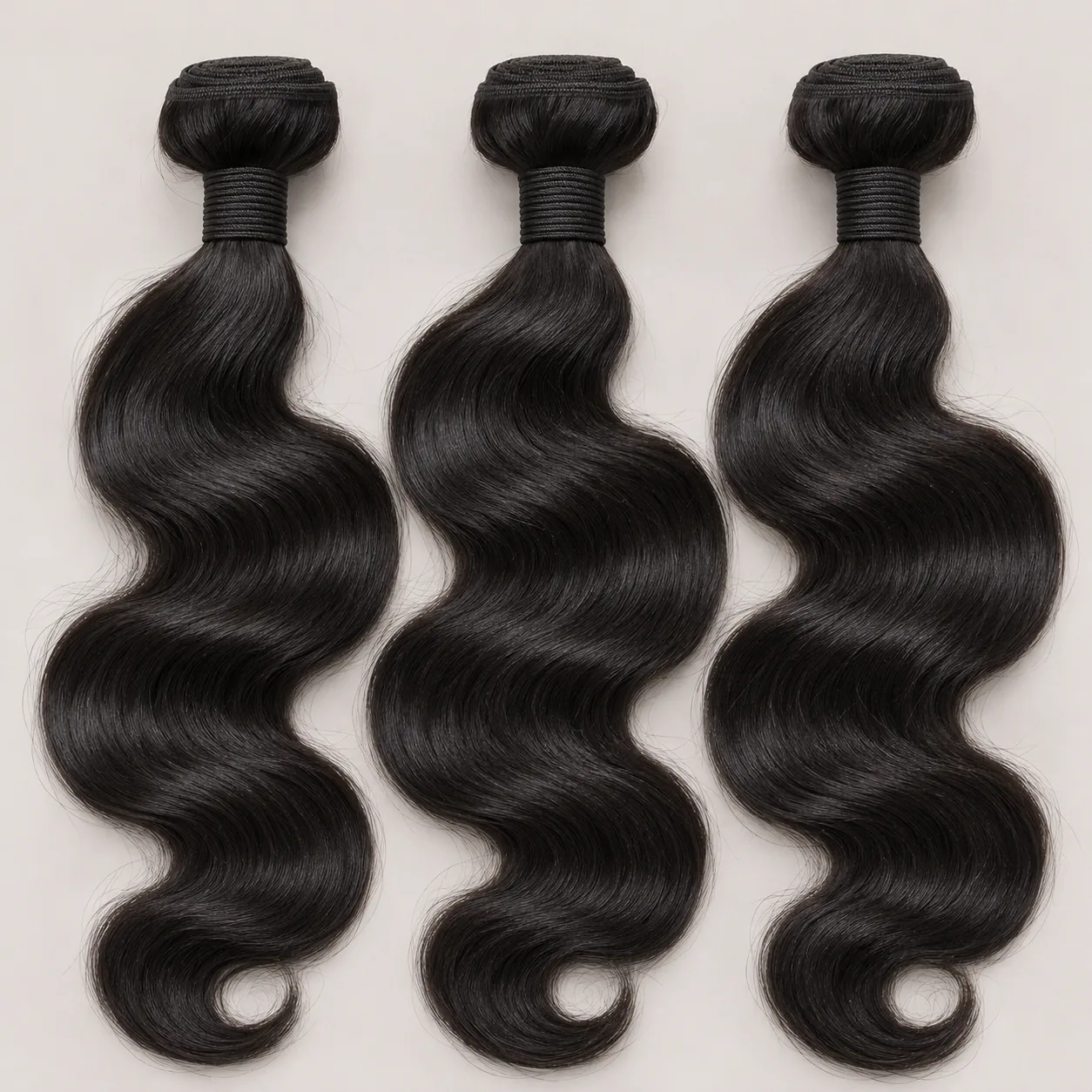
Packed wefts in straight, body wave or deep wave. For sew-ins on a braided track.
Line page
Loose hair, each bundle tied where the roots are. Used for braiding, wig work and repairs.
Line page
Keratin tips melted onto a few strands of the client's hair with a heat tool, in a flat K shape or a U shape.
Order a sampleEvery client row on a salon account goes through the same steps. Some clients stop after one order; others come back for more hair, a longer length or a new colour.

Your stylist decides the method, length, weight and texture for the client.
Your stylistA small piece of the client's hair is cut, taped at the root end and labelled.
The client's hair is written up as a row on your spec sheet, with your client number in the notes.
Your contactA sample is made to the row in its structure, coloured to the swatch.
UsYour stylist holds the sample against the client's hair and confirms or marks what is off.
Your stylistThe confirmed row gets a spec code, and a matching retained sample stays with us.
The client's row goes onto an order alongside other clients' rows, and each row is checked before shipping.
UsThe client comes back, and the row is reordered by code, changed in writing or sampled again.

In a salon or an extension studio, several stylists book their own clients. What sets the pace is getting each stylist's clients onto one order sheet.


An independent extension stylist works alone, often across salons or from a private room, and many licensed cosmetologists who fit extensions work this way. One person consults, cuts the swatch, places the order and fits the hair, so the rows follow the bookings.

A new client books in. You choose the method you fit, say tape-in or nano tip, and cut a swatch. The row goes to your contact with your client number and, if you like, the appointment date noted on the row for reference. For tip rows, note the ring you fit with: rings are not part of our supply, and tip samples are sent unringed.

You run the side-by-side check yourself, in your own light, against the client's hair. Once you confirm, the client's shade has its code. Many independent stylists fit one or two methods most of the time, so their account fills up with codes in those structures, and the account spec sheet becomes their own colour list.

Codes for clients due back and sample rows for new clients can go in one send, handled by the same contact each time.
When the order arrives, you check each pack label against your bookings. The pack for each client sits ready with its code, next to the approved sample you kept for that client.

Write up your next booked client as a row, note your client number, and tell us you have a swatch to post. Your contact sends the spec sheet and the address for the swatch.
 Client [#]
Client colour matching on our account runs on physical hair from start to finish. Here is each step, who does it, and what you hold at the end.


At the consultation, your stylist cuts a small piece from an inner layer of the client's hair, where the cut is less visible. The piece runs from root to end, so we see the full run of the colour along the length. The root end is taped, which tells us which end is which, and the tape is marked with your client number and the row the swatch is for.
If one swatch is the colour reference for more than one row, list each row and name the same swatch on each.
Your contact sends the address for colour references in the reply to your request. A row matched to a swatch is sampled once the swatch has arrived. Before any of that, your contact returns your rows written out as a spec sheet, which you check before sampling starts. Any row short of a field is returned flagged and is not sampled until you fill the gap.
The sample is made in the structure of the row, so you judge the shade on the same item your stylist will fit.
Length, weight and texture come from the row; texture on lines other than bundles follows your reference. Each sample is labelled with its row on your spec sheet, and when the parcel is dispatched your contact lists the rows inside.

Your stylist holds the sample against the client's hair, with the client in the chair if possible, or against the swatch. They look at the colour in the light the salon works in, from root area to ends, and check length, weight and texture against the row.
You name the row and what is off on it, for example a shade too warm or a length too short. Your contact turns that into a revised row, and the row is sampled again. Before a row's first confirmation there is no physical reference to work from, so a revision to length or weight goes back through sampling too.

For a genius weft, the stylist can cut the sample where they would cut it for this client.
When the sample matches, you confirm the row. Your contact sends back the spec sheet with a spec code written against it. The sample in your hands is now your approved sample for that client.
Swing tag · with the first order on the rowA swing tag with the spec code arrives with the first order on that row, for you to hang on the approved sample.

We keep a retained sample for each code, tagged with the same spec code. Every later order on that code is matched to it, and each shipment of the row is checked against it.
A confirmed client shade becomes a record on file, held by us as a code and a retained sample.
A shelf of packs bought in case the client comes back is not needed. When the client returns, or when your stylist sees that a new client matches a shade already on your account, the order quotes that code.


Clients with highlights, a balayage, a root-to-end fade or two clear shades are matched one tone at a time. Each tone is its own row on the spec sheet.
Each salon row can carry your own client number in the notes. We record it next to the spec code on your account spec sheet.
We recommend your in-house client number rather than a client's full name.
Your account spec sheet shows each code with everything written on its row (colour, texture, length, weight, hair type, line and notes) and your client number next to it. You can ask your contact for it at any time.

| Client ⇄ code | Line | Hair type | Notes |
|---|---|---|---|
| Client [#][Code A] | Tape-in | [Type] | Single-sided |
| Client [#][Code B] | Genius weft | [Type] | Cut to shape |
| Client [#][Code C] | Nano tip | [Type] | Tone A |
| Client [#][Code D] | Nano tip | [Type] | Tone B |

Reorders still go by spec code. The client number helps you find the code; the code is what the order runs on. When a code is missing from your account file, or the note beside it disagrees with what we hold, your contact checks with you first and the reorder waits.
Account only ·Client details you give us are used for your account's orders only and are not shared with or shown to other buyers.

Each confirmed shade is held as a spec code and a retained sample, so the order you place carries the rows for the clients you are fitting.

A salon account works with records in place of reserve stock. Each confirmed shade is held as a spec code and a retained sample, so the order you place carries the rows for the clients you are fitting.

One order can carry rows for several clients across several lines. A client's first fit in tape-in, another client's genius weft reordered by code, and two tone rows for a highlighted client can all sit on the same order, each as its own row. New rows that still need a sample and codes that are ready to reorder can go on the same request. You choose whether the codes ship first or wait to travel with the new rows once they are confirmed.
Who you are and what kind of buyer, the lines involved, the spec rows or codes, an estimated quantity on each row, where it ships to, and your repeat plan. A missing item is asked for in the reply, and a row is quoted once it is complete. How to lay out a mixed order sheet is covered on the Build a Mixed Order page.
You send the code, the quantity and the destination. Your contact replies with a reorder sheet that writes out the full row after each code, and production starts once you confirm the sheet. A shade used on several clients sits on one code, so every one of those clients is supplied from the same record.

Before shipping, every row is checked against its retained sample for weight, length, colour and texture, with the seam, tip or tape detail checked for structured lines.
If one client's row does not match, that row stays behind. Your contact sends photos, and the row is made again or replaced so it meets its confirmed spec. The rows that match ship, or wait for the remade row if you prefer.
Every pack in the box carries a label with its spec code. The packing list is written row by row, with the result of the pre-shipment check for each row. Read together with your account spec sheet, the code on a pack tells you which client it belongs to.
Select a pack label · follow it to its row and its stylistFor a first order on a row, the code swing tag is in the box. Hang it on the approved sample you kept for that client, so the sample and the record carry the same code from then on. Your stylist can lay a pack beside the approved sample for that client before the appointment.
| Spec code | Client | Line | Stylist |
|---|---|---|---|
| Spec · [Code A] | Client [#] | Tape-in | [A] |
| Spec · [Code B] | Client [#] | Genius weft | [B] |
| Spec · [Code C] | Client [#] | Nano tip · tone A | [C] |
| Spec · [Code D] | Client [#] | I-tip | [A] |
| Spec · [Code E] | Client [#] | Machine weft | [B] |
| Spec · [Code F] | Client [#] | Nano tip · tone B | [C] |
 Stylist [A]
 Stylist [B]
 Stylist [C]
 Your arrival photo
 Our retained sample
Photograph it and send the photos with the code printed on its pack label. The row is compared with our retained sample for that code, and your contact sends back a photo of the retained sample beside your arrival photo. The handling of that row is agreed with you.
When a client comes back, what they ask for decides how the row is handled.


| Return visit | What goes on the order | Sample needed |
|---|---|---|
| By code · no sample | ||
| More hair in the same line, length, weight, texture and colour | [Code]The client's spec code | No; the code ships to its confirmed spec |
| A new client whose hair matches a shade already on your account | The existing spec code, chosen by your stylist against the approved sample | No |
| A different ring type for I-tip or nano tip | The existing code, with the ring type in the notes | No |
| In writing · no sample | ||
| The same hair, longer or heavier | A new row, with the new length or weight | No; confirmed in writing |
| A wider or narrower weft | A new row, with the new width | No; confirmed in writing |
| New sample | ||
| A new colour, or a client who has had their own hair coloured | A new row, matched to a new swatch | Yes |
| A new texture | A new row | Yes |
| A move to another method, such as tape-in to genius weft or I-tip to nano tip | A new row in the new line, coloured from the retained sample of the client's code | Yes, in the new structure |
| A change of tape type or fitting method | A new row | Yes |
| One tone of a multi-tone client changes | A new row for that tone; the other tones keep their codes | Yes, for that tone |
New rows get their own codes once confirmed. The client's earlier codes stay on the account spec sheet unchanged, so an earlier shade can still be reordered.
We are responsible for the hair, the code records and the pre-shipment check of each row. Your stylists are responsible for the client.
Every shade on your account comes from a swatch or reference you send and is approved by your stylist on the sample, then held by our retained sample. This is how a client's exact colour is reproduced on later orders.
We make each tone to its own spec and your stylist blends tones in the chair, so every tone can be checked and reordered separately.
Straight, body wave and deep wave are written on bundle rows. On tape-in, wefts, tips and bulk hair, texture follows the reference you send, such as the client's own hair.

Tip samples arrive without rings and your ring type sits in the row notes, so the tips are judged in the rings your stylists already use.
Your stylist decides the method, places the hair, cuts genius weft to shape and advises the client on wear and care. Your stylist tests samples on a client or a training head.
The salon, studio and independent stylist routes above run entirely inside these lines.

Every field on a sample request and how a sample parcel is checked, for any buyer.
How to set out rows from several lines on one order sheet.
How a wholesale account and repeat orders by spec code run across all seven buyer types.
The inquiry form, WhatsApp and business hours.
All lines side by side, including one colour re-sampled across structures.
Spec fields and sample checks for each of the seven lines, from tape-in panels to bulk hair.

List the clients you have booked: method, length, weight, texture, a client number, and whether a swatch is on its way. Add the spec codes of any returning clients.
You can also start with Request Samples or Get Wholesale Quote.