Hair Extension Manufacturer: Partner Workshops and QC

Your human hair extensions are made in partner hair workshops to the spec row on your account. We write that row, keep the retained sample for its code, and check every row on our side before it goes out to you.

  • Samples and orders made in partner workshops to the row under your code
  • One retained sample per spec code, held on our side
  • Every row checked by us against that retained sample before it leaves
  • Check results written by code into your packing list
  • One contact for samples, orders and after-arrival reviews
Written
A plain sheet of off-white paper, softly creased
Made
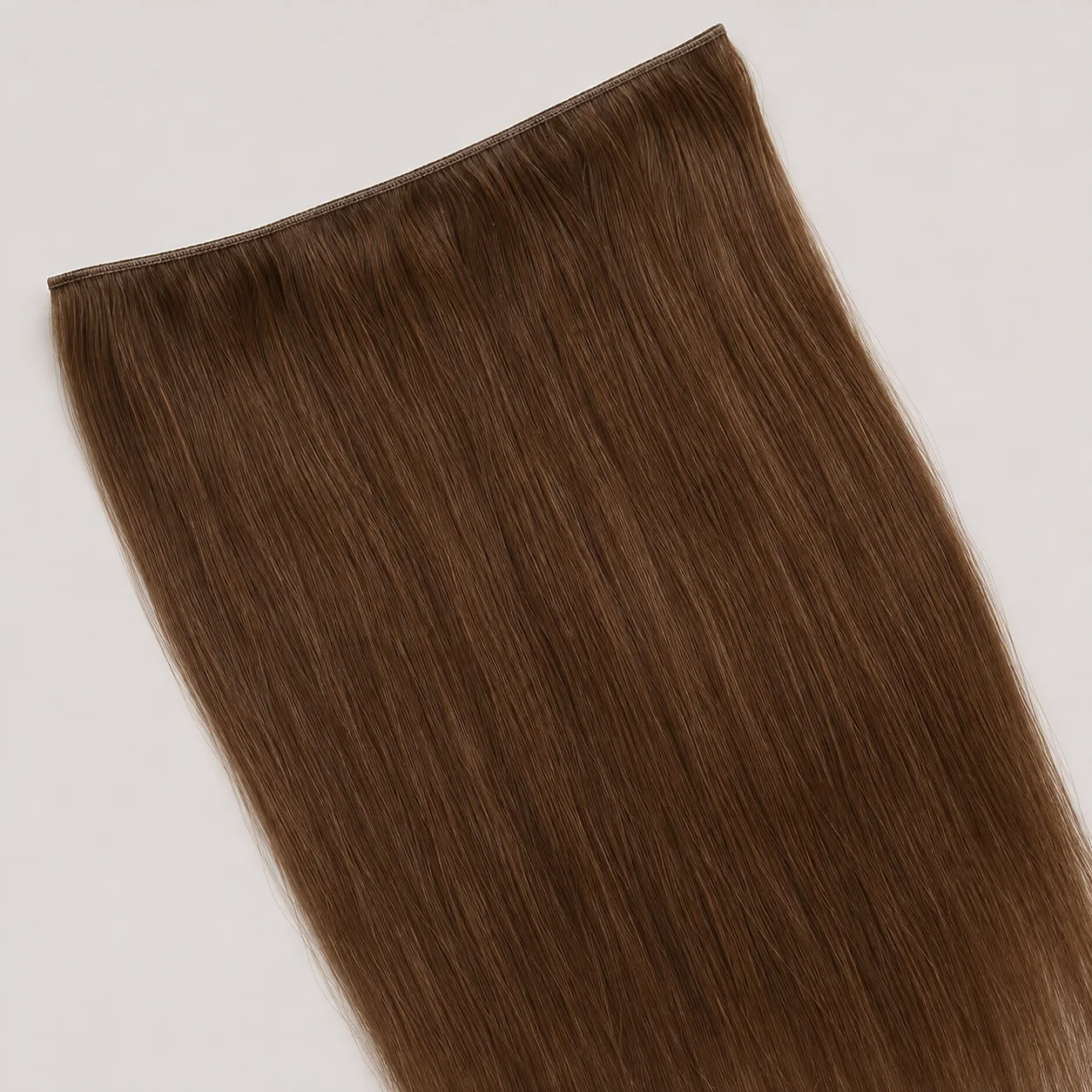
Long copper-brown hair hanging down a back, seen from behind
Checked
Two hands parting and checking a section of tightly curled dark hair

Hair Extension Manufacturing Model — Partner Workshops Make, We Record and Check

Making the hair and answering for it are two separate parts of every order, and each part sits with one party.

Partner workshops
Fine dark strands of hair lying loose on a pale surface

What the partner workshops do

They make the hair: the sample for each new row and the bulk rows of every order. They take their work from the row as it stands on your account.

For a new row that is the row your contact has written up from your request. For an order it is the confirmed row under its spec code, with all its fields and notes: hair type, length, weight, texture, colour and, on structured lines, the weft width, tape type or strand weight. Colour and texture are made to the reference you confirmed, so a repeat row is matched to the same reference as the first one.

Our side
A hand reaching out, black and white

What we do

We hold everything the workshops are measured against. Your rows, your codes and the retained sample for each code stay on our side.

Before any row goes out to you, our side compares it with the retained sample for its code and writes the result into the packing list. The quality owner for every row you receive is us: we run the check, we write the result, and when a row has a problem you take it to your contact.

You
Hands working through a head of braids

What reaches you

Your requests, your sample feedback, your orders and any after-arrival review go through one contact on our sales team, and the workshops take their instructions from our record of your rows.

You deal with one person and one record, and the record you check against is the same one the workshops work from.

A blank sheet, a pencil and a binder clip on a dark desk

The background to this model, the account record and the people on it, is on our About page. This page follows the work itself, stage by stage, and the check that ends it.

Manufacturing Responsibility by Stage — Spec Row to Packing List

On our accounts, the manufacturing process a buyer deals with is an order and record process: spec row, sample, spec code, retained sample, check, packing list. Each stage has one party doing the work and one paper or object that comes out of it.

Manufacturing responsibility by stage: what the partner workshop, our side and you do at each stage, and what comes out of it
StagePartner workshopOur sideYouWhat comes out of it
Spec row— no stepWrites your request up as rows, returns rows with missing or conflicting fieldsSend rows, confirm the spec sheetA spec sheet you have checked
SampleMakes one sample per rowChecks each sample against its row's fields, tags it, posts itLook over the physical sampleA sample tagged with its row
Confirmation— no stepRecords the row as confirmed and issues its spec codeConfirm or revise each rowAn updated spec sheet carrying the code
Retained sample— no stepKeeps one sample for each code, with the code tag on itKeep your approved sampleTwo matching references, one on each side
ProductionMakes the row from the confirmed row and its referenceSends the row under its code to the workshopSend codes and quantitiesGoods made to that code
Check— no stepCompares every row with its code's retained sample— no stepA check result for each row
Shipment— no stepLabels each pack with its code and writes the results into the packing listMatch packs to list lines on arrivalPacking list and pack labels

At the spec row

Nothing goes to a workshop until the row is complete. A row with a missing field, or two fields that cannot both be true, is marked and sent back to you. That row waits until you choose, so no sample is made from an incomplete row.

At the sample

The workshop makes each row once. Before the sample is posted, our side looks it over against the fields of its row and hangs the row tag on it, so what you open is a sample you can trace to one line of your spec sheet.

At production

When you order, the confirmed row goes to the workshop under its code. A repeat order is made from the same row and the same reference, because neither has changed since you confirmed it.

At the check and shipment

Our side runs the comparison and writes the result.

Our side

How a row is sampled and confirmed is set out on Hair Extension Samples, and how each row turns into a code you reorder by is on Wholesale Hair Extensions.

A blank lined notebook and a pen on grey wooden boards
The moulded pulp tray inside a carton, close up
Dark strands of hair catching a little light

The workshop makes the goods and our side signs them off, so the hair is made by one party and checked by another.

Product Lines Made in Partner Workshops — 7 Lines by Construction

That split covers all seven lines: tape-in, genius weft, machine weft, I-tip, nano tip, human hair bundles and bulk human hair. Each confirmed row is tracked under its own spec code.

K-Tip and U-Tip rows, keratin tips fused onto a client's hair with a heat tool, are available on request.

K-Tip & U-Tip

Construction Compared Across 7 Lines — Seam, Panel, Tip and Tie

Each line is built around one structure, and that structure decides what your stylist checks on the sample and what our side compares before shipment.

Construction compared across seven lines: what each line is built around, what is looked at on your sample, what is compared before shipment and what is left untouched
LineBuilt aroundLooked at on your sampleCompared before shipmentLeft untouched before shipment
Tape-InPanel and tape stripTape edge, tape line, root directionTape edge against panel edge, root direction—
Genius WeftThin seam, flat topSeam thickness, a test cutSeam thickness and stitching across the full widthNot cut
Machine WeftFolded top, machine-sewn seamStitch line, both ends, seam width, a comb testSeam width, stitch line, finished endsNot combed or pulled
I-TipSealed slim tipTip ends, fit in your own ring, single strands weighedTip seal and shape, single strands weighedRings not pressed, strands not pulled
Nano TipShort, fine sealed tipFit in your nano ring, a parting on fine hairTip length, thickness and sealRings not pressed, strands not pulled
Human Hair BundlesA sewn weft in each packEnds, length, pack weight, a wash, colourLength, end fullness and texture beside the retained packNot washed or combed
Bulk Human HairLoose bunches, tie at the root endTie, length spread, a test braid or knotsLength profile, texture, tie at the root endNot untied, washed or combed

Read across the table and one pattern holds: the tests that change the hair, cutting, pressing a ring, washing, combing, are done once by your stylist on the sample.

The check before shipment only compares, so the goods reach you in the state the workshop made them.

Long straight strands of hair, black and white
Loose strands of light hair crossing the frame, black and white

Weft and Bundle Construction — Folded Top, Thin Seam, Sewn Pack

Three lines arrive as sewn wefts, and the difference between them is in the top of the weft.

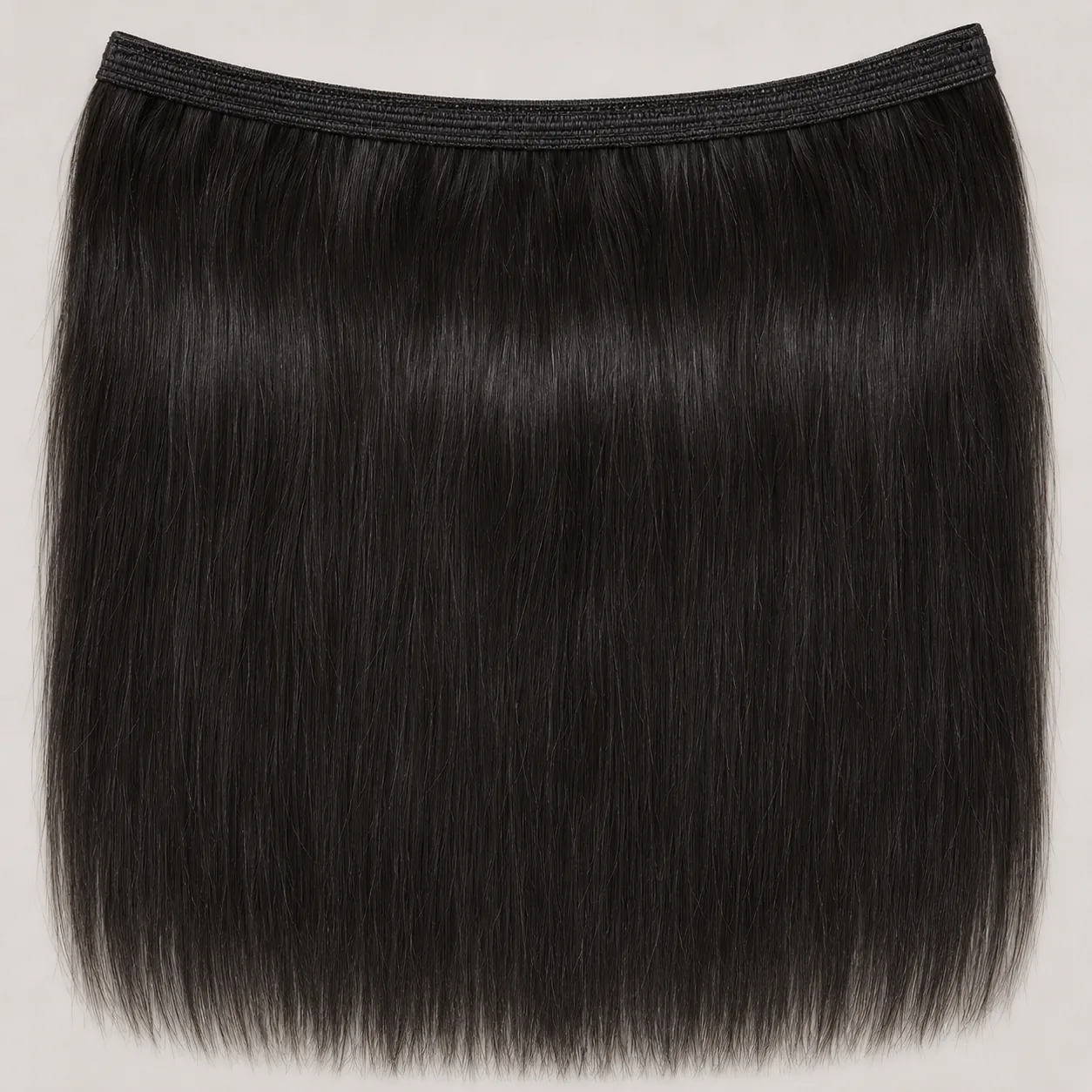
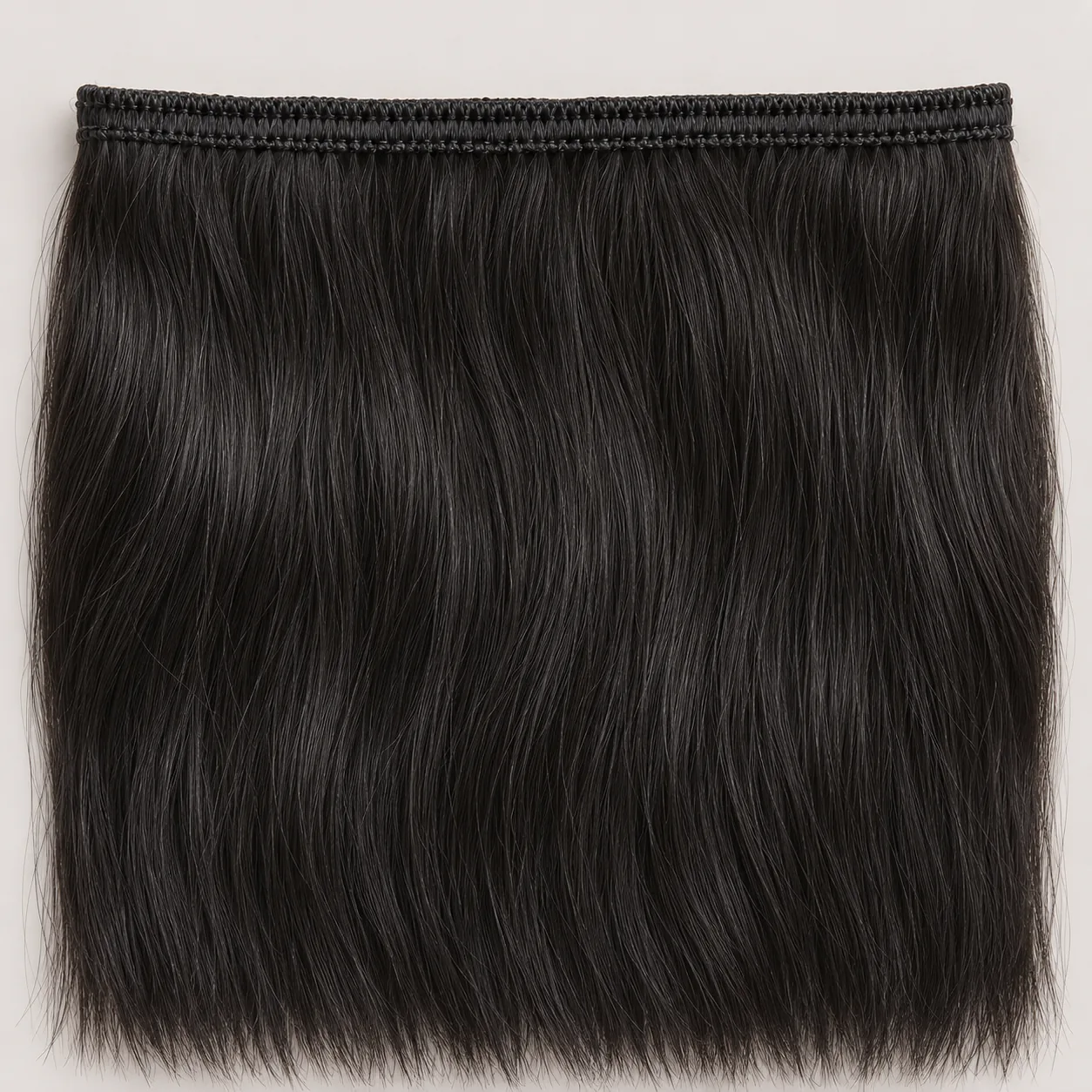
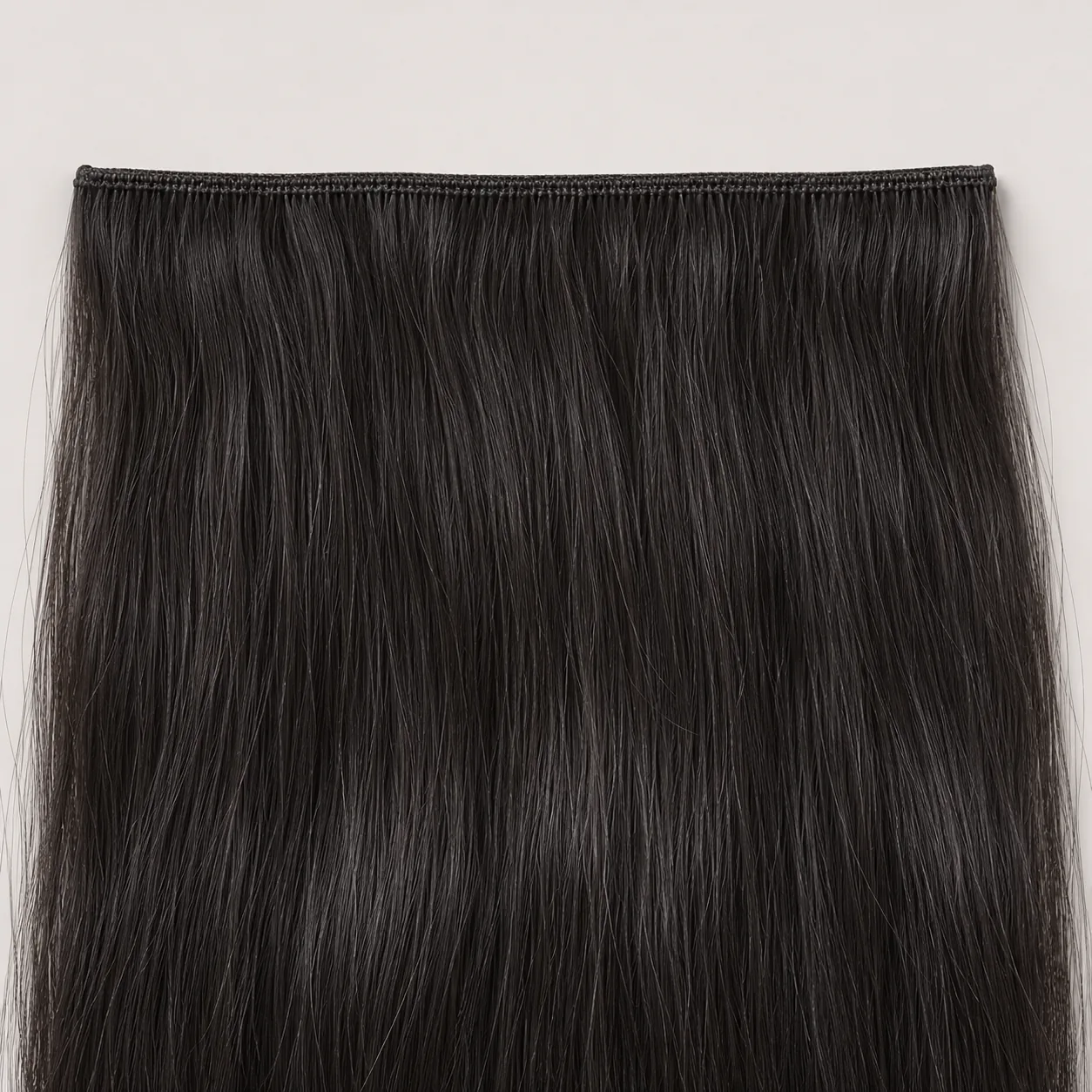
A black weft with its sewn seam along the top

Machine weft

Machine weft has return hair folded over the top. The machine sews along the top, catching the fold and the roots together, which gives a wide seam. The stitch line runs unbroken across the whole width and is finished at both ends. It is fitted at the width it arrives in, sewn onto a braided track or fixed with a row of micro beads.

Machine Weft Hair Extensions
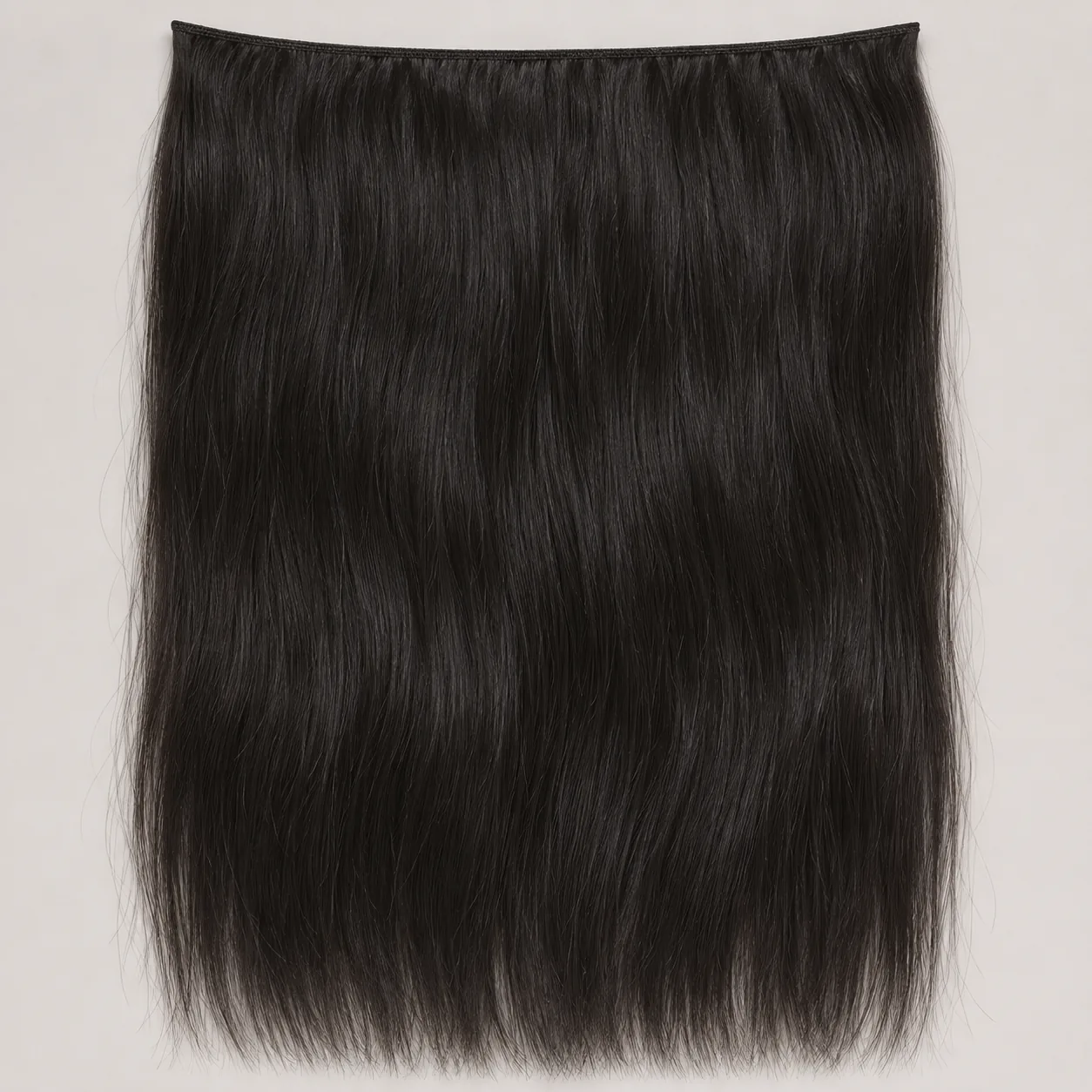
A black weft laid flat with a tag

Genius weft

Genius weft is made without return hair over the top. That keeps the seam thin and the top flat, and the hair is held tightly along the stitching, so where the weft is cut the hair does not slide back along the seam. Salons cut it to the width of a client's head.

Genius Weft Hair Extensions
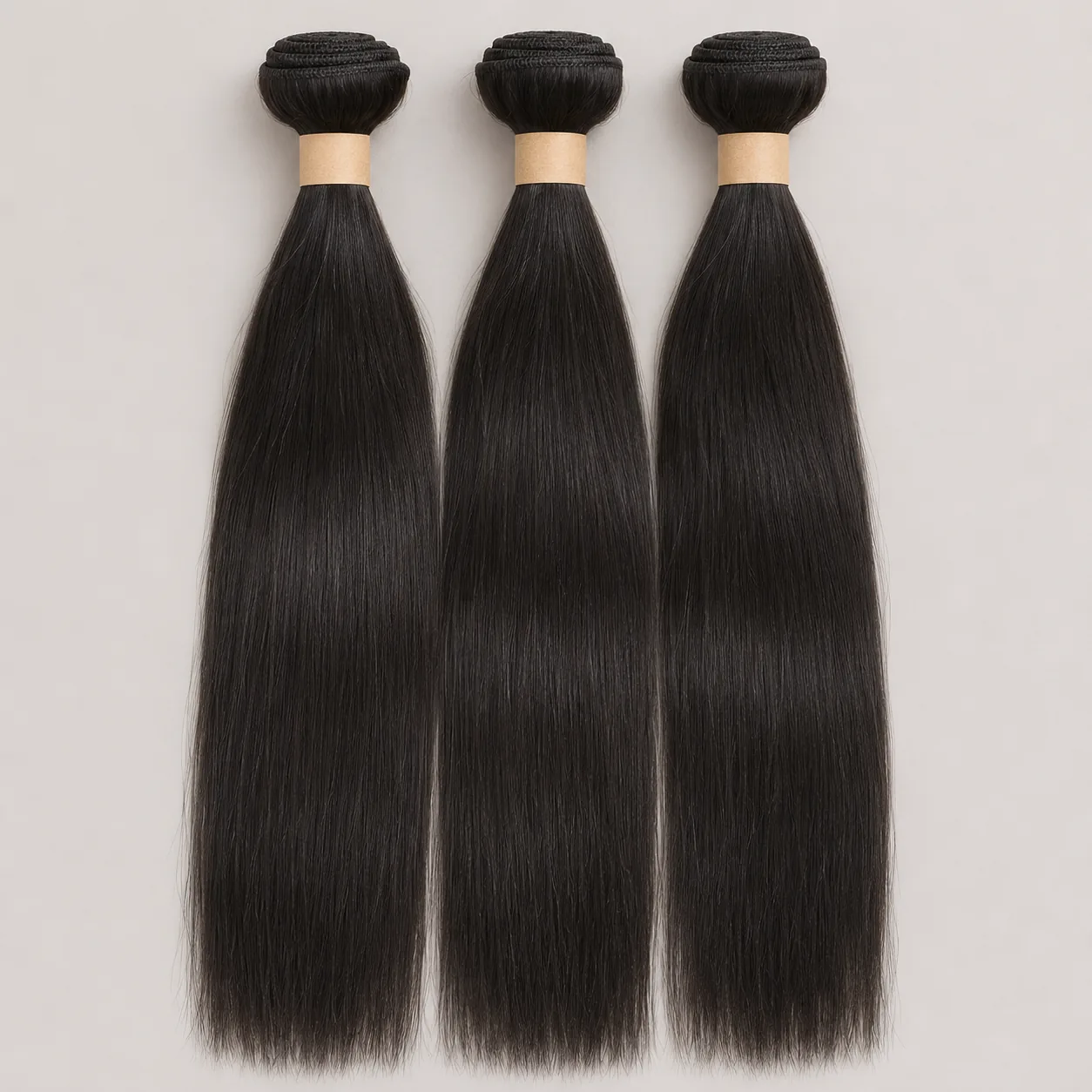
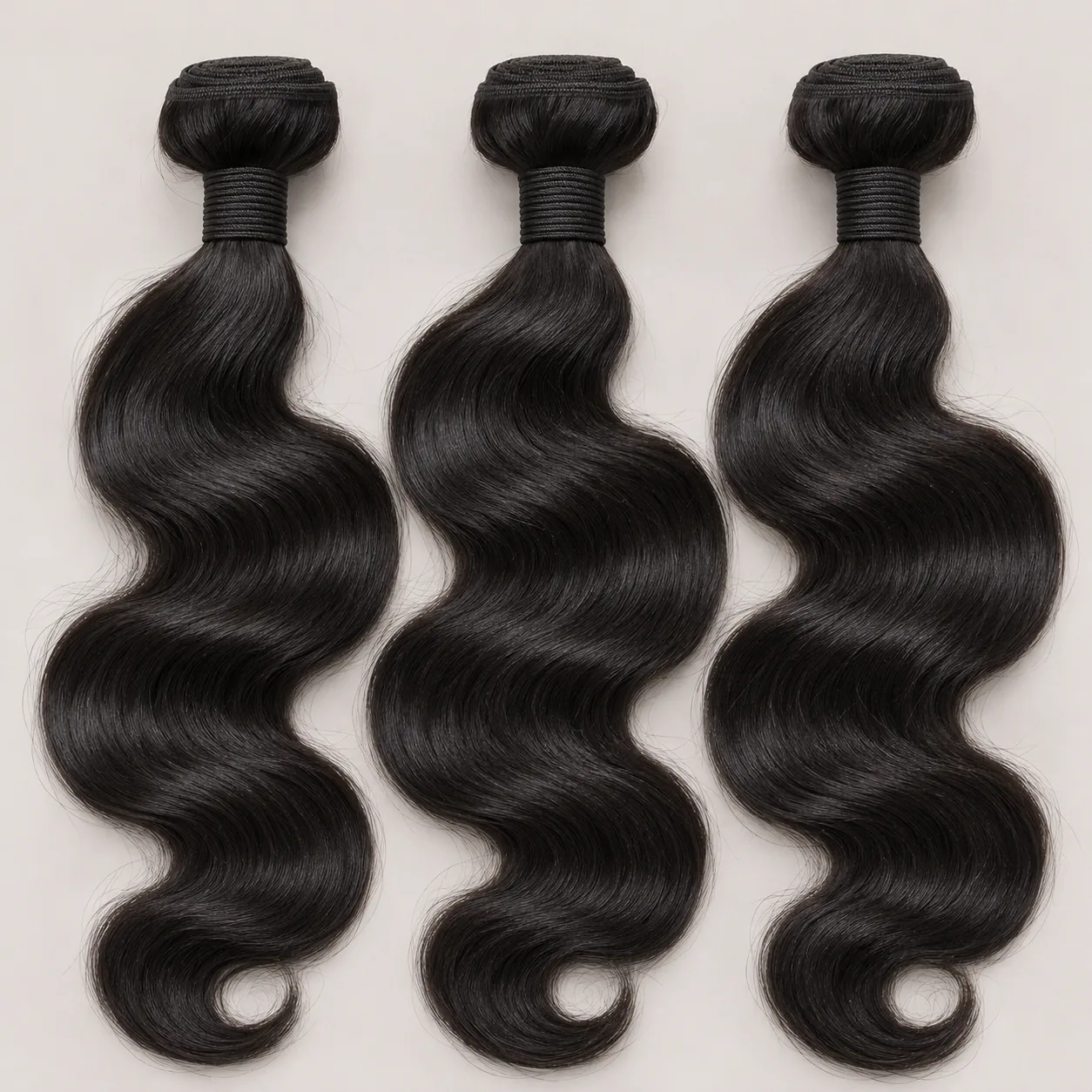
Three black body wave hair bundles

Human hair bundles

Human hair bundles are one sewn weft sold by the pack, with the wider seam of a machine-sewn weft. The points that matter sit inside the pack: length, fullness at the ends and the texture, straight, body wave or deep wave.

Human Hair Bundles
Close-up of a straight black weft and its seam

What this means for the row

A weft row records its width as you write it, and the choice between genius and machine is a choice of line, so moving a row from one to the other is a new row and a new sample. If a row will be cut to fit, it belongs on genius weft; if it will be fitted at full width, machine weft.

Genius ↔ machine · new row, new sample

Tip and Tape Construction — Sealed Tips, Nano Tips and Tape Panels

A thick dark braid falling past an ear

I-tip

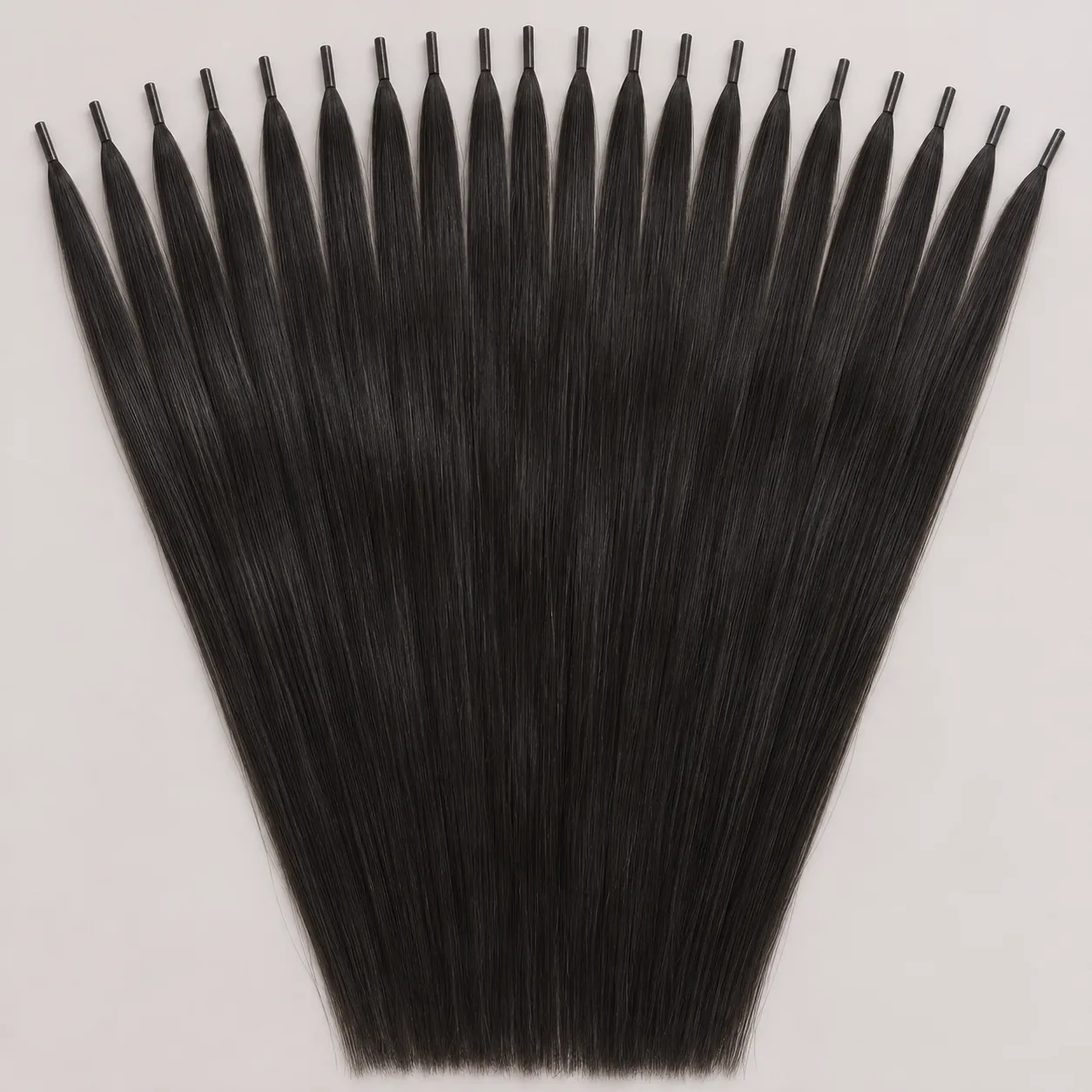
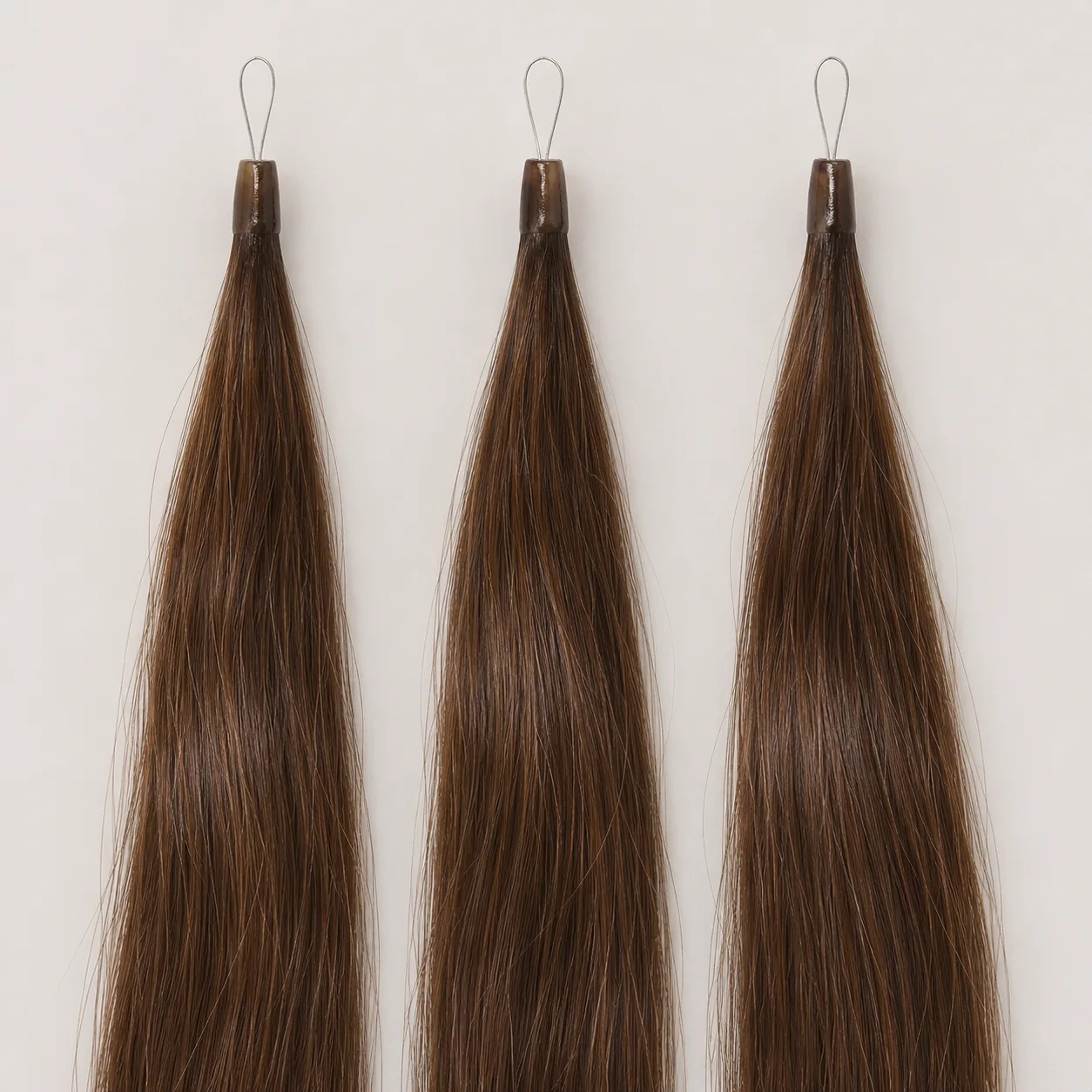
At the root end of each strand the workshop forms a straight, slim tip and seals it in advance. In the salon the tip goes through a micro ring or bead, which is pressed flat with pliers. No heat and no glue are used, and the tip does not melt.

Micro rings and nano rings come from your stylist's own stock; the ring type can be noted on the row.

Rings · your stylist's ownI-Tip Hair Extensions
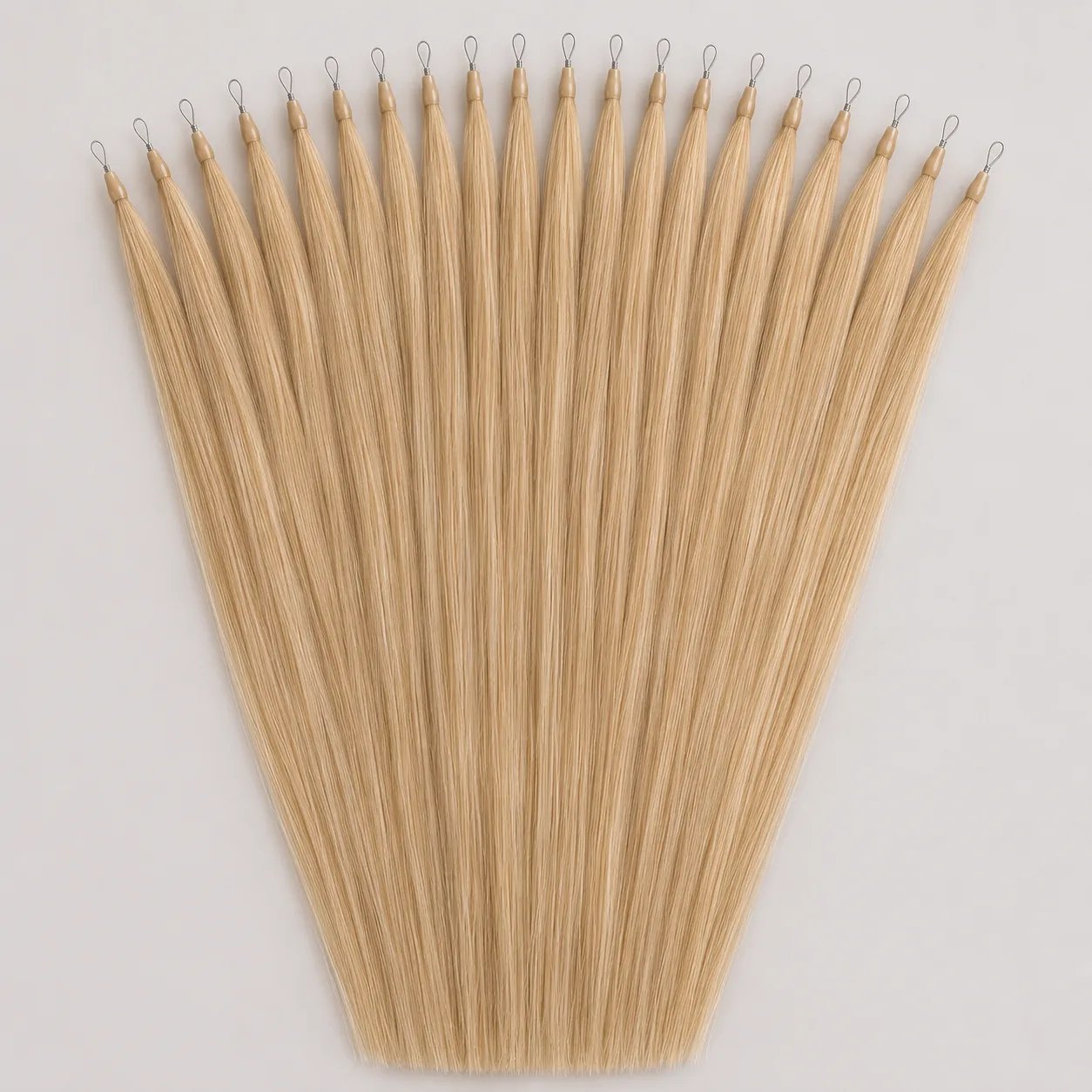
A fan of light blonde nano tip strands

Nano tip

The same idea at a smaller size. The tip is shorter and finer, sealed and set at the root end, and it goes into a nano ring that is smaller than a micro ring. Because both the tip and the ring are small, the fixing point sits close to the root and fine, soft hair covers it more easily. A nano row is matched to its confirmed sample and retained strands for tip size, rather than to a size figure.

Nano Tip Hair Extensions
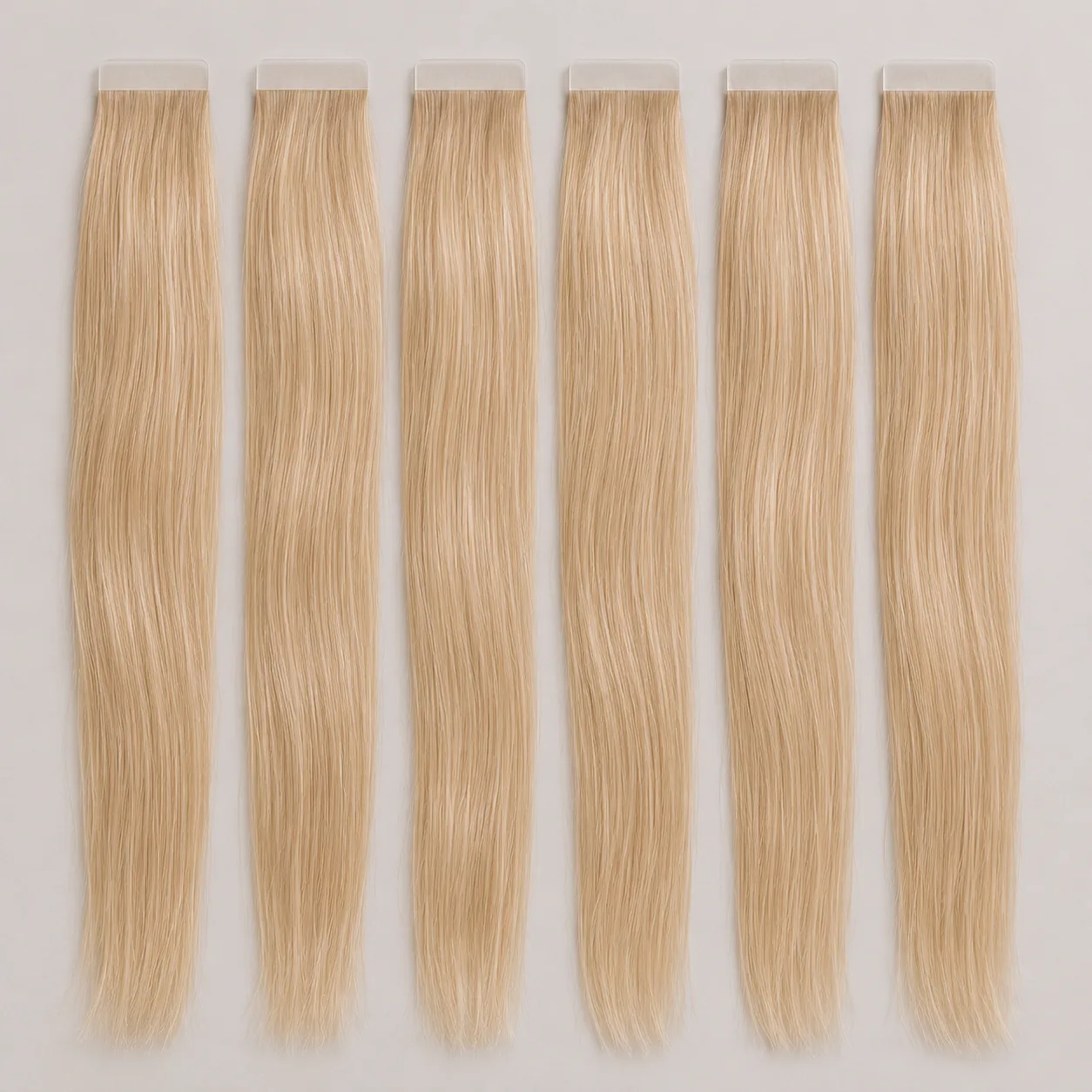
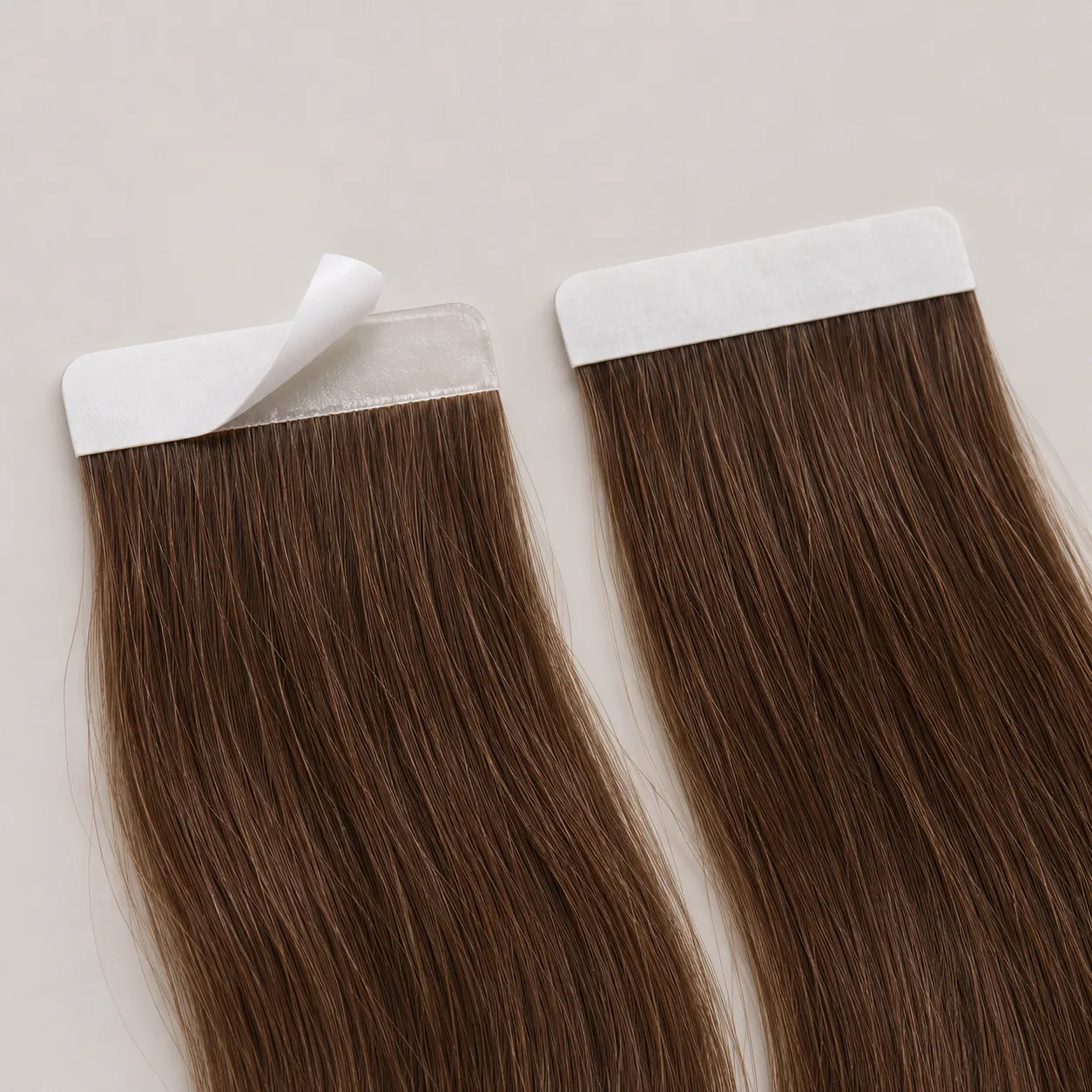
Two brown tape-in panels with the tape edge at the top

Tape-in

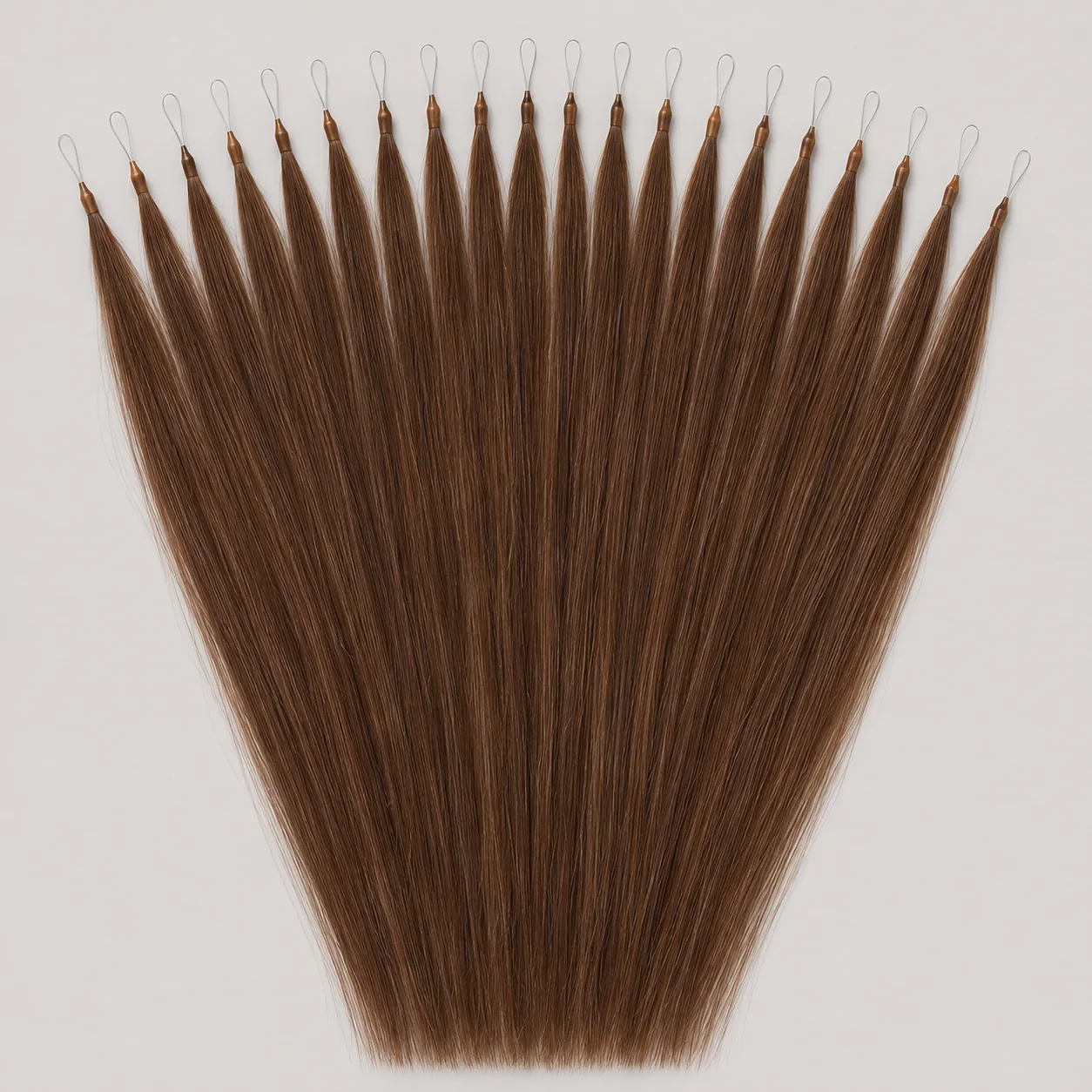
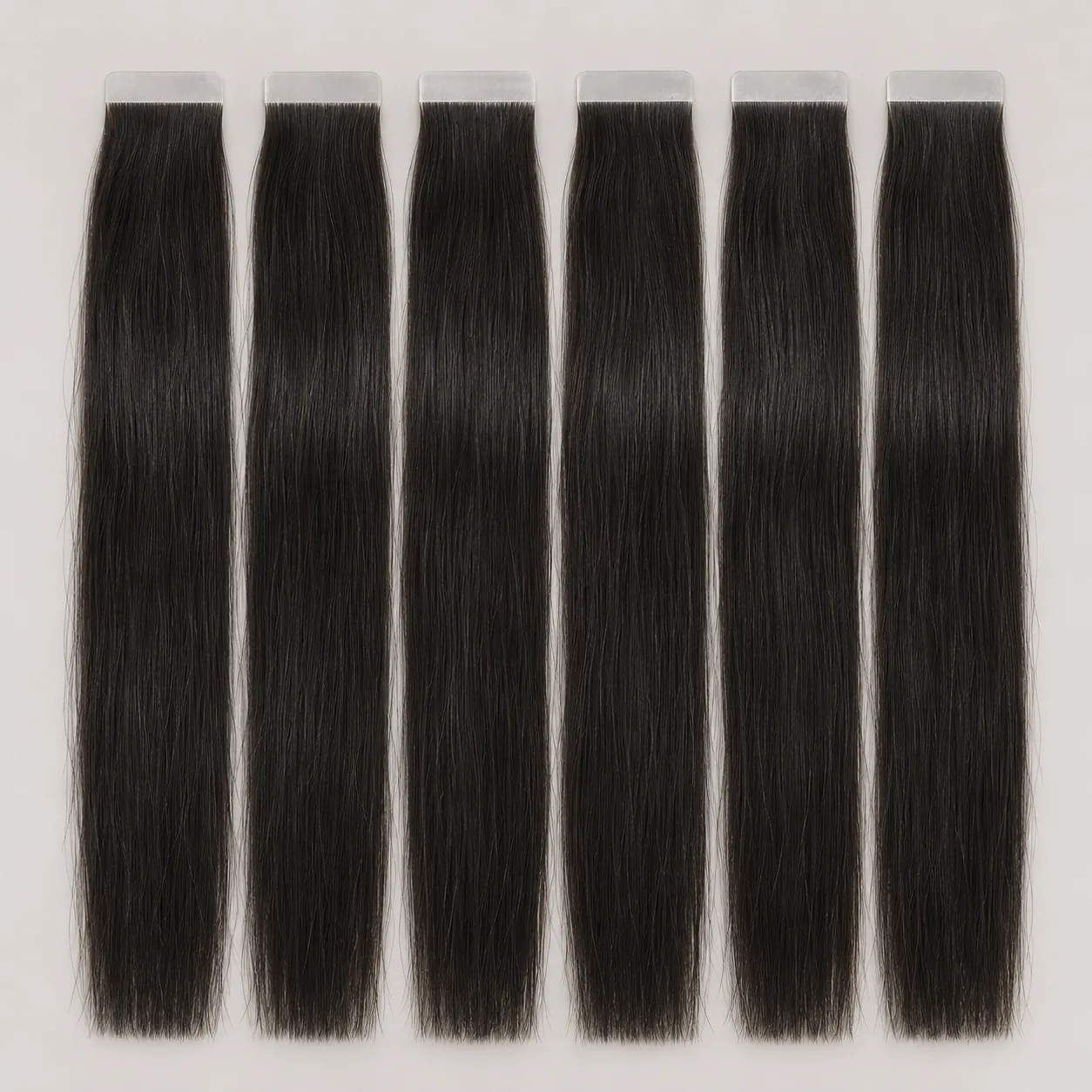
Hair is set into a panel carrying a tape strip. How the panel lies, and whether its edge lifts, comes down to its width, the tape it carries and a flat edge. A double-sided sandwich places two panels around a section of client hair; for fine, soft hair, one panel with a single-sided tape cuts the thickness.

For buyers sourcing from a tape hair extensions manufacturer, panels are made in partner workshops to the tape type and fitting method on the row, and changing either one opens a new row that is sampled again.

Tape-In Hair Extensions
A silhouette flicking long wet hair back over the sea at sunset

Request Samples Made in Our Partner Workshops

Send the rows you buy today, as a spreadsheet, photos or plain text, and every row comes back as a tagged sample from the workshop.

Hands holding a pen beside two plain envelopes

Workshop Samples — Checked Against the Row, Tagged, Confirmed by You

A sample is the first time a row exists as hair.

Partner workshop
Long hair falling over the shoulders of a white top, seen from behind

How a sample is made

One sample is made per row, in the workshop, from the row your contact has written up. Several lines and several rows can sit on one request, each made as its own sample: a full-width weft, a tape panel, a set of loose strands, a whole pack or a tied bunch. If the colour comes from a client's swatch or a reference bundle you send, the workshop matches to that reference.

Our side
A hand writing on a blank sheet beside an open ring binder

Before it is posted

Our side looks over each sample against the fields of its row: the line, the hair type written on the row, length, weight, texture, colour and the structure field. The row tag then goes on, naming the line of your spec sheet it belongs to.

You
Brown hair falling over a shoulder in a green shirt, seen from behind

On your side

Your stylist measures, weighs and tests the sample. You confirm the row, or tell your contact which field is off. Before a row has been confirmed there is no physical reference yet, so any revision, length and weight included, goes back to the workshop as a new sample.

Our side
An open hand, black and white

At confirmation

The row becomes a confirmed spec and gets its spec code on an updated spec sheet. A swing tag carrying the code ships with that row's first order; hang it on your approved sample.

Spec · [code] · on your sample
Glass jars and a bottle on a dark wooden shelf
Retained · spec · [code]
Shelves stacked with blocks, black and white

Retained Samples — One Kept on Our Side for Every Spec Code

For every confirmed row, a matching sample stays on our side and carries the same code tag as the approved sample you hold. It is kept for each code, and it is what we hold the workshop's later work to.

At every shipment

Each row in an order is set beside the retained sample for its code. Length, colour, texture and the structure points are compared against it.

At a repeat order

A reorder by code is made from the same confirmed row and the same reference. The retained sample is why a row ordered later can be held to the row you approved first, whatever the gap between the two orders.

When a colour moves to another line

The new structure is a new row, matched to the original code's retained sample and sampled again.

After arrival

If a row looks wrong, the retained sample is what your photos are compared against.

The retained sample and your approved sample are the same row in two places.

You lay yours next to a delivery; we lay ours next to a row before it leaves.

A plain cardboard box on a striped rug

Pre-Shipment Check — Run by Us Against Each Code's Retained Sample

Run by our side · before it ships

The check is the last stage the hair passes through before it reaches you, and it is ours. People on our side run it before the goods are sent to you, on every row of every order, including the one-line additions inside a mixed order. Each row is compared with the retained sample kept for its code, and the result is written by us into the packing list.

The four points of the check are listed on our home page; how weight and length are taken for each line, units, basis and start points, is set out on the Hair Extension Length and Weight Guide. What follows is the reference each line is held to.

Hands holding a blank white sheet over a pale table
Tape-in hair extension panels

Tape-in rows

  • Tape edge
  • Panel edge
  • Roots one way
  • Retained panel

Tape-in rows are compared with the retained panel: the tape edge must line up with the panel edge, and the roots must run one way.

Genius weft rows

  • Whole width
  • Seam thickness
  • Even stitching
  • Retained weft

Genius weft rows are compared with the retained weft along the whole width: seam thickness and the evenness of the stitching. The weft is not cut.

Not cut

Machine weft rows

  • Seam width
  • Stitch line
  • Both ends
  • Retained weft

Machine weft rows are compared with the retained weft for three points: seam width the same from end to end, a stitch line with no skipped or broken stitches, and both ends finished. Nothing is combed or pulled.

Not combed or pulled

I-tip and nano tip rows

  • Tip seal
  • Tip shape
  • Packs weighed
  • Single strands

I-tip and nano tip rows are compared with the retained strands for the seal and shape of the tip; on nano rows, tip length and thickness too. Packs go on the scales, and so do a few single strands from each row, one at a time. Rings are not pressed and strands are not pulled.

Rings not pressed, strands not pulled

Bundle rows

  • Every pack weighed
  • Length
  • End fullness
  • Texture

Bundle rows have every pack weighed, and a few packs per row are opened out next to the retained pack to compare length, end fullness and texture. Nothing is washed or combed.

Not washed or combed

Bulk hair rows

  • Every bunch weighed
  • Length profile
  • Texture
  • Tie at root end

Bulk hair rows have every bunch weighed, and a few bunches from each row are set, still tied, beside the retained bunch for length profile, texture and a tie at the root end.

Still tied

Every one of these comparisons uses an object you also hold: your approved sample carries the same code as the retained sample on our side.

The check holds the workshop's work to the row you confirmed. Because cutting, pressing and washing are kept off the goods, what you unpack is in the state it was checked in.

Hair Type Record — Declared on the Row, Carried With Its Code

Remy, Virgin or Raw is a declaration written on the row. It goes onto the sample's row tag, the spec sheet, the quote line and the reorder sheet, and it travels with the spec code into every order of that row.

A hand lifting hair, in silhouette against the sky
Pre-shipment check

What the check compares

What the pre-shipment check compares is what can be set against the retained sample: weight, length, colour, texture, the structure points of each line and the direction of the roots.

Spec row

What the row records

The check does not test hair for past chemical processing and does not inspect cuticles strand by strand. The hair type on a row is held by the record: one hair type per row, written the same way at every step, and a change of hair type on a confirmed code opens a new row with its own sample.

Your stylist can check direction on the sample and on delivered goods: run fingers from the ends towards the roots on a Remy weft, bundle or bulk bunch and feel which way the hair lies. On bulk rows, the tie marks the root end, and the check confirms the tie is on that side.

How the three hair types are collected and processed is on Remy vs Virgin vs Raw Hair Extensions.

Rows That Fail the Check — Held Back, Photographed, Remade to Spec

When a row does not match its retained sample, the failure stops on our side.

A held-back strand, tip seal close up
  1. Our side

    The row stays off the shipment

    It is not packed with the rest of the order, and no pack from that row goes out under its code until it matches.

  2. Our side

    You hear first

    Your contact tells you which row it is and sends photos of it, before anything ships.

  3. You

    You choose how the order moves

    If other rows on the order did match, you decide whether they go ahead now or wait and travel with the held row once it is ready.

  4. Partner workshop

    The row is made again to the confirmed spec

    It goes back as the same confirmed row under the same code, and it is remade or replaced to that spec. The fix is held to the same retained sample as the first attempt, not to a revised description.

  5. Our side

    It ships once it matches

    The remade row goes through the same comparison as any other row before it is packed, and its result goes onto the packing list like the rest.

Holding a row back is how the check protects your stock: a distributor does not put mismatched packs onto shelves, a salon does not fit a colour its client did not approve, and a private label brand does not ship packs that differ from the sample it put its name to.

If something looks wrong after the goods arrive, the route back to us is the one on our About page: photos and the spec code to your contact.

A hand holding up a phone to photograph a street at night
Creased brown kraft paper, close up
A sheet of white paper beside brown packing paper

Packing List and Pack Labels — Check Results Written by Code

The packing list is where the check reaches you. It is organised by spec code, one line for each row, with the check result written against it by our side. It records results, not scale readings or tape-measure figures.

Each pack is labelled with its row's spec code, and each label has its line on the list. The label is a code only, with no name on it, so it can stay on stock that goes on to your own customers or onto a shelf under your brand.

On arrival you hold three things that line up: the code on each pack, the result against that code on the packing list, and the approved sample carrying the same code. Lay the sample beside a pack and check the points you confirmed.

  • Code on the pack
  • Result on the list
  • Same code on your sample
Crumpled white paper, close up

Hair Extension Manufacturer Quote Checklist — Rows, Lines, Destination

For a wholesale quote across one line or several, send:

One contact · asks for any missing field
A hand writing in a lined notebook
  • Your businessCompany name and buyer type
  • Product linesThe lines you want made
  • Spec rowsHair type, length, weight, texture and colour for each row, plus weft width, tape type and fitting method, or strand weight and strands per pack on structured lines
  • ReferencesA client swatch, a bundle you stock or an existing spec code for colour and texture
  • Estimated quantity per row
  • Repeat planWhich codes you plan to order again
  • Destination

Rows can come as a spreadsheet, photos or plain text. If a field is missing, your contact asks for it before that row is quoted. Already confirmed with us? Send your spec codes.

Get Wholesale Quote
Shelves of a shop seen through glass, black and white

We supply human hair extensions made in partner hair workshops for hair salons, independent extension stylists, extension studios, distributors and wholesalers, beauty supply stores, wig-making studios and private label brands.

Send Your Rows to Be Made and Checked

Use the form or WhatsApp to send your rows. Request Samples and each row is made in the workshop and tagged for you, or Get Wholesale Quote with your codes and quantities.

Please enter your name.
Please enter an email address the reply can go to.
Please enter your company name.
Please choose the closest buyer type.
Product lines (optional)
Your contact replies to the email you give, or on WhatsApp if you add a number.