A small beauty studio with shelves of packaged products and a work table

Private Label Hair Extensions Locked to the Sample Your Brand Approves

Private label hair extensions made to the spec rows your brand writes. Each product you approve on physical hair gets its own spec code, a retained sample on our side and a code tag for the sample you keep, so every later batch and every product you add points back to the hair your brand signed off.

  • Your approved sample · fixes that product's spec
  • One spec code per product · on your spec sheet
  • Code tag for your sample · with the first bulk shipment
  • Every batch · checked against the retained sample
  • Packaging + label files · recorded per code
Close view of a brown human hair sample, the approved sample a brand keeps
Approved · [YOUR CODE]
Brown human hair of the same colour, the retained sample held under the same code
Retained · [YOUR CODE]

Private Label Buyers — Four Ways Brands Start With Us

Private label accounts usually begin in one of four ways. Sampling, approval and spec codes work the same for all four; only the first request looks different.

Private label human hair extensions for businesses selling hair under their own name: new brands launching a first product, established beauty brands adding an extension line, salons and studios building a line in their own name, and distributors creating a house brand.

  • Two plain white product tubes standing on a white plinth, packaging with no brand yet
    [Your brand]

    A new brand launching its first product

    The first request can be one line in a few lengths and colours. Each item is a separate row, so the brand can launch with one product and add more as it learns what sells.

  • Dark shelves holding rows of a beauty brand's unlabelled bottles and tubes
    [Your brand]

    An established brand adding hair extensions

    A beauty or haircare brand with its own customers and packaging direction adds extensions as a new category, and may request several lines at once in the colours it plans to list.

  • A stylist's hands working through a client's braided hair at the root
    [Your brand]

    A salon or studio building a line in its own name

    The stylists who fit the hair approve it, checking each sample the way they check hair before a client appointment. The line they approve is the one sold from their chairs and retail shelf.

  • Long warehouse aisles of shelving stacked with cartons
    [Your brand]

    A distributor creating a house brand

    A distributor or wholesaler puts its own label on the lengths and colours its salon customers reorder most, rewriting each one as a row so it carries the house brand and a code of its own.

Your Brand's Records in Writing — Spec Sheet, Code Tags, Packing Lists

A private label account leaves your brand with records it can check at any point.

Your updated spec sheet
Each approved product with its full row and spec code. Ask your contact for the account spec sheet whenever you want to compare it with your own product list.
Your approved samples
The hair you signed off, each with its code tag once the first bulk shipment of that product arrives.
Your packaging and label record
The packaging direction and label files for each product, written against its code on the spec sheet and stated on the quote for your first batch.
A hand filling in a printed form at a desk, one row at a time
[Your brand]Spec · [Code]
Two blank paper swing tags hanging on cords
A plain white product box beside a white tube with no printing
A packing list by spec row
The check result for each row in every shipment.
Spec · [Code]A spec code label on every pack
A code alone, with no name of ours, kept within your brand's packaging so your stores and distributors can reorder by quoting it.
The confidentiality line
Your spec sheet and quotes state that your materials serve your orders only. The About Us page explains how this works.
  • Private Label Hair Extensions — 7 Lines for Your Brand

    Every line below can go under your label. These are the fields your brand fills in for each one.

    You choose the lines that go under your label, across tape-in, both weft types, both ring-fixed tips, bundles and bulk human hair. Each product is written as a spec row and sampled on its own. The sample your brand approves becomes the standard for that product, and everything after it is made and checked to that standard.

    Hair type is written as Remy, Virgin or Raw by processing method. K-tip and U-tip can be sampled through the sample request form. Each line has its own page covering structure and checkpoints.

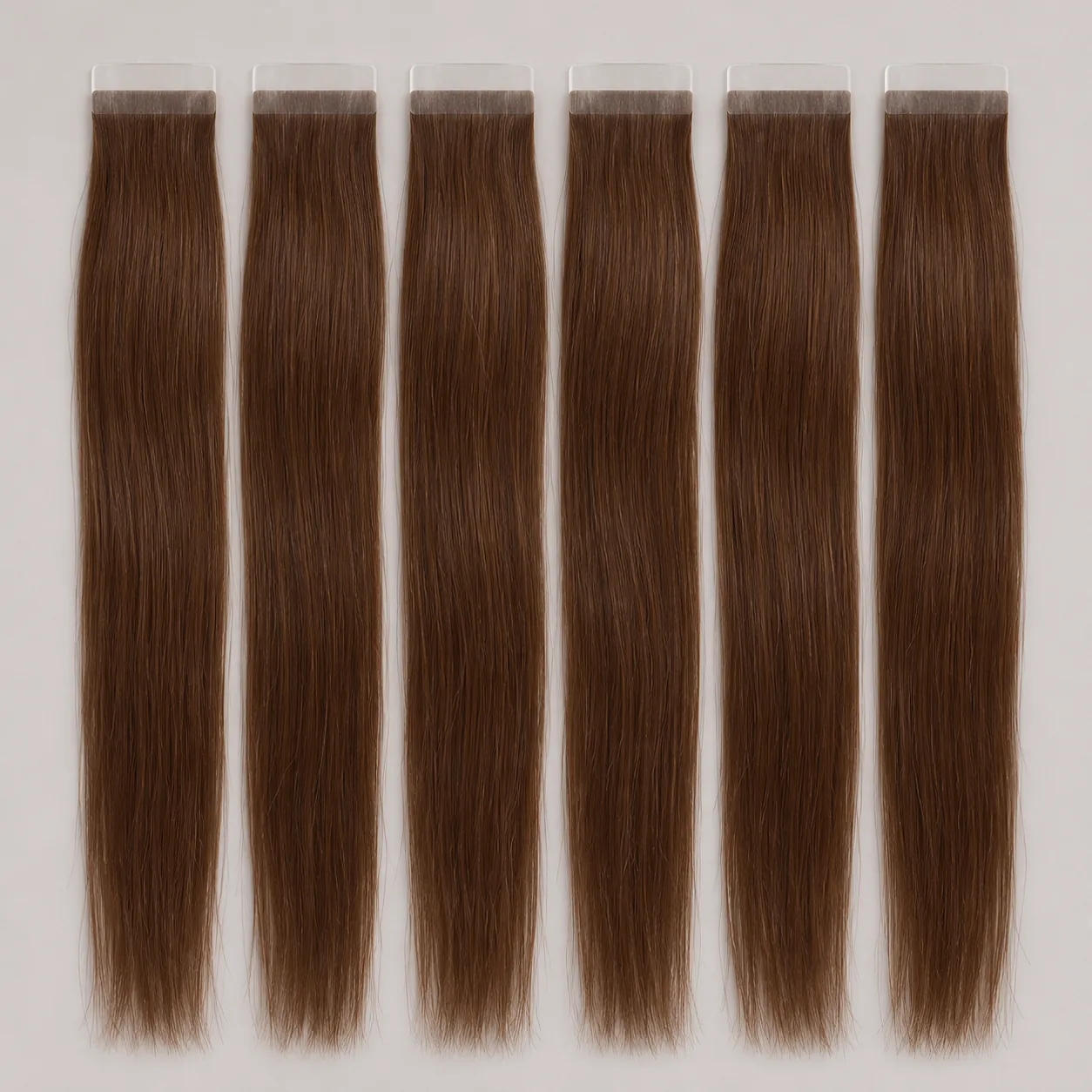
  • Tape-in

    A row of brown tape-in hair extension panels with the tape strips at the top
    • Length
    • Weight as written on your row
    • Colour
    • Hair type
    • Tape type
    • Application method
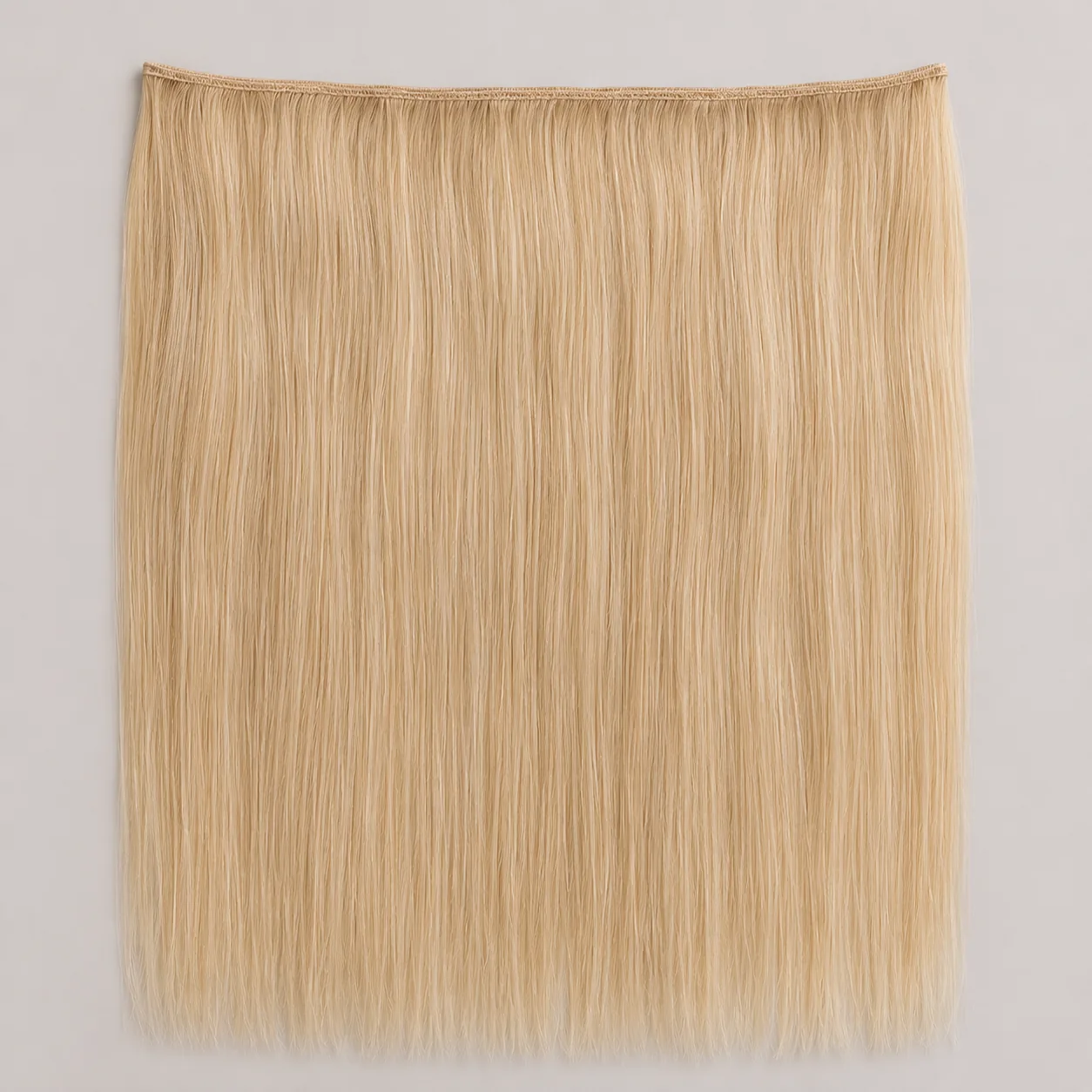
  • Genius weft

    A full-width blonde genius weft with its thin flat seam along the top
    • Length
    • Weft width and weight as written on your row
    • Colour
    • Hair type

    A thin seam stylists can cut.

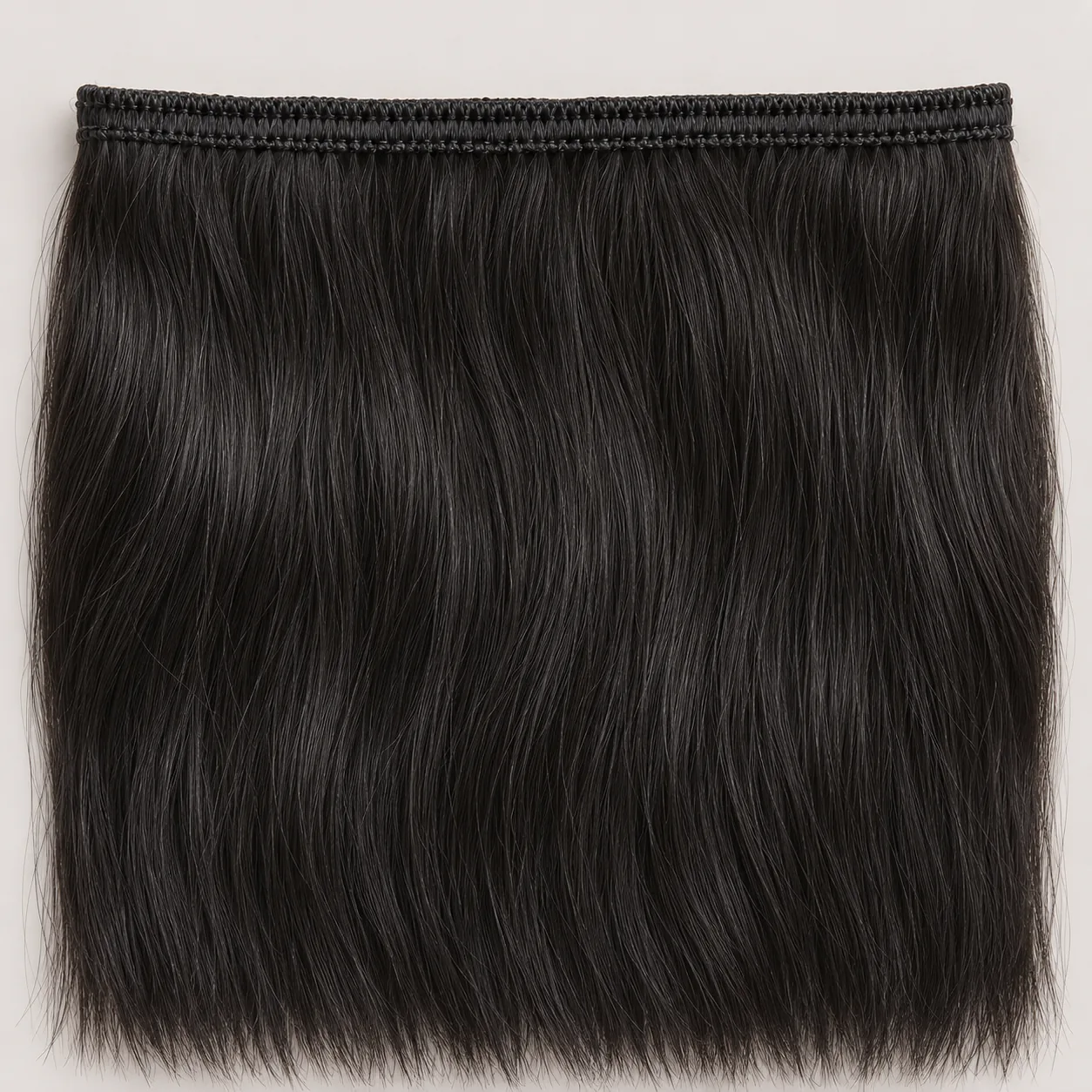
  • Machine weft

    A black machine weft with its wider sewn seam along the top
    • Length
    • Weft width and weight as written on your row
    • Colour
    • Hair type

    A wider sewn seam.

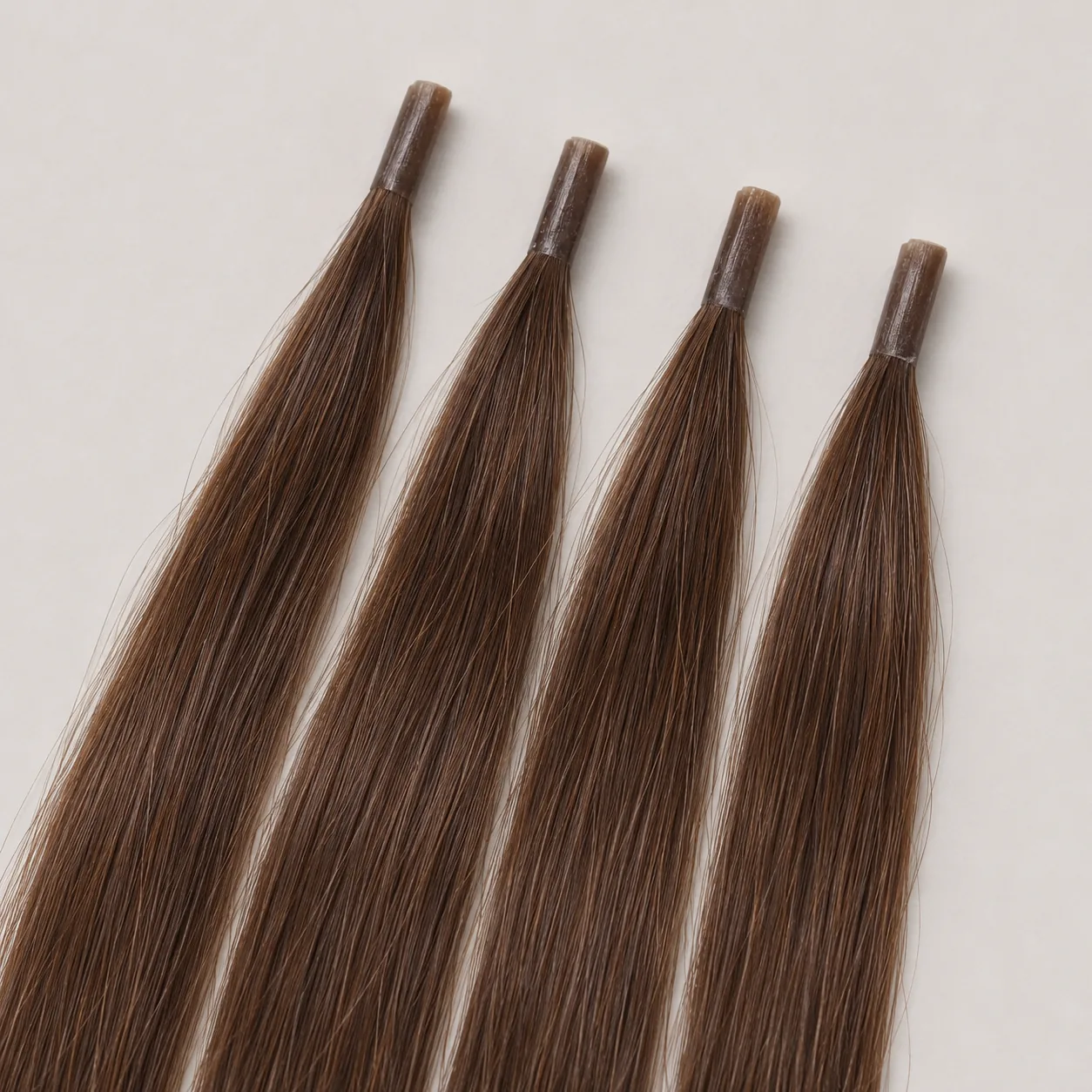
  • I-tip

    Four brown I-tip single strands laid diagonally with the sealed tips at the top
    • Length
    • Single-strand weight and strands per pack as written on your row
    • Colour
    • Hair type

    Ring type noted on the row.

  • Nano tip

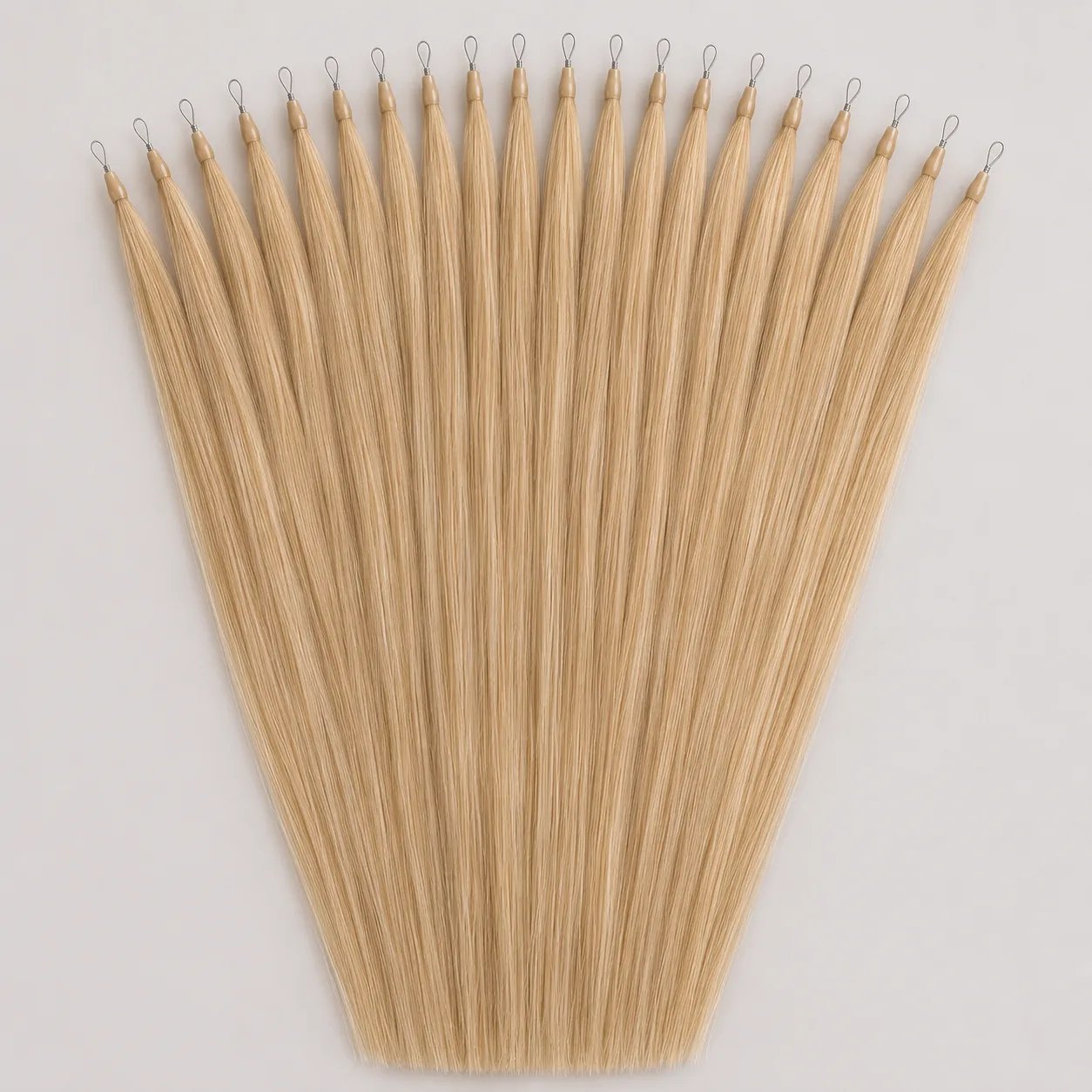
    A fan of blonde nano tip single strands with small looped tips

    The I-tip fields, with the smaller tip and ring for fine hair.

  • Human hair bundles

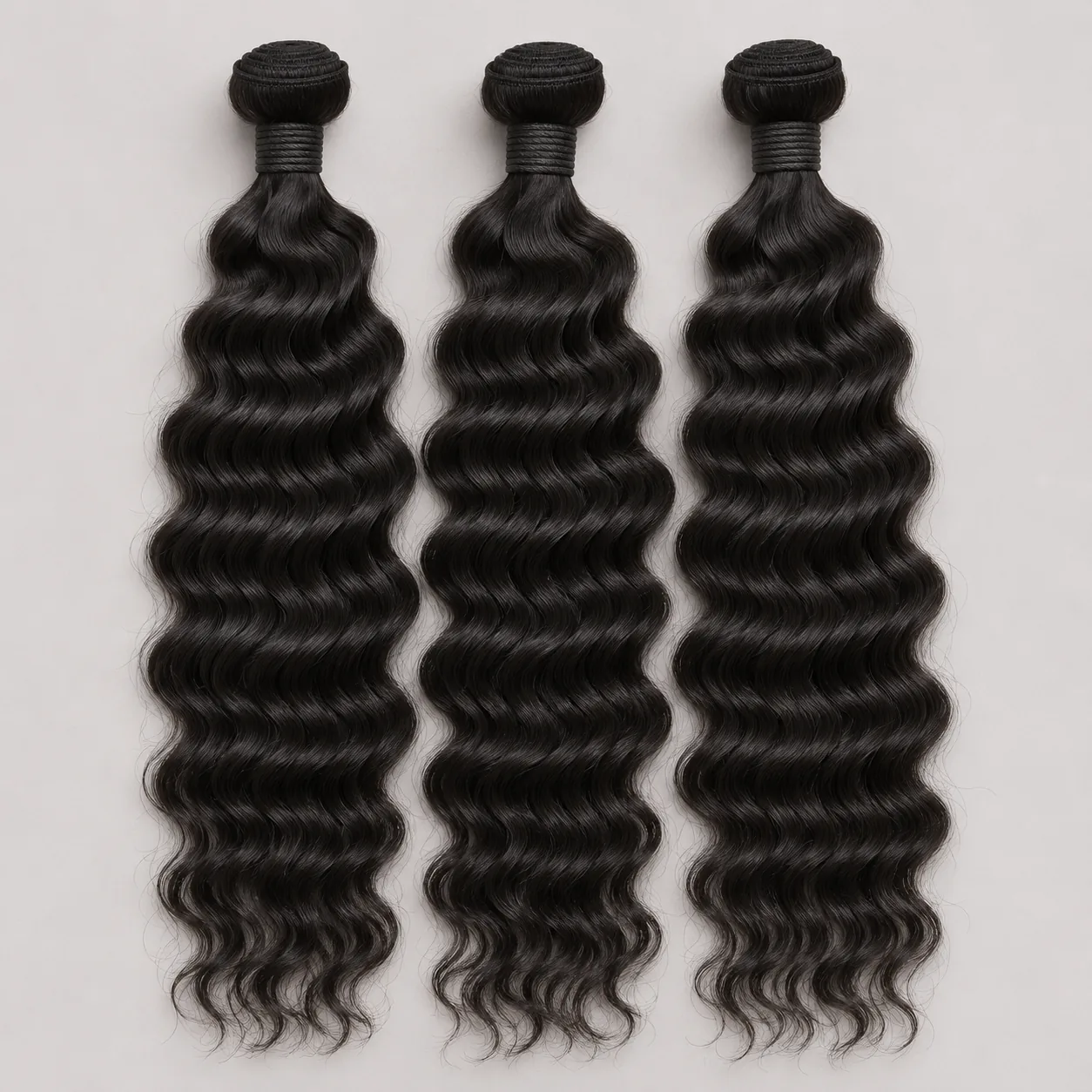
    Three black deep wave human hair bundles laid side by side
    • Length and how it is measured
    • Pack weight
    • Texture in straight, body wave or deep wave
    • Colour
    • Hair type
  • Bulk human hair

    Long dark human hair gathered at the back, falling loose below
    • Length from the tied end
    • Length profile
    • Weight
    • Texture to your reference
    • Colour
    • Hair type
A bright salon with styling chairs, mirrors and a wash station

Private Label Scope — Our Part, Your Part, What We Leave Out

Our partYour partWhat we leave out
Write your products up as a spec sheet for you to checkDecide which products go under your brandDesigning your brand, packaging or labels
Sample every row, each sample labelled with its rowWrite each product as a row, in your own formatSupplying rings, beads or named tape brands
Give each approved row a spec code and a retained sampleApprove or mark each sample on physical hairShade numbers or a colour ring
Record packaging direction and label files against each codeSend your packaging direction and label filesGrade numbers, or ranking one hair type above another
Check every row against its retained sample before shippingKeep your approved samples with their code tagsUsing your rows, packaging or labels for other buyers
Hold back a row that misses its spec and send you photosFit the hair and advise your customersChanging a confirmed row without a new row you confirm

Brand and label design sit with your brand: the files and packaging direction come from you, and we record them against your codes.

Production runs in partner workshops, while the spec codes, retained samples and pre-shipment check stay on our side.

Two blank sheets clipped to a wall, ready for a brand's label artwork

Private Label, White Label and Custom Hair Extensions — One Route

Buyers search for this service under three names. On our side all three follow the same route.

  • An open white box lined with tissue, the kind of plain packaging a brand puts its name on

    Private label hair extensions

    Hair sold under your brand name, made to the rows you write and approved by you on physical samples, each product on its own spec code.

  • A blank card on a light table beside a small vase, a spec row still to be written

    White label hair extensions

    The term usually means hair a brand can put its name on with little setup. With us, white label orders follow the private label steps: you write the rows, approve the samples and receive a code per product. We hold no ready stock for relabelling, so every product under your name starts from a row and a sample made for you.

  • Shoulder-length brown hair seen from behind in a salon

    Custom hair extensions

    The spec comes from you: the length, the weight, a colour matched to your client's hair or your reference bundle, the texture to your reference, the weft width or tip you work with. Each is a field on the row, and a later change follows the range rules further down this page.

Your rowApproved sampleSpec codeRetained sample

All three share one route because a product under your label needs a fixed reference, and that reference is the sample you approved.

Whatever you call the service, you end up with an approved sample, a spec code and a retained sample, with every batch checked to them.

A salon retail counter with shelves of hair care products

One Approved Sample, Every Batch After It

The sample your brand approves is the hair every later batch is checked against.

Long straight brown hair, the approved sample a batch is checked against
Approved · [Your code]Retained · [Your code]
  • Plain boxes stacked for a batch shipment
  • A cardboard carton packed and ready on a table
  • Two patterned boxes on a white plinth

From First Product to Product Line — 5 Stages

A private label line is built product by product. Each stage has an input from you, something you receive and a point where you confirm.

  1. A hand writing a product list in a notebook beside a keyboard

    Plan the range as rows

    Send the products you want under your brand in a spreadsheet, as photos or as plain text. Your contact writes them up as a spec sheet, which you then confirm; a row with a field missing is marked and waits until you complete it.

  2. Close view of braided hair with a clip, a sample being worked at the root

    Sample each row

    Each row is sampled and labelled with its row. Note on the request if your team needs extra samples of the same row. The sampling steps are on the Hair Extension Samples page.

  3. A stylist lifting a client's long dark hair to check it

    Approve and receive the code

    Your team approves or marks each row. Approved rows get a spec code on an updated spec sheet, and packaging and labels are agreed against those codes ahead of the first quote.

  4. Plain cardboard cartons stacked for a first shipment

    First batch under your label

    The first bulk shipment of each product brings its packing list by spec row and the code tag for your approved sample.

  5. White retail shelves lined with rows of hair care bottles in many colours

    Reorder and grow by code

    Reorders quote the codes you hold, and new shades, lengths and structures join as new rows beside them. The reorder sheet is covered on the Wholesale Hair Extensions page.

Sample Approval Locks the Spec — What Is Fixed, Recorded and Tagged

Approval turns a sample into the standard for a product under your brand. This is what happens at that step and what it leaves behind.

Hands tying back a client's brown hair to check its length and texture
Brown shoulder-length hair seen from behind, the same colour kept as a retained sample
Approved · [Code]Retained · [Code]

What your team checks

The sample arrives labelled with its row. Your stylists or product team check it against that row: the structure, the length measured the way the row states, the weight, the texture, and the colour against your reference.

A colour matched from a client's hair or a reference bundle is laid beside that reference. If several people at your brand sign off, ask for extra samples of the row so each of them checks the same hair.

When a sample is not right yet

Before approval there is no physical standard for the row, so every correction is sampled again. You point out the row and the field that is off, your contact writes a revised row, and a new sample is made.

Length and weight corrections are sampled again too, because the first approval has to rest on hair that matches the row in full.

What approval fixes

Approving a row sets the confirmed spec for that product: line, hair type, length, weight, texture, colour, and weft or tip type where it applies. Your contact sends an updated spec sheet with the spec code beside the row, and from then on every quote, reorder sheet and packing list for that product carries it.

What is tagged

The sample you approved stays with your brand. Its code tag comes in the first bulk shipment of that product for you to hang on it, and our retained sample for that code wears an identical tag. Your brand and our side each hold one of two matching samples under one code.

What the lock covers later

Each batch of that product is checked against the retained sample before it ships. A change to the hair becomes a new row with a new code, leaving the approved product untouched. A change to packaging or labels is a written note against the code, leaving the hair row untouched.

New row · hair changeCode · on approvalNote · [Code] · packaging change · code unchanged

What it gives your brand

The product your customers first bought is the product you keep reordering.

Every Batch Under Your Label Checked to Its Code

Each batch under your label is checked row by row against the retained sample for its code, the sample matched to the one your brand approved.

Red retail shelving holding rows of plain bottles and boxes

What is checked

Weight, length, colour and texture on every row, plus the seam, tip or tape edge on structured lines; the home page lists the checkpoints in full. For your brand the reference is what matters: each product is held to the hair your team signed off.

What is written down

Each row's result goes on the packing list by spec row, and each pack carries its code label on your packaging to match. Your warehouse or distributor can trace any pack on the shelf to its code without opening it.

Spec · [Code]Packing list · by spec row

When a row misses its spec

It stays out of the shipment. Your contact names the row, sends photos and has it made again to the confirmed spec before it goes out, so hair below the standard never travels under your label.

Held back · photos sent · remade to the confirmed spec

After it arrives

Lay a pack beside your tagged approved sample. If a row looks off, send photos with the code; we compare it with the retained sample, return both photos side by side and settle that row with you.

Hands holding an opened box from a delivered batch
Close view of loose hair strands laid out for comparison
A pen resting on a printed form on a desk
[Your brand]

Send Your First Private Label Products

List the products you plan to sell, and your contact sends them back as a spec sheet; sampling begins once you have confirmed it.

Example layout · your contact keeps the real account spec sheet
Account spec sheet[Your brand]
  1. Tape-in[Hair type] · [Length] · [Weight] · [Colour][Code A]Code unchangedRetained · ready
  2. Human hair bundles[Hair type] · [Length] · [Weight] · Body wave · [Colour][Code B]Code unchangedRetained · ready
  3. Genius weft[Hair type] · [Length] · [Weight] · [Weft width] · [Colour][Code C]Code unchangedRetained · ready
  4. New row · new colour · sampled againCode · on approval
Note · [Code B] · packaging change · code unchanged

A stylist working on a client's hair beside a mirror, comparing a new shade
Close view of fine copper hair strands against the light

Growing Your Range — New Shades, Lengths and Structures

A private label range grows by adding rows beside the codes you already hold. Existing products keep their codes, so new items never disturb what is already selling.

A new shade or texture

A different colour or texture means a new row and a fresh sample, approved the way your first product was. It takes its own code next to the original on your account spec sheet.

A longer or heavier version

A new length or weight on a product you already sell is a new row your team can approve in writing, since colour, texture and structure are already set by the approved sample.

The same shade on another line

A brand often takes a colour that sells in bundles into tape-in or genius weft. The structure changes, so it is a new row: the sample takes its colour from the original code's retained sample, is made on the new structure and approved on that structure before it gets a code.

Changes within a structure

On tape-in, a new tape type or application method is sampled again. A new weft width is approved in writing, while moving between genius weft and machine weft counts as a change of line and is sampled again.

On I-tip and nano tip, a new single-strand weight or strands per pack is approved in writing, and switching between the two tips is sampled again. A ring type or fitting method noted on the row does not create a new row.

New rows on a reorder

New rows can share a reorder sheet with existing codes. You decide whether the existing codes ship first or wait for the new rows and travel together.

Keeping references ready

The repeat plan shared with your quote lets us keep the retained samples for your codes ready and arrange production with our partner workshops.

  • Packaging and Labels for Your Brand

    Packaging and labels are discussed per order with your contact, and recorded the way the hair is: against your codes, in writing.

  • A blank card, kraft paper and a wooden comb laid out as a brand's packaging direction

    What you send

    Your packaging direction and your label files, ready to use, since brand and label design stay with your brand. Your contact records them against the spec code of each product.

    [Your label file]
  • A printed form and blank cards laid together on a pale desk

    When it is agreed

    Packaging and labels are settled before the quote for your first batch and confirmed in writing with it, so the quote and your spec sheet carry the same record.

  • Six plain gift boxes in different colours laid out on white

    On reorders

    A reorder that mentions no change uses the packaging and labels from the previous order, with no files to resend.

  • White product boxes and tubes against a yellow background

    When your packaging or label changes

    A redesign, a new label file or a new packaging direction is entered as a written note against the code. The hair has not changed, so the spec row and the code stay as they are, and your stores and distributors keep reordering on the same code after the new packaging arrives.

    Note · [Code] · new packaging · code unchanged
  • A blank paper tag on a cord resting against a glass vessel

    The spec code label

    Every pack keeps its code label within your brand's packaging, linking a pack on any shelf to its row on your spec sheet.

    [Your brand]Spec · [Code]

Private Label on Spec Codes vs a Catalogue Listing

Hair being sectioned at the parting by a stylist, seen from behind
A phone showing a product listing on a stand beside a laptop
Point of comparisonPrivate label on spec codesTypical catalogue listing
Product specSet by the sample your brand approvesSet by the listing description
Reference for reordersRetained sample under your codeProduct name or photo
On every packCode label matching your spec sheetSpec · [Code]Listing name or stock number
Packaging changeWritten note, code unchangedNote · [Code]Not tied to a hair record
Adding a shadeNew row, sampled and approvedNew rowCode · on approvalShades already listed

Private Label Start Checklist — For Your Spec Sheet and First Quote

A private label enquiry needs enough to write your first spec sheet and, later, your first quote.

A hand writing a list in an open notebook
Close view of a braided lock of blonde hair, a colour reference

For the spec sheet

How you sell
New brand, established brand, salon or studio line, or distributor house brand.
The products you plan to launch
Each as a row with product line, hair type, length, weight, texture and colour, plus weft, tip or tape details where needed, as a spreadsheet, photos or a written list.
Colour references
Hair from a client, a reference bundle, or a code already approved on your account. Your contact replies with where to post physical references.

For the quote

  • Packaging direction and label files for each product.
  • Estimated quantity, destination and repeat plan.

One contact handles your account from the first spec sheet to your reorders, in English, through the web form or WhatsApp.

Ways to Start — One Product or a First Range

  • A single plain kraft box with cups and a napkin, packaging for one first product

    Start with one product

    A new brand or salon line often begins with its best-selling item in a few lengths and colours. Once that product is approved, coded and shipped under your label, the next products join as new rows.

    Next product · new rowCode · on approval
  • A shop wall of long hair pieces in blonde, brown and red shades

    Start with a first range

    An established brand or distributor often samples the whole launch range across several lines at once; the Hair Extension Samples page shows how to put a range on one request.

  • A wall of old wooden storage drawers, stock waiting for a new label

    Start from products you already sell

    A distributor moving stock items to a house brand can send its current product list. Each item becomes a row, is sampled and approved, and takes its own code under the new label.

A busy salon interior with styling stations and a front counter
[Your brand]

Request Private Label Samples

Send the products you want under your brand through the private label enquiry form or on WhatsApp. Your contact replies with a spec sheet built from your list, and sampling starts after you approve that sheet.

Send the first products you plan to sell through the private label enquiry form below, and your contact writes them up as a spec sheet for you to check before any sampling begins.

You can also start with Request Samples, Get Wholesale Quote or Build a Mixed Order.

Private label enquiry · your contact replies with a spec sheet
Please enter your name.
Please enter your company or brand name.
Please enter an email address the reply can go to.
Please choose how you sell.
The reply goes to the email address you give, starting with your spec sheet.