Remy vs Virgin vs Raw Hair Extensions: Three Processing Methods on One Spec Row
Remy, Virgin and Raw hair, each named for one part of its processing and set side by side with no grade between them.
- Remy · cuticle direction
- Virgin · no colour, perm or bleach
- Raw · sorted, minimal processing


Remy, Virgin and Raw Hair Side by Side — Three Processing Methods
Each of the three names describes one thing about how the hair has been handled: Remy describes the direction of the cuticle, Virgin describes the absence of colour, perm and bleach, and Raw describes how little the hair has been processed after it was collected and sorted.
Remy
Cuticles kept on the hair and aligned in one direction.
Virgin
Never chemically processed, so never coloured, permed or bleached.
Raw
Hair collected and sorted, then left with minimal processing.


Collection and Processing — Remy, Virgin and Raw Hair
Three steps, the same for all three names: collected, sorted, and what is done after.
-
Remy
- Collected
When Remy hair is collected, the root ends are kept together. That is how the cuticles stay running in one direction through sorting and onward into the finished product.
- Sorted
- After
- Collected
-
Virgin
- Collected
- Sorted
- After
After collection, Virgin hair is not coloured, permed or bleached.
-
Raw
- Collected
- Sorted
After collection, Raw hair is sorted by length, and beyond that it is processed as little as possible.
- After


Hair Type Field on the Spec Row — One Type per Row
A spec row describes one product: the line, the hair type, the length, the weight, the texture and the colour, plus weft width, tip details or tape details for structured lines. Those fields stay the same through inquiry, sample, quote and reorder, so a row never changes its wording between steps.

- LineBundles
- Hair typeRemy
- Length[As on row]
- Weight[As on row]
- Texture[As on row]
- Colour[As on row]
- LineBundles
- Hair typeVirgin
- Length[As on row]
- Weight[As on row]
- Texture[As on row]
- Colour[As on row]
One hair type per row
Each row takes one hair type. Remy and Virgin versions of one length, weight and colour make two rows. Each is sampled on its own, confirmed on its own and given its own spec code, so the two can be quoted, reordered and checked separately.
A genius weft row in Remy and a bundle row in Raw can sit on the same spec sheet, and so can rows in all three hair types across all seven lines. A mixed order lists them all, one row at a time.
Build a Mixed OrderFilled in, then sent back to you
Your contact turns each item you send into a spec row, fills in the hair type field, then sends the spec sheet back for you to check before anything is sampled. Where a row arrives without a hair type, it is marked and returned for you to complete, and that row waits until the field is filled.

Hair Type and Colour — Virgin and Raw Rows Matched to Reference
On a Virgin row and on a Raw row, the colour field is the natural colour of the hair, matched to the reference you send. That reference can be a swatch cut from a client's hair, a bundle or pack from your shelf, or a sample already confirmed under one of your codes.
- A client swatch
- A pack from your shelf
- A confirmed sample under your code


We make the sample to that reference, your stylist checks the colour against it in hand, and the confirmed sample becomes the colour standard for the row.
Highlights, blends and two tones
Where a client has highlights, a blend or two tones, each colour is its own row and its own sample, and the stylist mixes them at fitting. Each of those rows carries its own hair type, and the colour check above applies to each one.

A colour that needs dye or bleach on a Virgin or Raw row
This follows from what the two names mean. Virgin describes hair that has had no colour, perm or bleach, and Raw describes hair that has been sorted with minimal processing. A colour that can only be reached by dyeing or lifting the hair belongs to hair that has been chemically processed. Written on a Virgin or Raw row, that colour and that hair type describe two different hairs.
The row has a field conflict, and it goes back to you before sampling, as set out in the section on conflicting fields below.
When a Virgin or Raw row conflicts on colour, you choose which field changes:
Keep the hair type and change the colour
The row stays Virgin or Raw, and the colour field becomes a natural colour matched to a reference you send.
- Hair typeKept
- ColourNatural · to your reference
Keep the colour and change the hair type
The row is rewritten with a different hair type, and the colour stays as you wrote it.
- Hair typeRewritten
- ColourKept
Your contact rewrites the row the way you choose and sends the updated line back with the spec sheet. The colour is then sampled like any other row.
Request SamplesA confirmed colour on another line
A colour already confirmed on one line and wanted on another is re-sampled on the new structure against the retained sample of the original code, and the hair type on the new row is read the same way.

Each row on your spec sheet takes one of them, and none is placed above the others.
The three sit next to one another.


Hair Type and Texture — Wave Rows on Virgin and Raw Hair
Texture is set by a reference, the way colour is. On bundle rows you can name straight, body wave or deep wave. On every other line, texture is written to your reference: a pack, a weft or a swatch that shows the texture you want. The confirmed sample becomes the texture standard for the row.
- Bundle rows
- StraightBody waveDeep wave
- Every other line
- To your reference
Raw and Virgin rows can carry a wave, written to the reference you send and confirmed on the sample. A texture that can only be reached by perming the hair conflicts with the Virgin name, which describes hair that has never been permed, and with the Raw name, which describes hair with minimal processing.
A row written that way is handled like a colour conflict: the texture field and the hair type are marked, the row comes back to you, and you choose whether the hair type or the texture changes. The section on conflicting fields below sets out the steps.
The conflict stepsConflicting Fields on a Row — Marked and Returned Before Sampling
Every row on a sample request is read field by field before it goes to our partner workshops. A row has a conflict when two of its fields describe different hair: a Virgin or Raw row with a colour that needs dyeing or bleaching, or a Virgin or Raw row with a texture that needs perming. Your contact reads the hair type against the colour and the texture on each row, along with the rest of the fields.
- LineBundles
- Hair type
- Length[As on row]
- Weight[As on row]
- TextureStraight
- ColourA pale blonde · needs bleach
- Field missing · row returned to you · waits until complete
Rows missing a field follow the same path: the empty field is marked, the row comes back to you, and that row waits until it is complete.
- Marked · returned to you · not sampledKeep hair typeKeep colour
- No conflict on this row · goes ahead to sampling
The conflict is marked
Your contact marks the fields that conflict on that row, for example hair type and colour, and says in plain words what each field describes.
The whole row comes back to you
The row is returned with the marked fields and the two ways to resolve it: keep the hair type and change the other field, or keep the other field and change the hair type.
That row is not sampled
The row waits, unsampled, until you choose.
The other rows go ahead
Rows on the same request that have no conflict carry on to sampling as normal.
The resolved row joins the request
Once you choose, your contact rewrites the row, sends the updated line back on your spec sheet, and the row is sampled like the rest.

Why it matters to your order
A row that reaches the confirmed spec has to describe one hair, because that row becomes the standard for every reorder. If the hair type said one thing and the colour said another, the confirmed spec would carry the contradiction into every quote line, reorder sheet and packing list for that code.
Resolving it on the spec sheet means the sample you approve and the hair type on its code agree from the start.
Buyer Terms as Spec Fields — Grade Numbers, Origin Names, Combined Types
Many buyers already describe their hair with words from earlier suppliers, from their own product names or from what their clients ask for. Your contact takes each of those words and finds the field on the row that carries what you mean by it, so the spec row describes hair you can check on the sample in your hand.
-
Grade numbers
A grade number does not go onto a spec row. Your contact asks what the grade has meant to you on hair you have bought before. If it has meant how full the ends are, the row records end fullness against a reference pack you send, or you judge it on the sample. If it has meant texture or colour, the row records that texture or colour against your reference. Whatever the grade stood for ends up in a field that the sample can show you.
A grade word, rewritten- Was[Grade word]
- End fullnessTo your reference pack
-
Origin names
Origin names do not go onto a spec row either. Your contact asks what the name stands for in your order, and the answer is written into the field it belongs to. A texture you associate with a name becomes a texture matched to your reference. A colour becomes a colour matched to your reference. A feel in the hand is something your stylist confirms on the sample.
An origin name, rewritten- TextureTo your reference
- ColourTo your reference
-
Combined hair types
Some orders describe hair with two of the three names at once, for example "virgin remy". Each row on our spec sheet takes one hair type, so your contact asks which of the two goes onto the row. The one you choose is the hair type for that row, on its sample tag, its quote line and its code. The other word is not recorded as a claim for that row.
- If both descriptions matter to your clients, write two rows, one for each hair type, and sample them side by side.
A combined type, written as two rows- Row oneVirgin
- Row twoRemy
-
Fullness words
Words for how full the ends of a pack are go into the end fullness note, recorded against your reference pack or judged on the confirmed sample.
A fullness word, rewritten- Was[Fullness word]
- End fullnessOn the confirmed sample

Before sampling, your contact sends the rewritten rows back on the spec sheet, with each changed word shown next to the field it became. You check that the rows say what you meant, and the sample request goes ahead on those rows.


Request Samples by Hair Type
Send the rows you want to see, in the hair types you plan to stock. Each row arrives as its own sample, tagged with its line on your spec sheet.

Hair Type Across 7 Product Lines — Spec Fields and Sample Points
The table shows the fields that sit beside hair type on each line and where your stylist sees hair type on that line's sample.
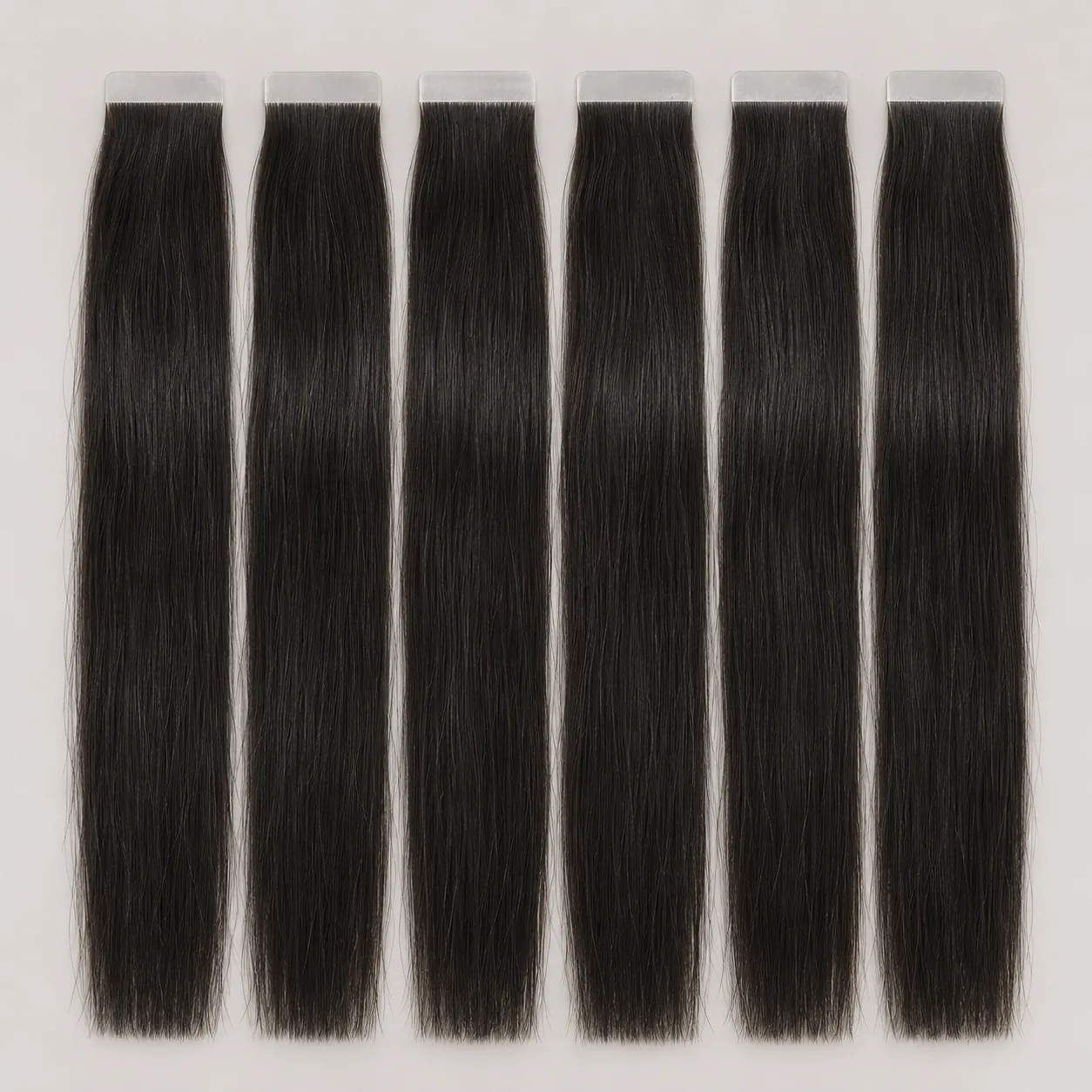
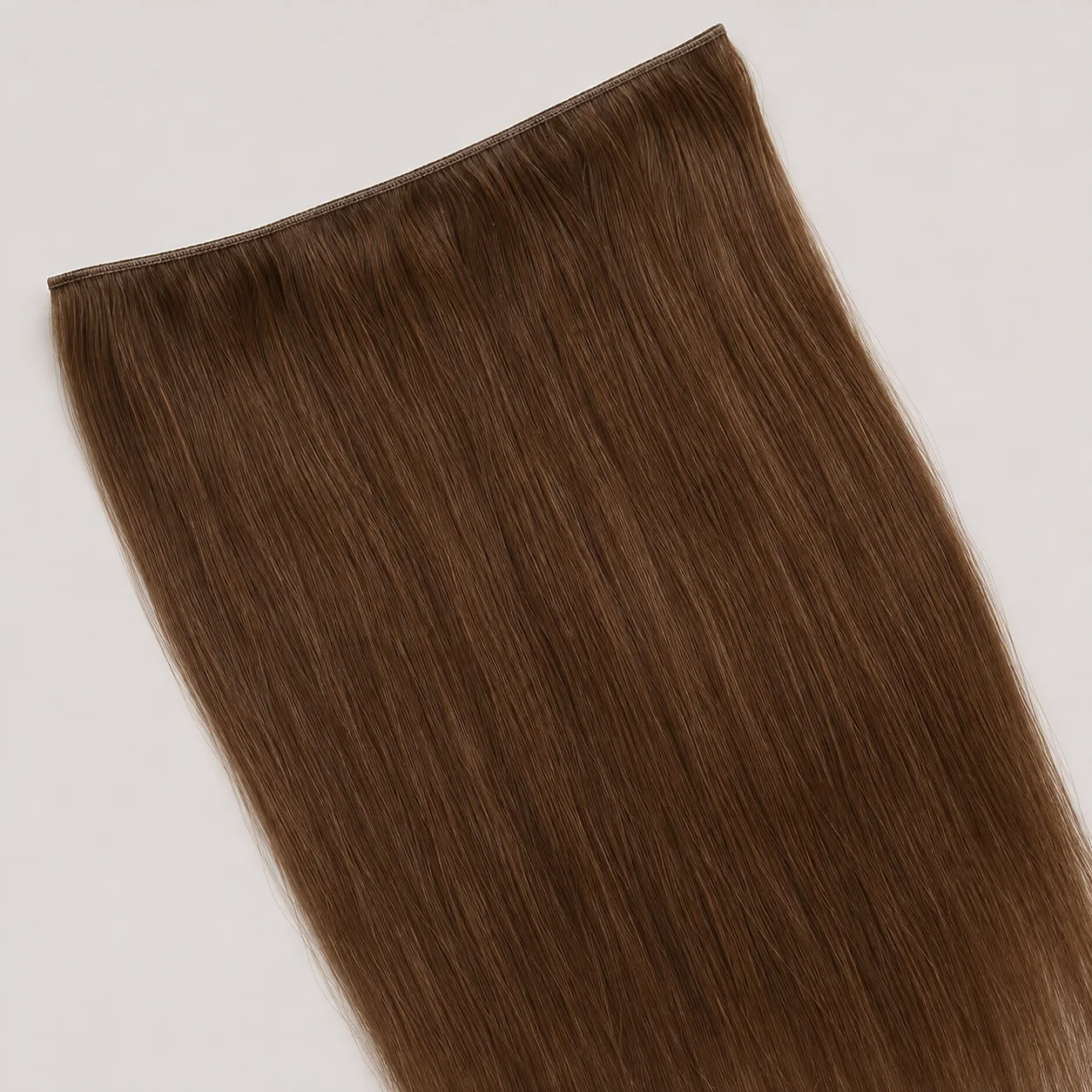
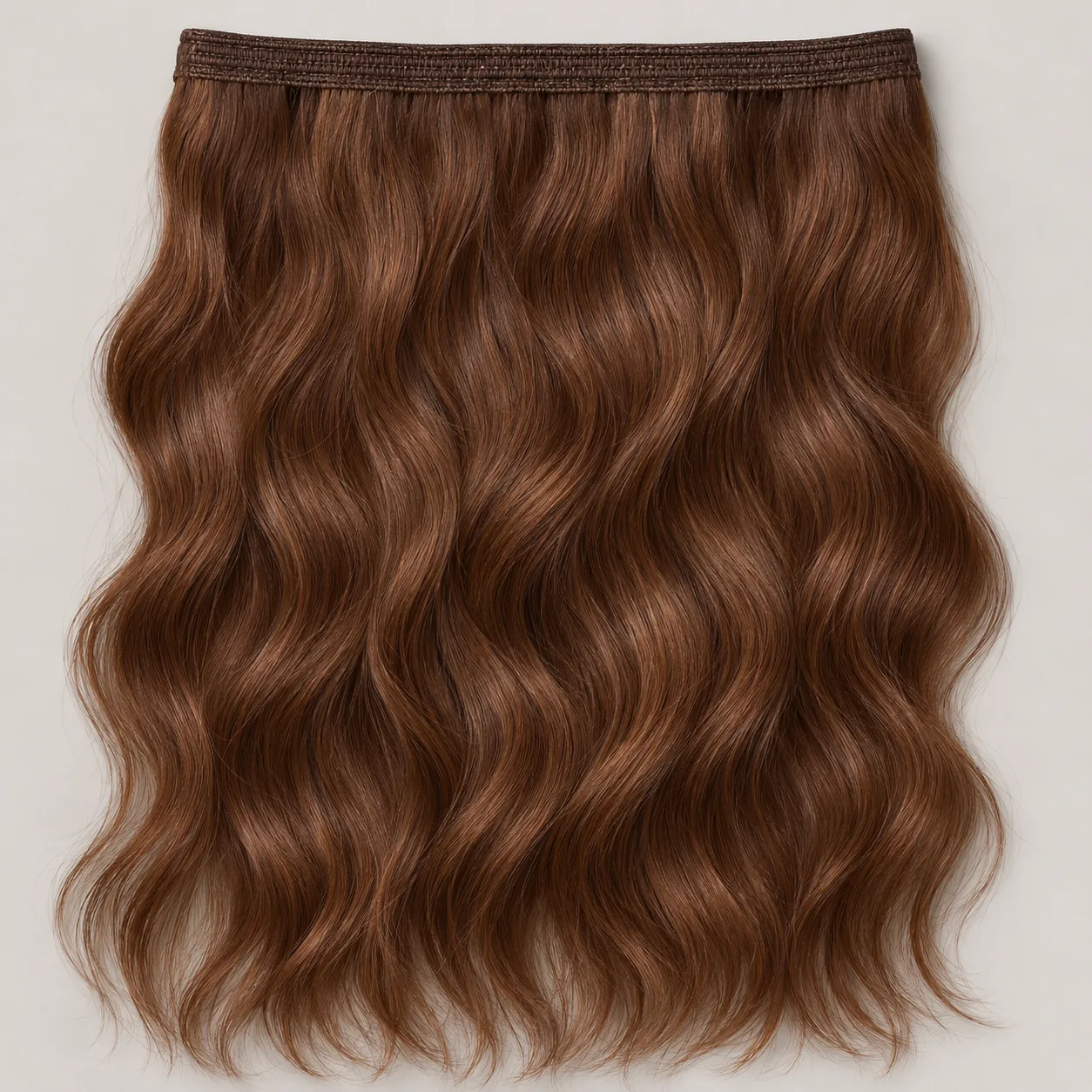
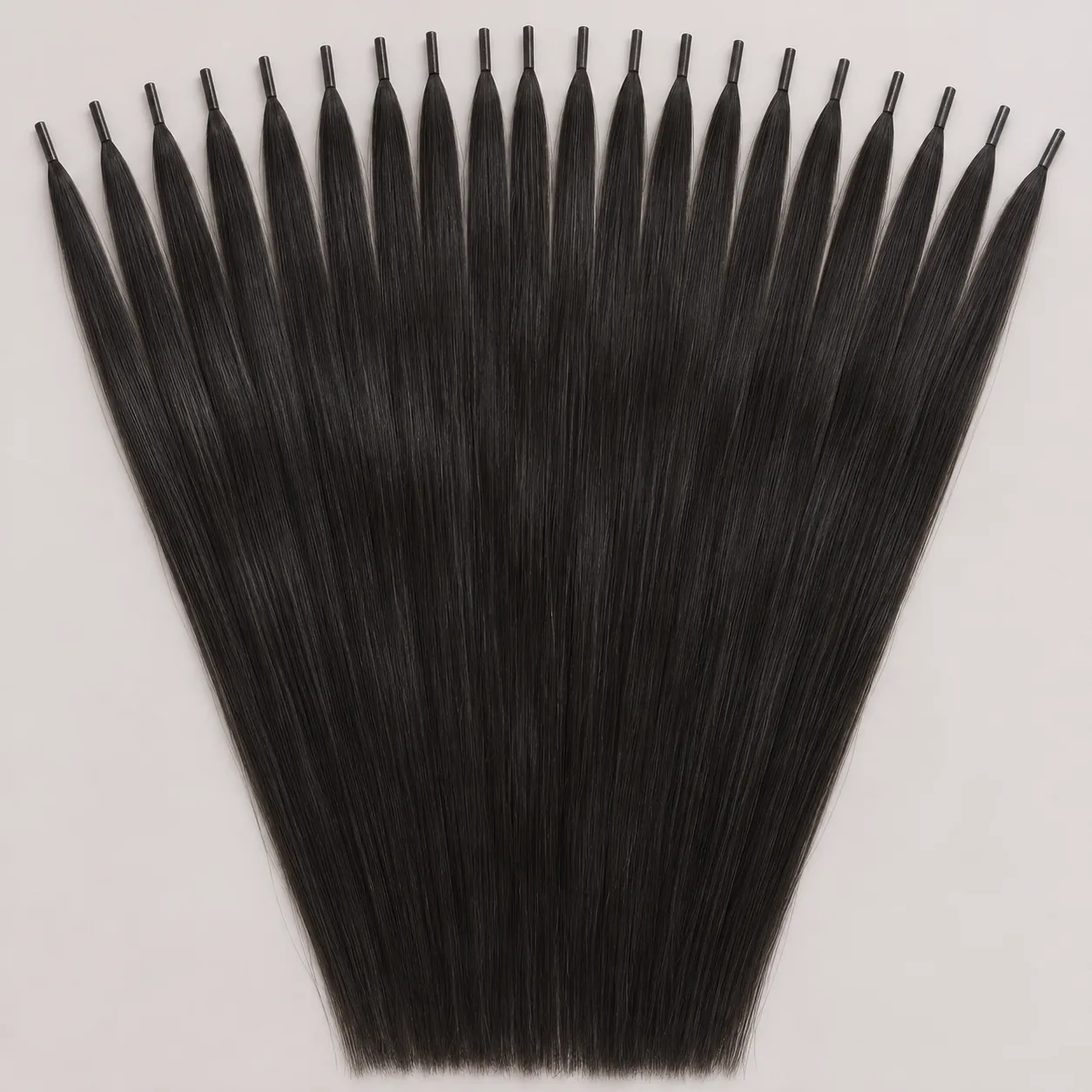
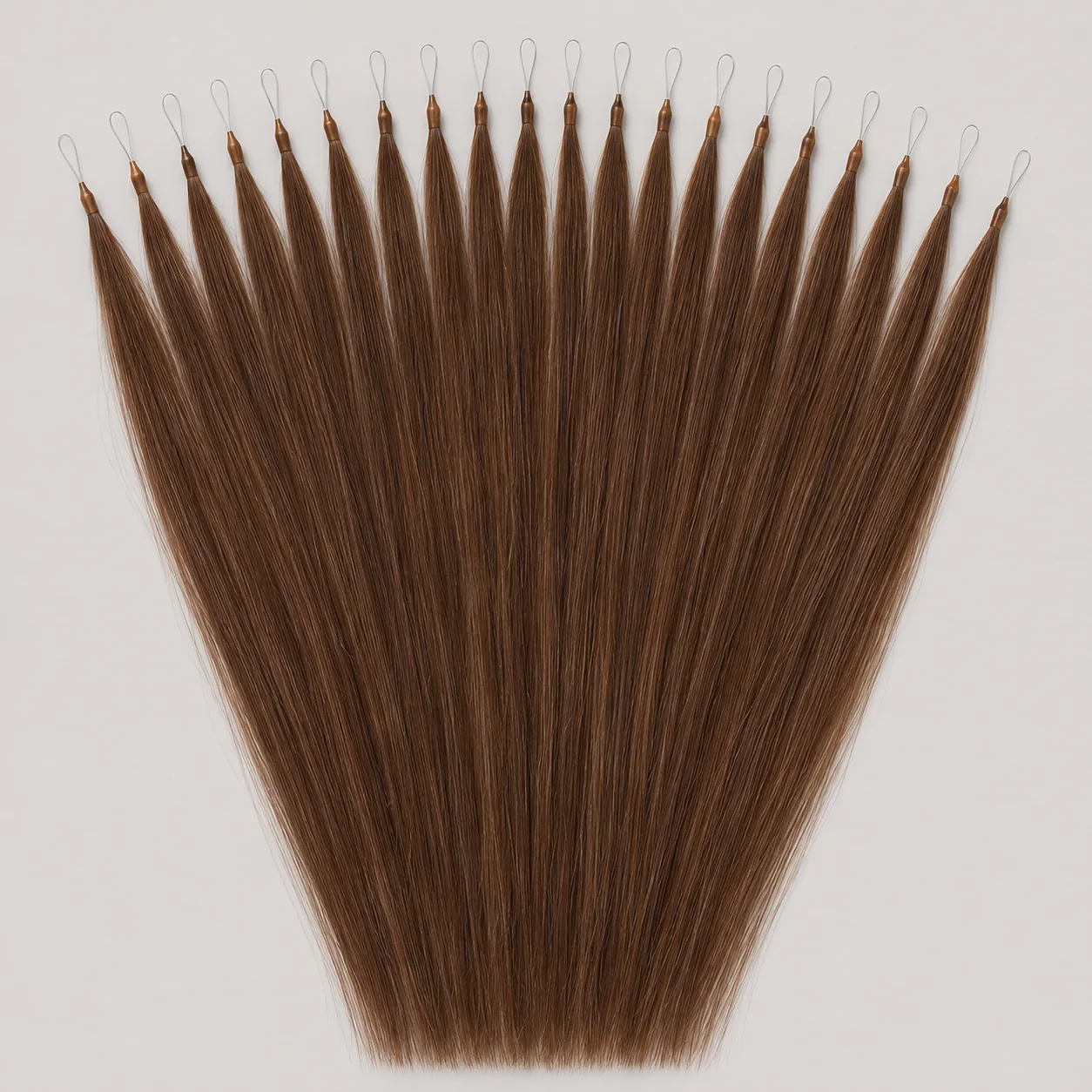
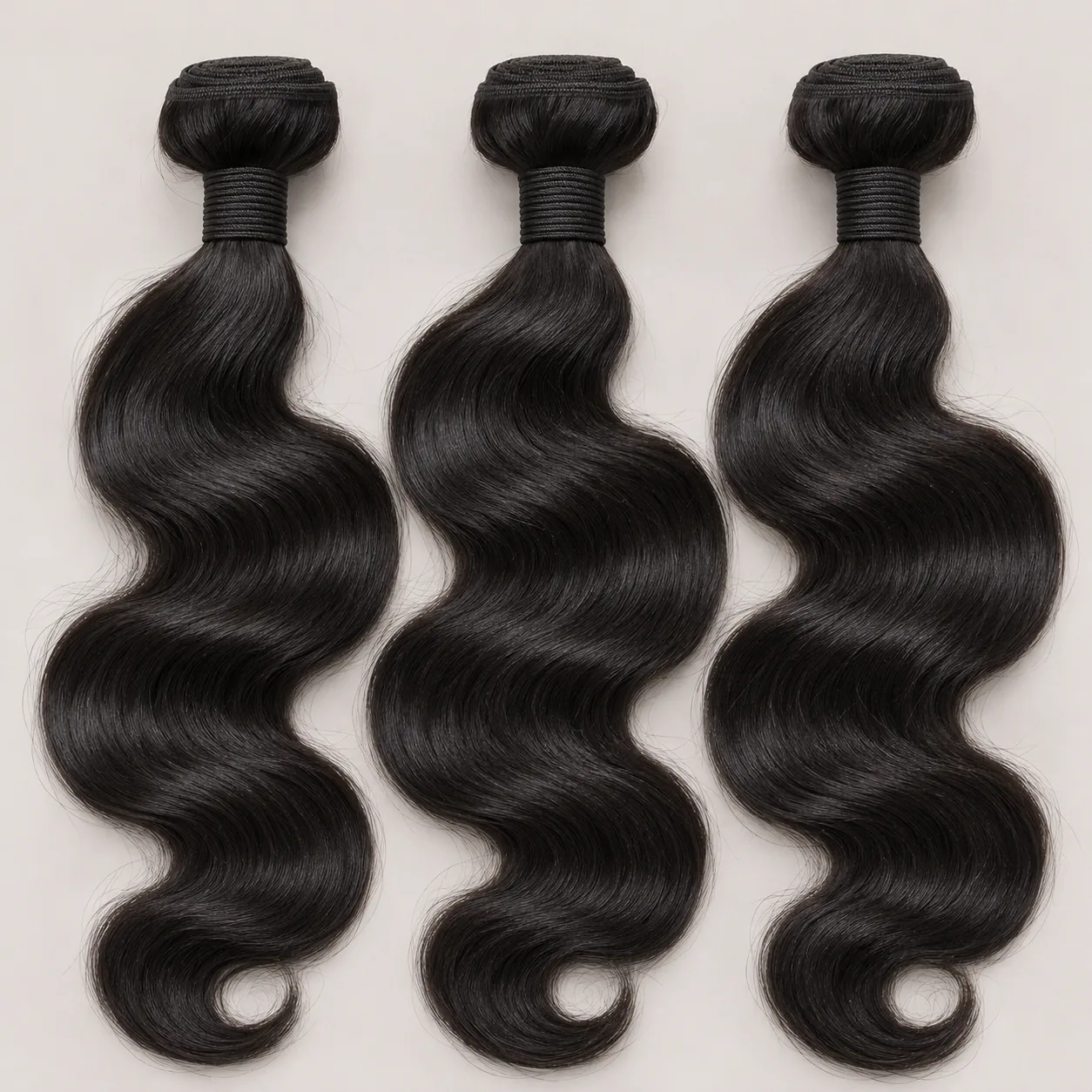

| Product line | Fields beside hair type | Where hair type shows on the sample |
|---|---|---|
| Tape-in | Tape type, fitting method, length, weight, texture, colour | Roots held at the panel, running one way |
| Genius weft | Weft width, length, weight, texture, colour | Remy rows: a finger run from end to root along the weft |
| Machine weft | Weft width, length, weight, texture, colour | Remy rows: a finger run from end to root along the weft |
| I-tip | Strand weight, strands per pack, length, texture, colour, ring note | Roots of each lock gathered at the tip end |
| Nano tip | Strand weight, strands per pack, length, texture, colour, ring note | Roots of each lock gathered at the tip end |
| Human hair bundles | Texture name, length with its measuring method, weight per pack, end fullness by reference, colour | Remy rows: a finger run from end to root down the pack |
| Bulk human hair | Length from the tie, length profile, weight, texture to your reference, colour | Tie at the root end; Remy rows: a finger run from end to root |
K-tip and U-tip rows are requested through the sample request form.
Each line has its own page for structure, sample checks and shipment checks.
Hair Type on the Sample — What Your Stylist Checks per Line
Each sample row arrives with a label naming the line on your spec sheet it belongs to, hair type included. The label is the first thing to check: one tag, one row, one hair type.
Row [#] · hair type · [Yours]A row your stylist approves is recorded as a confirmed spec under its own spec code. If a row needs revising before first confirmation, you mark the row and the field, your contact writes the revision, and the row is sampled again.
Direction where the line shows it
On the hair itself, your stylist checks direction where the line shows it. On a bulk bunch, the tie marks the root end. On tape-in panels, the roots sit at the panel and run one way. On I-tip and nano tip strands, the roots of each lock are gathered at the tip end.
A finger run on Remy rows — on your side
On Remy rows of bulk hair, genius weft, machine weft and bundles, your stylist can run a finger from the ends towards the roots to feel which way the hair lies. This is a check on your side, made with your own hands, alongside the length, weight, texture and colour checks for the line.
Colour and texture against their references
Colour on Virgin and Raw rows is checked against the reference the row was matched to. Texture on every row is checked against its reference, and wavy bundle rows can be washed once and left to dry on your side to see how the wave sits. The samples page and each line's page set out the full set of checks.


Hair Type After Confirmation — Spec Code, Repeat Orders, Changing Type
After you approve a sample, the hair type travels with the row's code.
- Spec · [Code]
The code carries the hair type
After you approve a sample, the updated spec sheet you receive shows the new code against the row. The hair type is part of that confirmed row, and from then on it appears with the code on every quote line, every reorder sheet and every packing list for that product.
The code swing tag travels with the first bulk order of the row and is hung on the approved sample you hold; the sample we retain is tagged with that code too.
Reordering by code
A reorder is the spec code, a quantity and a destination. What comes back is a reorder sheet listing every code with its full row, hair type included, and production with our partner workshops starts only after you confirm that sheet. Your contact stops and asks you whenever a code is not one of yours or your wording differs from the row on file.
Get Wholesale QuoteChanging the hair type
Moving a confirmed row from one hair type to another makes a new spec row, which is sampled again and confirmed on its own. A change of hair type is a change to the hair itself, the same as a change of colour or texture, so it gets a new sample.
- Code[Code A]
- Hair typeRemy
- StatusConfirmed
- Code[Code B]
- Hair typeVirgin
- StatusNew row, new sample
The original code stays on your account spec sheet as it was. Both codes can stay on your account and be reordered side by side.
New rows on a reorder
A reorder sheet can hold existing codes and new rows together, including a new hair type of a product you already stock. Each row follows its own path: existing codes are made to their confirmed spec, and the new row is sampled first. You choose whether the existing codes go out first or wait to ship together with the new row once it is confirmed.
Your account record
The account spec sheet, available from your contact whenever you ask, shows the hair type of every product you hold a code for.
- Code[Code A]
- Hair type[Yours]
- Line[Yours]
- Code[Code B]
- Hair type[Yours]
- Line[Yours]
Pre-Shipment Check on Hair Type Rows — Root Direction, Recorded Type
Checked before shipment
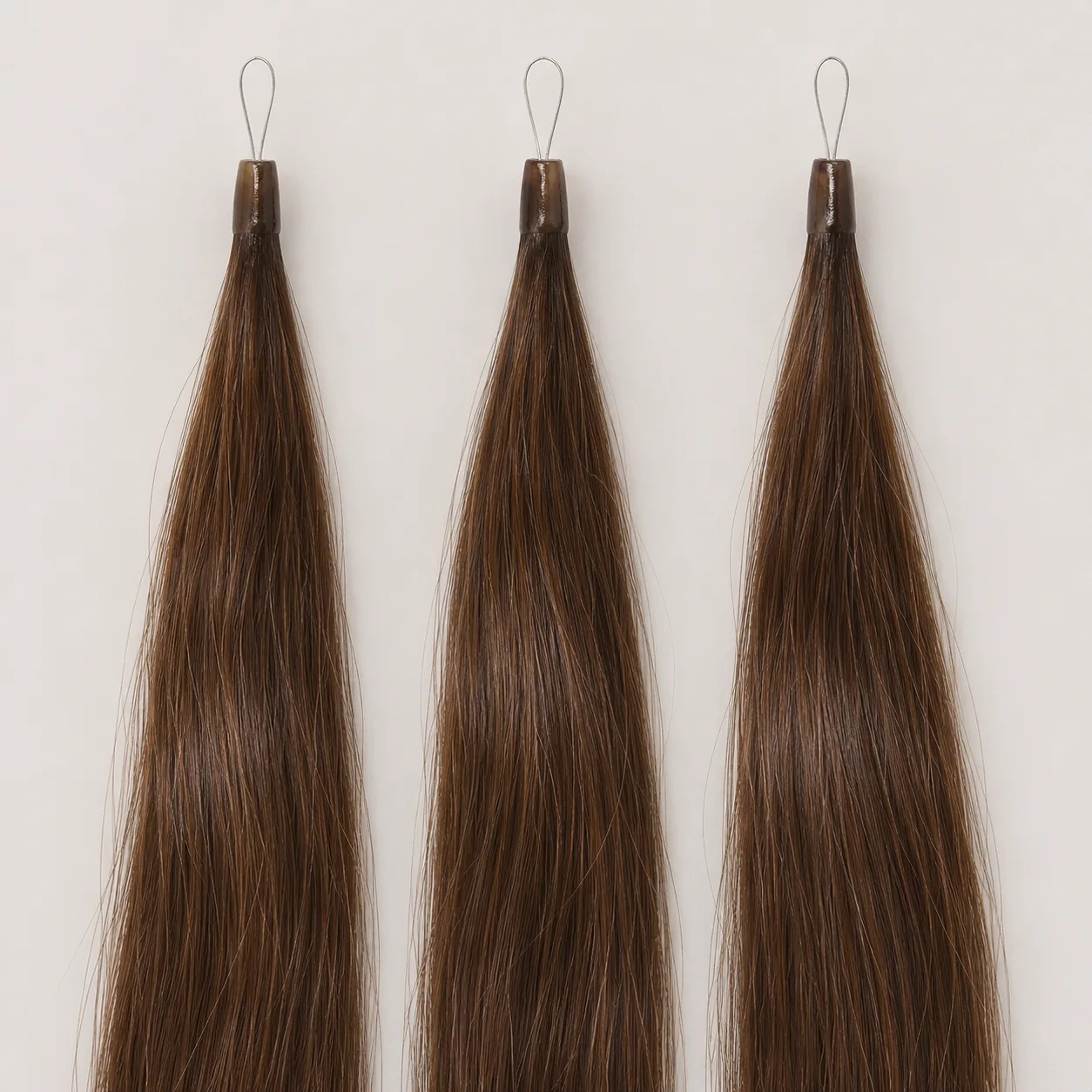
The pre-shipment check on each row, set out on the home page, compares the hair with its confirmed spec and retained sample. On structured rows and bulk rows, the check includes root direction:
- Tape panels with roots running one way
- I-tip and nano tip locks with roots at the tip
- Bulk bunches with the tie at the root end

Recorded, not tested
The hair type on each row is the processing method written on that row when it was confirmed. It is recorded and carried with the row; the check before shipment does not test it.
We do not test the chemical history of the hair or examine the cuticle of each hair.
What carries the hair type from your confirmation to your delivery is the row itself: its code, which appears on
- The code tag
- Every quote line
- Every reorder sheet
- The pack label
- The packing list

Hair Type Rows by Buyer — Distributors, Salons, Wig Makers, Private Label
Remy, Virgin and Raw human hair extensions wholesale for buyers who fit them, stock them, build with them or sell them under their own names.
Distributors and wholesalers
Distributors and wholesalers can hold one product in two or three hair types for different salon customers, each under its own code. A distributor's own SKU can be noted on each row, and the pack label carries the spec code only, so stock can be reordered by code in any hair type.
For distributorsBeauty supply stores
Beauty supply stores can name shelf products by processing method in the same three words the spec sheet uses, so the hair type on the shelf card and the hair type on the reorder sheet match.
For storesHair salons, extension studios and independent stylists
Salons, studios and stylists write rows around the clients in their chairs. A client number can be noted on a row, and a swatch from that client becomes the colour reference. For a Virgin or Raw row, that swatch sets the natural colour the row is matched to.
For salonsWig-making studios
Wig-making studios order bulk hair and bundles by row, with the hair type on each. On bulk rows the tie stays at the root end through sorting and tying, whatever the hair type, so ventilating starts from the right end of the hair.
Bulk human hairPrivate label brands
Private label brands can describe their products by processing method on the label and in their listings. Approving a row fixes its hair type with the rest of the confirmed spec, and each pack is labelled with that code. Your spec sheet, references and notes serve your orders alone; no other buyer sees them.
Private label


Hair Type Sample or Quote — Rows, References and Words to Send
Spreadsheets, photos or a written list all work, by the form or on WhatsApp.

- Company name and buyer type
- Product linesWhich of the seven lines you want
- Spec rowsEach with hair type, length, weight, texture and colour, plus weft, tip or tape details
- Hair type per rowRemy, Virgin or Raw, one per row
- Colour referencesA client swatch, a pack from your shelf or a code you hold with us
- Texture referencesA texture name for bundles, or a reference for other lines
- Words from earlier ordersGrade or fullness words you use, so your contact can ask what they mean
- Estimated quantity per row
- Repeat planWhich rows you plan to reorder
- Destination
Remy vs Virgin vs Raw Hair FAQ
Q ·Can one row be both Virgin and Remy?
Each row takes one hair type. You can write two rows, one in each type, and sample them together.
Q ·Can a Virgin or Raw row be blonde?
A Virgin or Raw row carries the natural colour of the hair, matched to your reference. A colour that needs dye or bleach on one of those rows is a conflict, and you choose whether the colour or the hair type changes.
Q ·Can Raw hair be wavy?
Yes, when the wave is written to a reference you send and confirmed on the sample. A texture that needs perming on a Raw or Virgin row is handled as a conflict.
Q ·What if I want to change the hair type on a product I already reorder?
That makes a new row, sampled and confirmed on its own. Your existing code stays on your account.
Q ·Do you use grade numbers?
No. Remy, Virgin and Raw are named by processing method; grade words you use are written into the matching field.


Send your rows by the form or on WhatsApp, with a hair type on each.