
Processing method
Remy
Remy hair keeps its cuticles, aligned in one direction.

Wholesale tape-in human hair extensions for double-sided sandwich and single-sided fitting. Each tape row states the tape type, the fitting method, hair type, length, weight, texture and colour, and the panels are sampled to that row before any bulk order.
You tell us how the panels will be fitted and which tape they carry, and we write both onto the spec row. The sample comes back as a tape panel tagged with its row, so your stylist can check the tape edge, the tape line and the root direction before you confirm.
Row · [Tape-in]-[Fitting method]-[Tape type]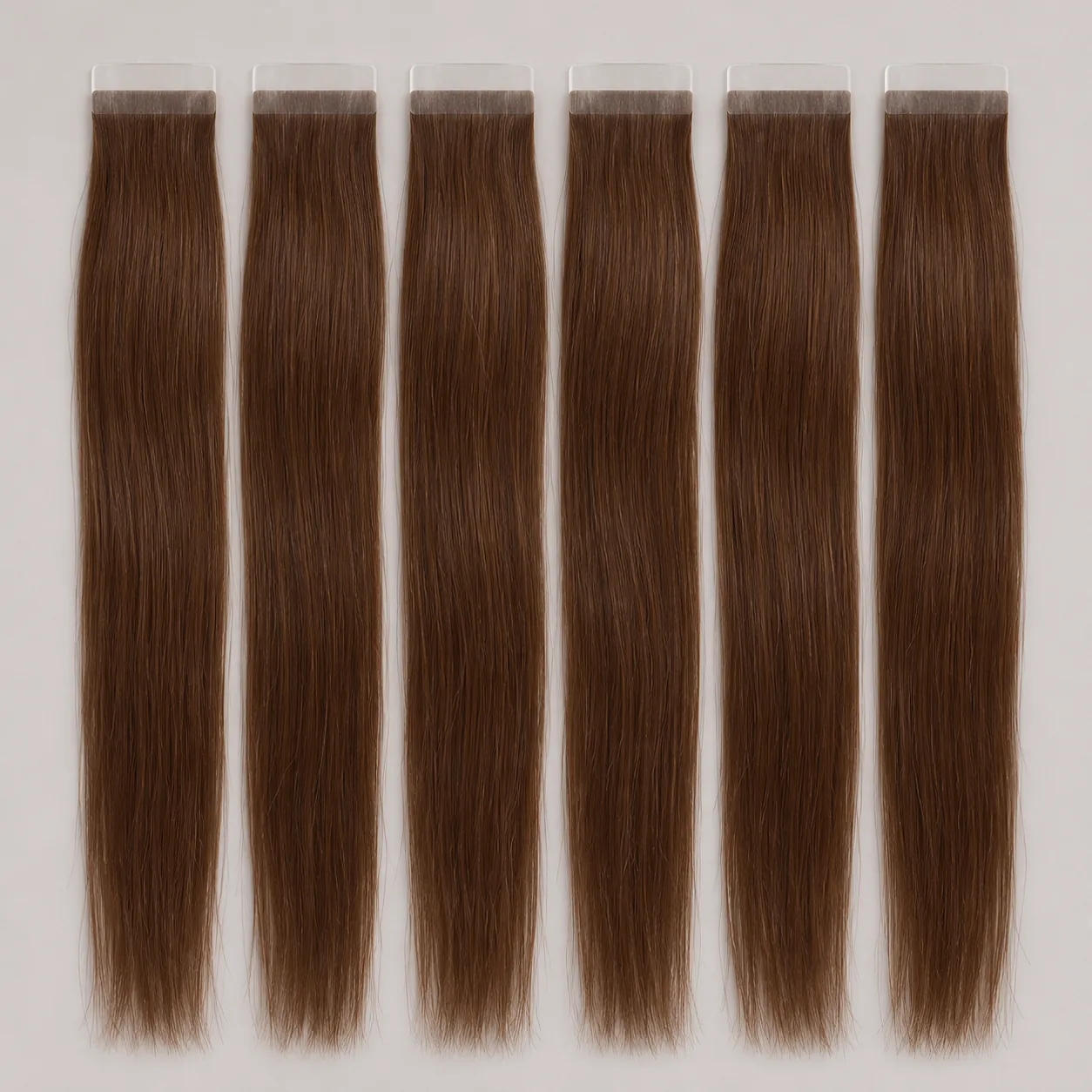 Sample · tape panel · tagged to its row
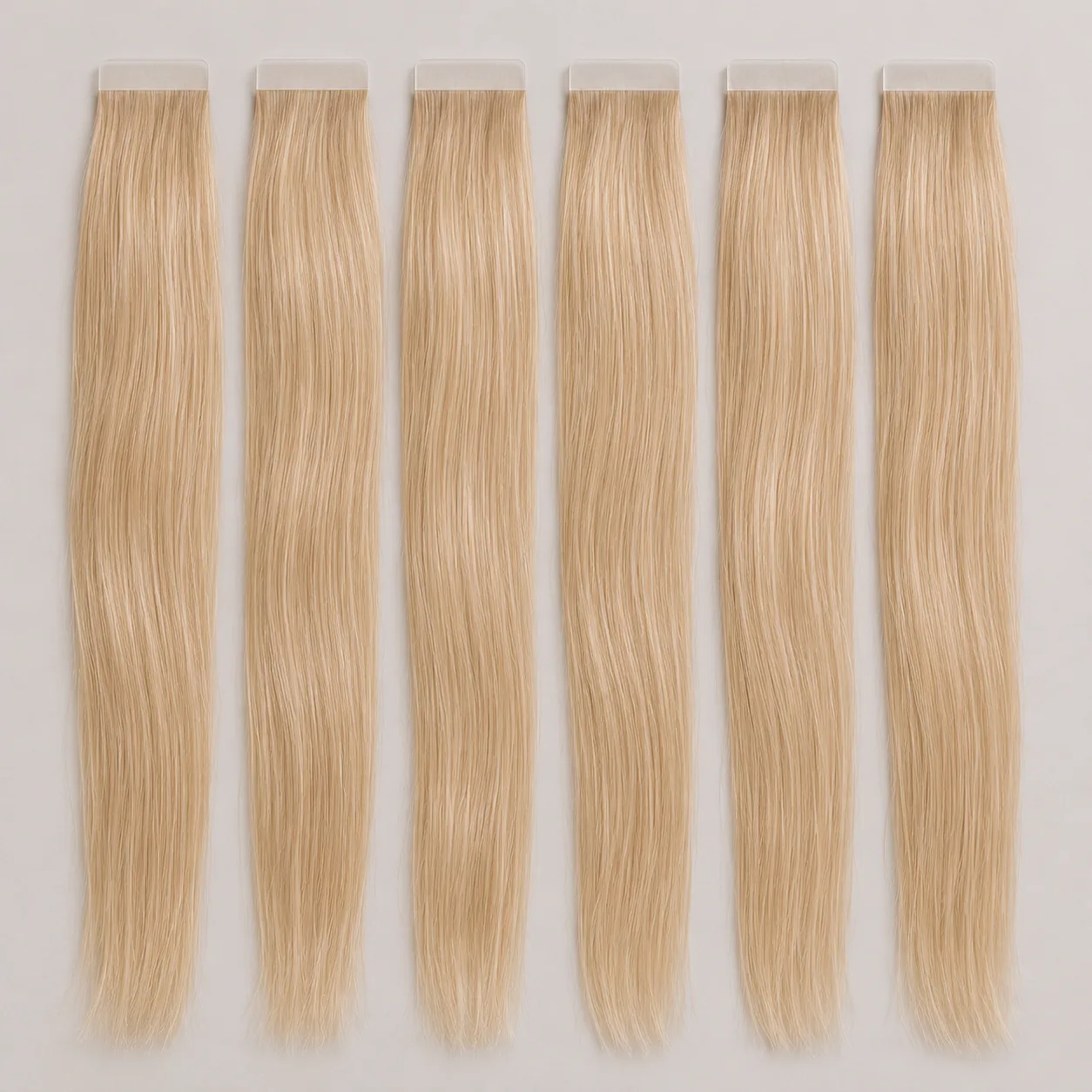

We are a tape in hair extensions supplier for hair salons, independent extension stylists, extension studios, distributors and wholesalers, beauty supply stores and private label brands. Tape-in suits clients who want hair that lies flat, goes in quickly and stays in as a semi-permanent install.
Every account has one contact on our sales team for its tape rows, samples, quotes and repeat orders.

A tape-in extension has three parts.
A section of human hair, held at the top edge of the panel with the roots running one way. When the roots all point in the same direction, the hair falls in one direction from the panel.
The line where the hair is held. How flat this edge is decides how the panel sits against the client's hair. A flat edge lies close to the head; an uneven one is where a panel starts to lift.

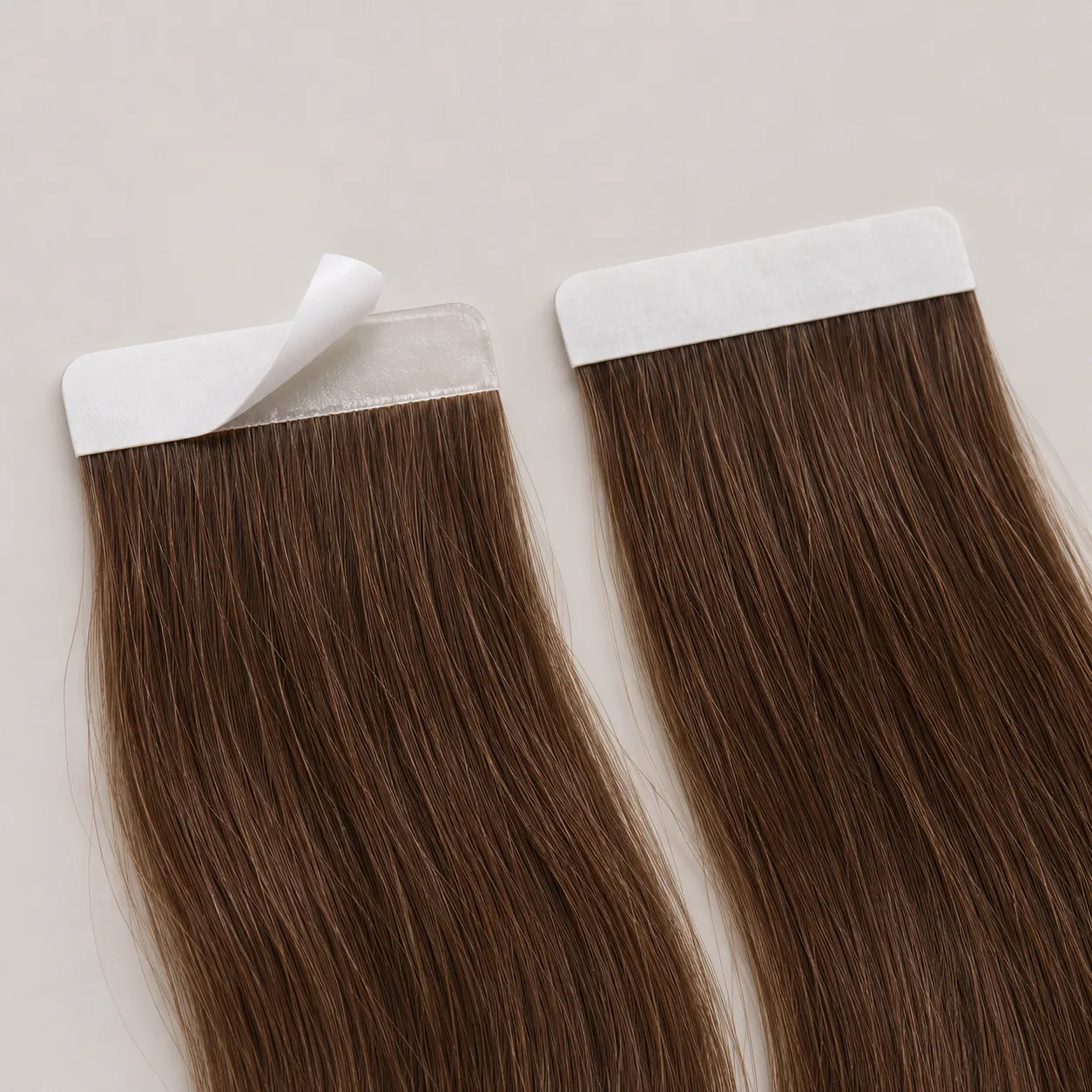
The tape that runs along the panel edge and holds it to the client's hair. The tape type is chosen to suit the fitting method and is written on the row. The tape edge should run along the panel edge, without gaps or overhang, so the whole width of the panel is held.
Our tape-in panels are made in the partner workshops we work with. We hold the spec record and the retained sample for each tape row, and we run the check before it ships. These three parts are what you check on the sample, and what we check again before every shipment.


Tape-in is fitted in one of two ways, and the fitting method is written on every tape row.
A thin slice of the client's own hair is held between two hair panels, tape facing tape. Both panels carry hair, so each fitting point adds hair from both sides of the client's section.
One hair panel is paired with a strip of single-sided tape on the other side of the client's section. Only one side carries hair, so there is less thickness at the root. Stylists use it for clients with fine, soft hair.
The fitting method and the tape type go together. A panel made for sandwich fitting and a panel made for single-sided fitting are two different items, and they are written as two rows on your spec sheet, each with its own tape type, its own sample and, once confirmed, its own spec code.
If your salon fits both ways, you hold both rows. Changing the method or the tape on a row is a new row with a new sample, set out in the tape type section below.
When you write a tape-in row, these are the points that decide which panel you get.

Sandwich or single-sided, chosen by the hair of the clients you fit. This decides the thickness at the root and is the first thing on the row.

The tape you specify for the panels. We make the sample with that tape and write it on the row, so the tape your stylists approve is the tape on every repeat.

Remy, Virgin or Raw, written by how the hair has been processed. You choose it per row.

Written as you specify them. Weight stays in the form on your row through the sample, the quote, the check before shipment and every repeat.

Texture follows the reference you send: a client's hair, a panel or bundle you stock, or an earlier sample. Colour is confirmed on a physical tape sample.

Every tape row is written with the same fields. Two of them, the fitting method and the tape type, belong to tape-in only.

| Field | What we write on the row | What you confirm on the sample |
|---|---|---|
| Product line | Tape-In Hair Extensions | Panel form |
| Fitting method | Double-sided sandwich or single-sided | Panel made for that method |
| Tape type | The tape you specified | Tape on the panel, its line along the edge |
| Hair type | Remy, Virgin or Raw | As described by processing method |
| Length | As you specify it | Length of the hair on the panel |
| Weight | As written on your row | Weight in the form your row states |
| Texture | To your reference | Texture against your reference |
| Colour | Your reference or an existing code | Colour on the tape panel |
| Structure | Panel edge and root direction | Flat edge, roots running one way |

Send your tape rows in a spreadsheet, as photos of panels you use, or written out.


Every tape-in row is sampled before it goes into a bulk order, and the sample is made in the form you will receive: a tape panel, with the tape type and fitting method on your row. Each sample carries a tag naming the row it was made to, so when several tape rows arrive together you can see which panel answers which line of your spec sheet.
There are three structure points on a tape sample, and these are the ones to hand to the stylist who will fit the panels.

Lay the panel flat and look along the edge where the hair is held. It should lie flat from one side to the other. This is the point that decides whether the panel sits close to the client's hair or starts to lift after fitting.

Look at where the tape strip meets the panel edge. The tape should run along the full width of the edge, lined up with it, with no part of the edge left without tape and no tape running past it. Check that the tape on the sample is the tape type written on your row.

Look at the top of the panel, where the roots are held. The roots should all run one way, so the hair falls in one direction from the panel.

When the sample is what you want, you confirm the row and it gets its spec code. That confirmed panel is the reference for every later order of the row.

We keep a retained sample of it on our side, and you keep the approved sample you confirmed, so both sides hold the same panel.

If the sample shows that the panel needs a different tape or the other fitting method, the changed row is sampled again as a tape panel. Changes to colour, texture, length or weight follow the spec change rules on our home page.
You end this step holding a tape row you have handled in the form you will fit, with its code, before any bulk order.
Every tape row on your spec sheet states the tape type and the fitting method next to hair type, length, weight, texture and colour. Both are part of the row's identity, from the first sample to the last repeat order.
Spec code[Tape-in][Sandwich][Tape type][Colour]

When your request comes in, your contact reads the tape type and the fitting method from whatever you send: a spreadsheet column, a photo of a panel you already use, or a note such as "single-sided, for fine hair". If either is missing, we ask before anything is sampled.

The sample is made with the tape you specified, for the method on the row. The tag on the sample names that row, so the tape and method you are looking at are the ones written down.
Once confirmed, the tape type and fitting method are part of the row's spec code. They appear with the rest of the row on the quote line and on the reorder sheet your contact sends back when you reorder by code. Your stylists receive the tape they approved on every repeat of the row.
A different tape or a different method is a new row with a new sample. Your confirmed row stays on your account unchanged, so a salon testing a new tape for one group of clients can keep reordering its existing panels for everyone else.
Where an account fits both ways or uses two tapes, each combination has its own code on the packing list and on the pack label.
The row on your spec sheet states the tape type and fitting method, and the tape sample you confirmed shows them.


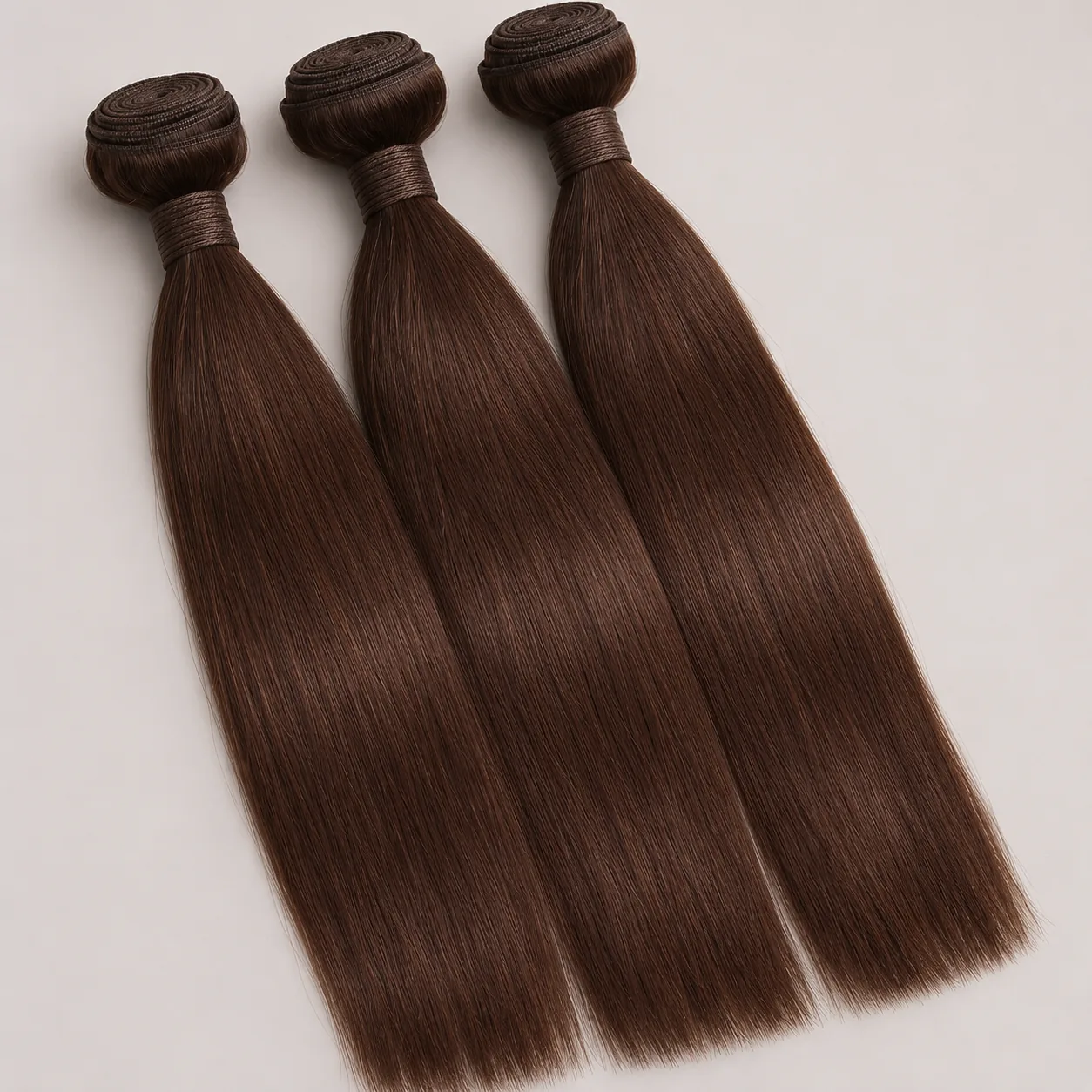
A bundle sample is never sent in place of a tape sample.
The tape sample in your hands is the colour reference for that row, and it is the same form as the panels you will receive.
Colour for a tape row is confirmed on a tape sample. A tape panel is a different structure from a bundle or a weft, so we sample the colour in the form your stylists will fit and your clients will wear.
If you send a client's hair or a reference you stock, we make the tape sample from it and you confirm the colour on the panel itself. If the shade is already confirmed with us on another line, such as a bundle or genius weft row, the tape row is still a new row: we match it to the retained sample of that existing code and make a new tape sample for you to confirm.

Once the tape row is confirmed, its retained sample is a tape panel, and the colour on every later shipment of the row is checked against that panel. Matching from a client's hair is set out on our home page, and colour across lines on Human Hair Extensions.
You choose the hair type on each tape row, and it is written by how the hair has been processed.
Remy hair keeps its cuticles, aligned in one direction.

Virgin hair has never been chemically processed: no colour, perm or bleach.

Raw hair is unprocessed hair, collected and sorted with minimal processing.
On a tape panel, the hair type and the root direction belong together. The panel holds the hair at the root end, and the roots are checked to run one way on the sample and before every shipment. Where you choose Remy, the cuticles run the same way as the roots, so the direction you see at the top of the panel continues down the length of the hair.
Each tape row carries one hair type. If you want the same length and colour in two hair types, they are two rows, each sampled and confirmed on its own. A distributor can hold Remy and Virgin tape rows side by side for different salon customers. The hair type you write is the hair type on the quote line and on the reorder sheet for that code.

Tape edge, root direction, weight, length, colour and texture, compared with the retained sample of each code before the order leaves.
Before a tape-in order ships, every tape row is checked against the confirmed spec and its retained sample.


The result is written into the packing list by spec row, so your packing list shows the check for each tape row, including the tape edge and root direction. Each pack carries a label with its spec code, matched to the packing list, so you can go from a pack on your shelf to the row it belongs to.
A tape row that does not match its retained sample is held back: we tell you, with photos, and remake or replace it to the confirmed spec before it ships. The details of the full pre-shipment check are on our home page.
Held · photos to youRemade or replaced to specThen it ships
How you check it: the packing list shows the check result for each tape row, and the pack label code takes you to the row it was made to.

When the order arrives, lay a panel from each tape row next to the approved sample you kept and look at the same three points you confirmed: the panel edge, the tape line and the root direction.
If something on a tape row looks wrong after arrival, send photos and the spec code, and we compare them with the retained sample of that code and agree how to handle that row with you. The review steps are on our About page.
Private label brands can carry tape-in under their own name. Bulk panels are made to the sample you approved. The tape type and fitting method you approve are the ones that go out under your brand on every repeat.
Approved sampleTape type + fittingEvery repeat
Packaging and labelling direction for your tape-in range is discussed per order.


How each line is fitted, what it suits, and the spec field it adds to your row.
| Picture | Line | How it is fitted | What it suits | Spec field it adds |
|---|---|---|---|---|
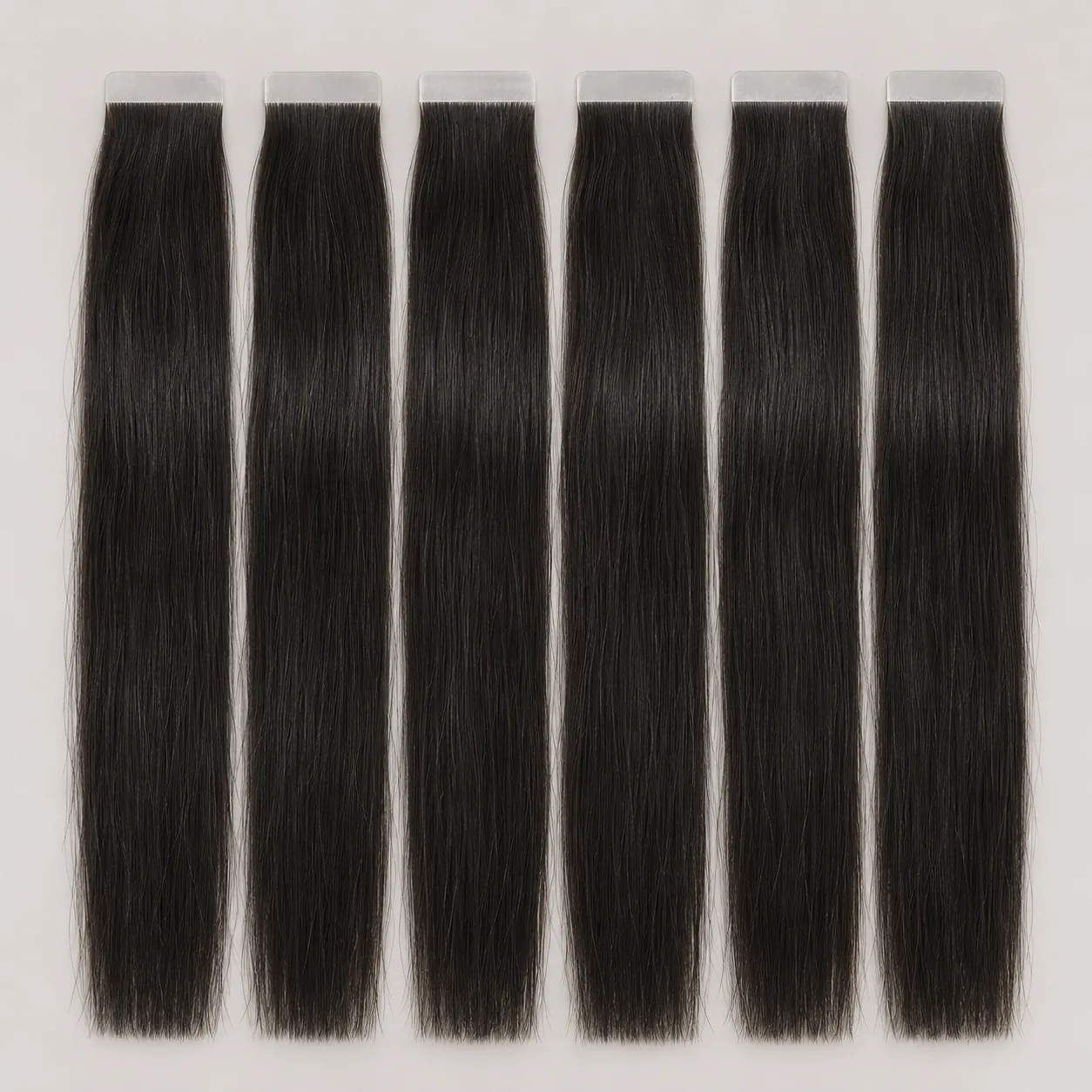 | Tape-In | Tape panels, sandwich or single-sided | Flat finish, quick fit, semi-permanent wear; single-sided for fine, soft hair | Tape type, fitting method |
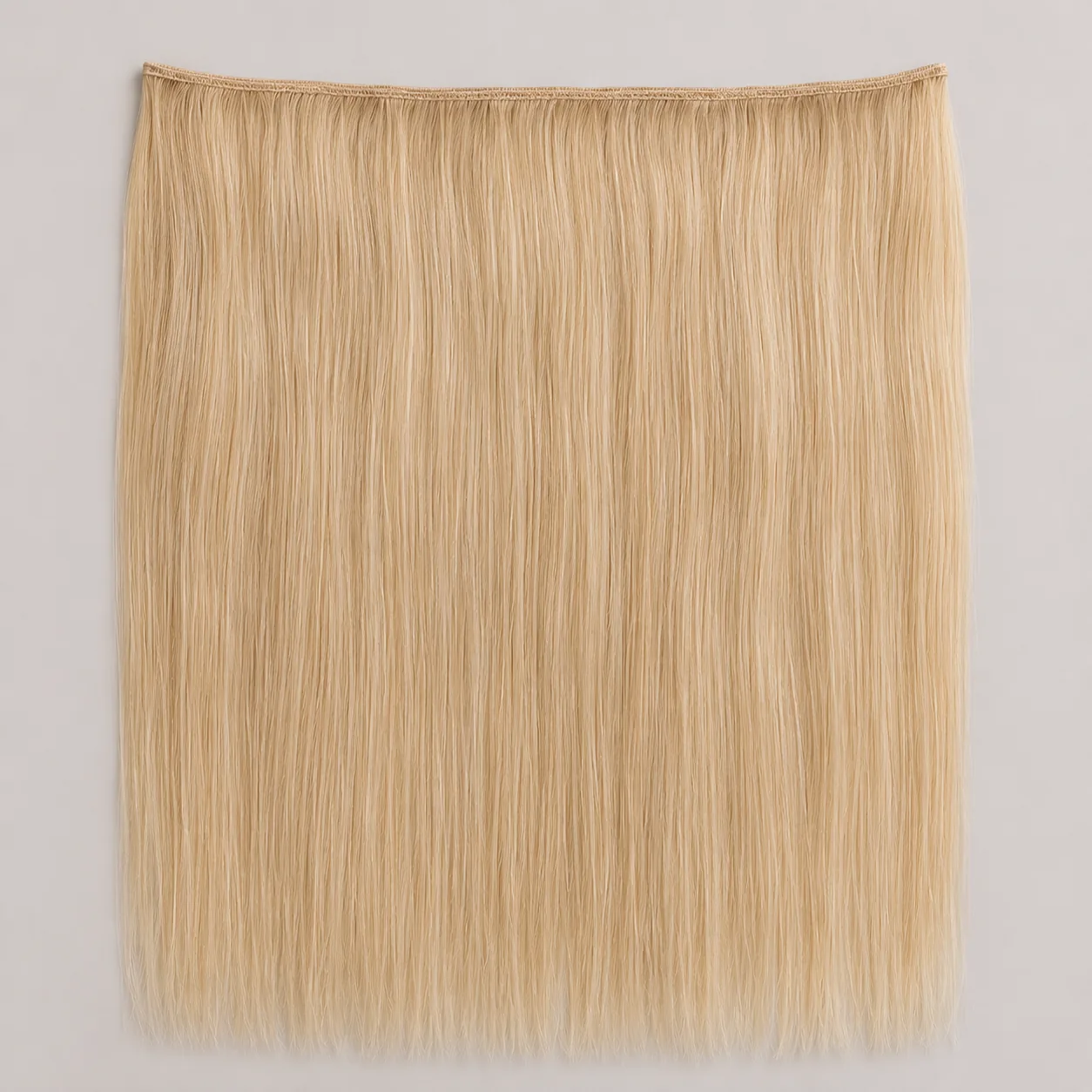 | Genius Weft | Sewn on a braided track or held on micro beads | A thin seam that can be cut anywhere along its width | Weft type |
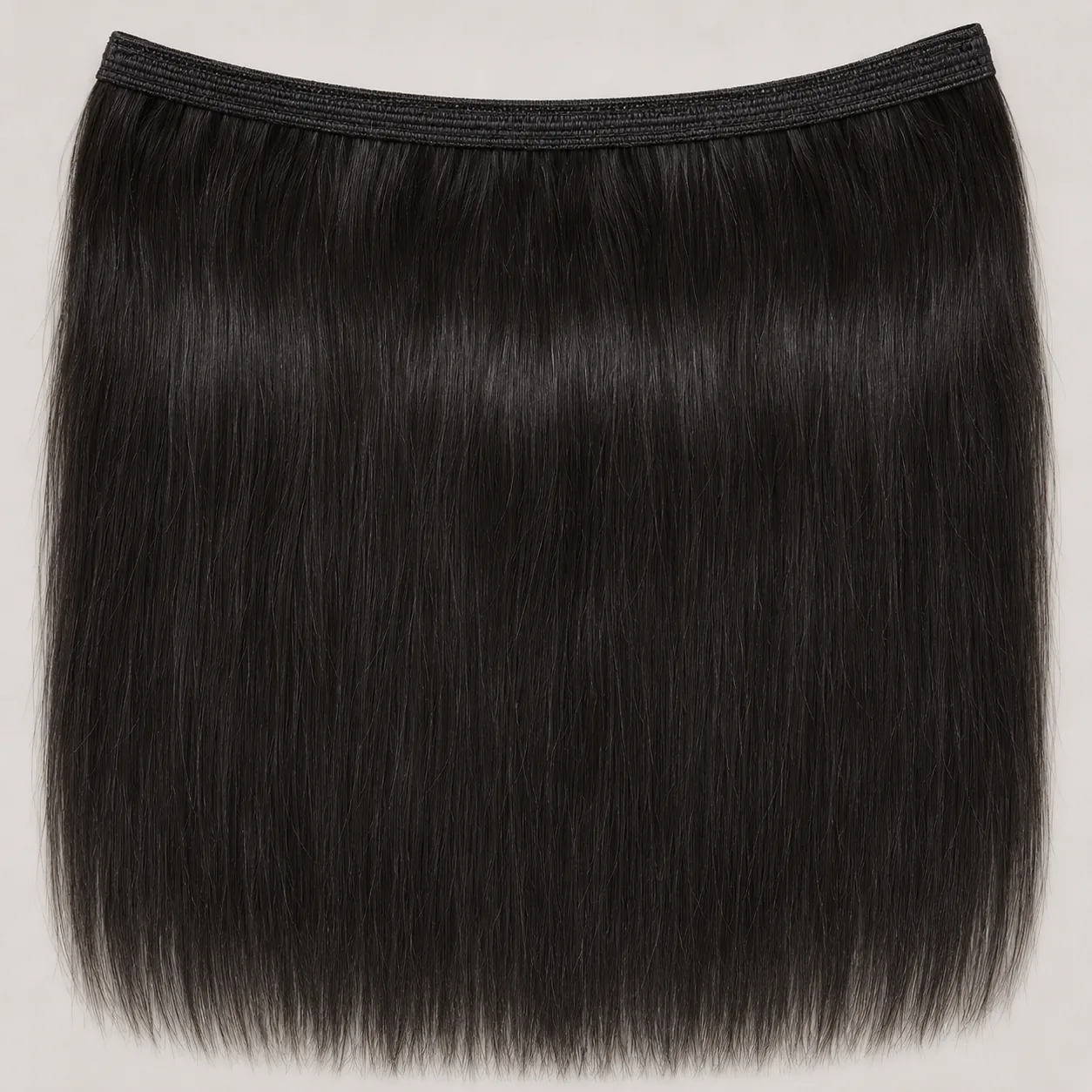 | Machine Weft | Sewn on a braided track or held on micro beads | A wider, stronger sewn seam | Weft type |
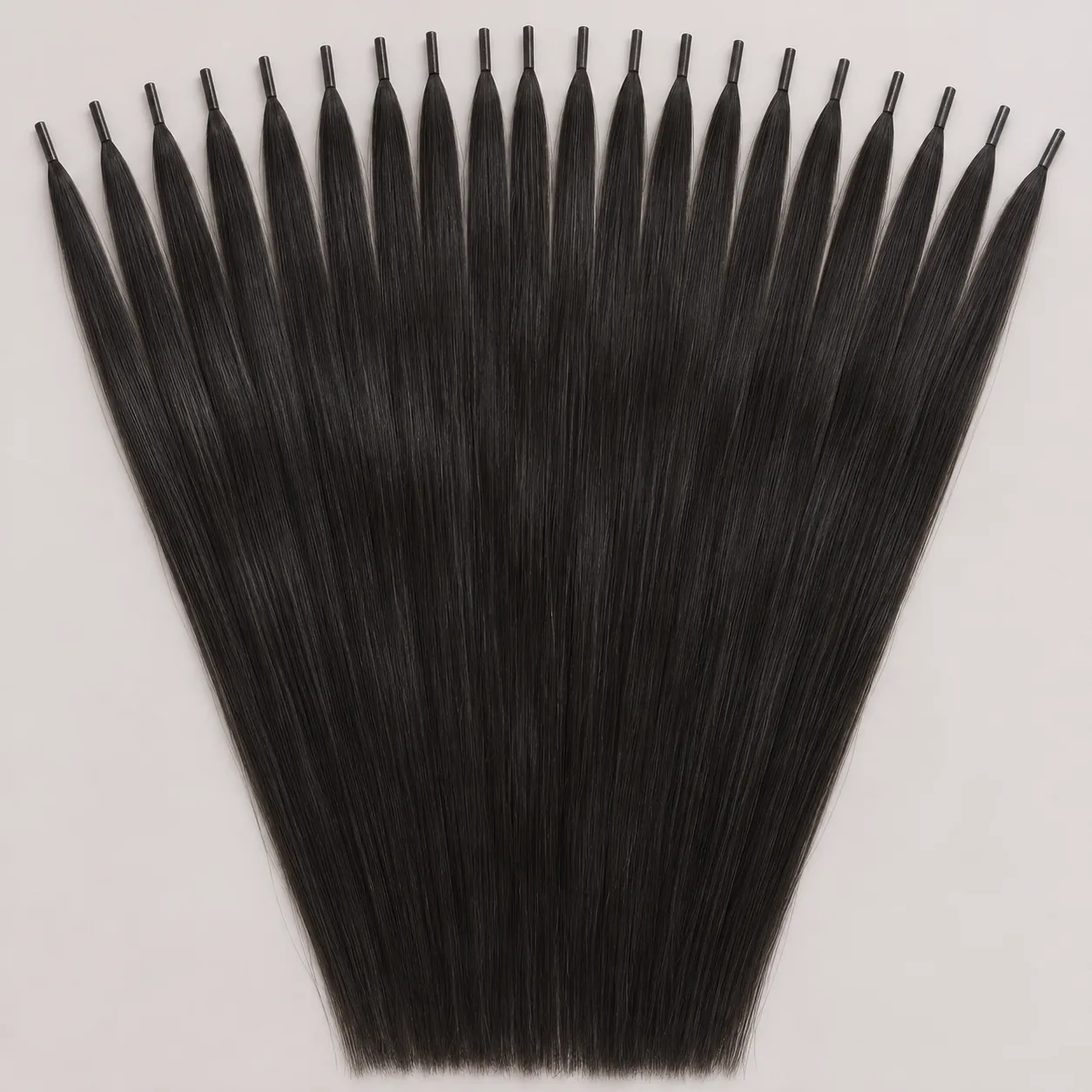 | I-Tip | Single strands in micro rings, no heat or glue | Strand-by-strand fitting on normal to thick hair | Tip type, strand weight |
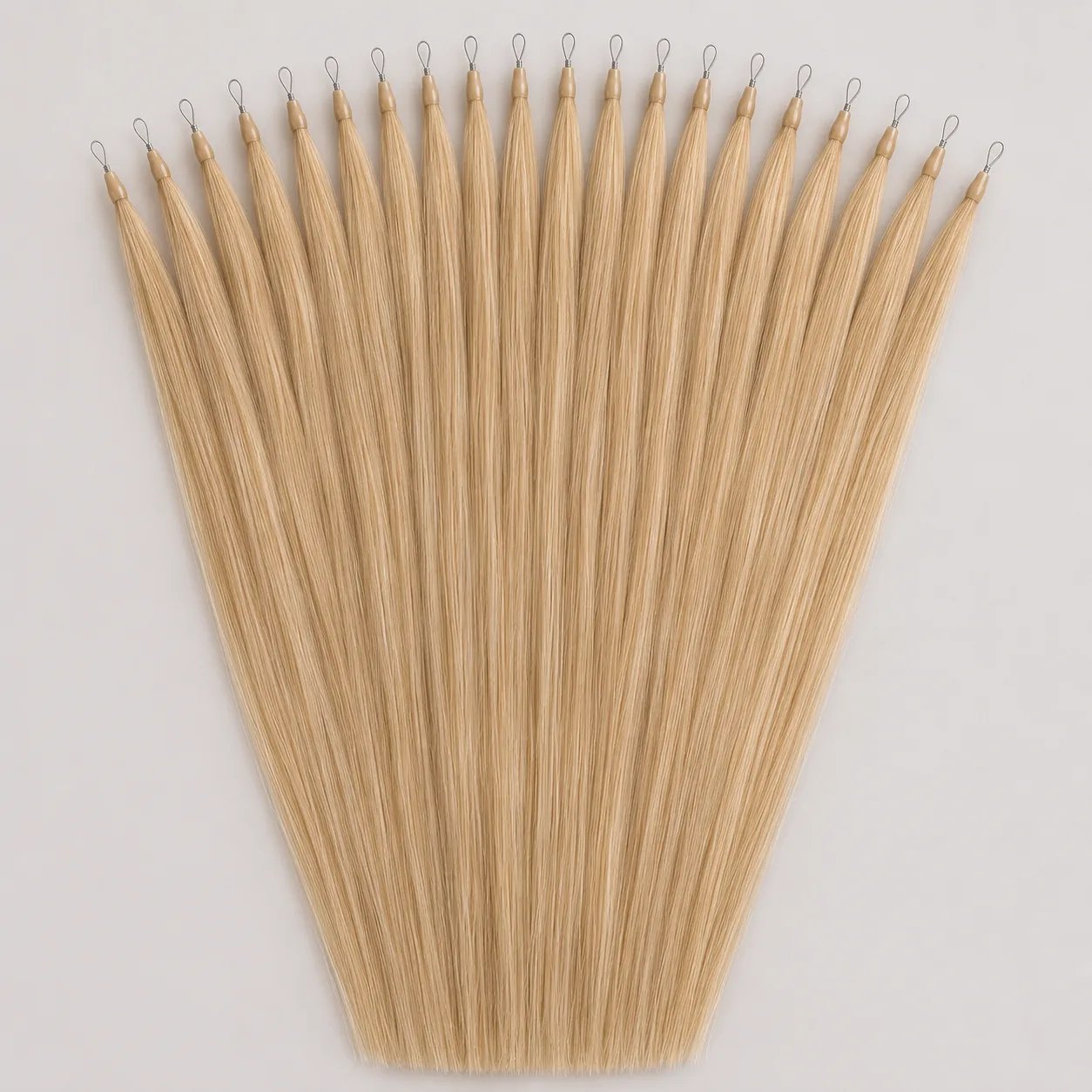 | Nano Tip | Single strands in smaller nano rings, no heat or glue | Strand-by-strand fitting on fine, soft hair | Tip type, strand weight |
Each line has its own page: Genius Weft Hair Extensions Wholesale, Machine Weft Hair Extensions Wholesale, I-Tip Hair Extensions Wholesale and Nano Tip Hair Extensions Wholesale. The full range, including K-tip, U-tip, bundles and bulk hair, is on Human Hair Extensions.
Tape-in rows can share an order with any other line. Sandwich and single-sided rows, several lengths and several colours of tape-in can sit on one order with genius weft, I-tip or bundle rows, each listed as its own row. A salon can order tape-in for one group of clients and nano tip for another.
New tape rows can go on the same sample request as rows from other lines, one sample per row. If tape-in is one line among several, Build a Mixed Order and put everything on one sheet.
Row · [Tape-in]-[Sandwich]Row · [Tape-in]-[Single-sided]
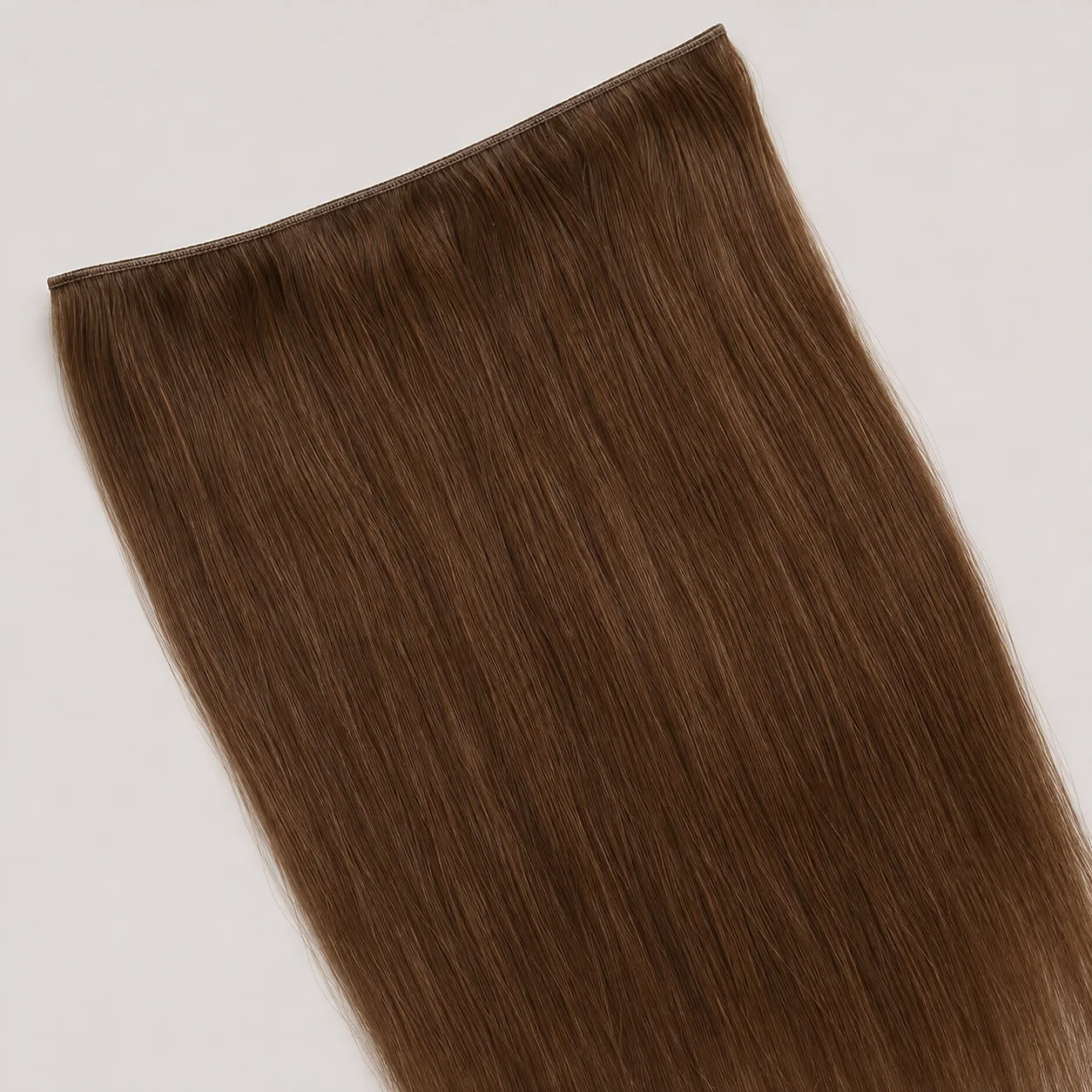
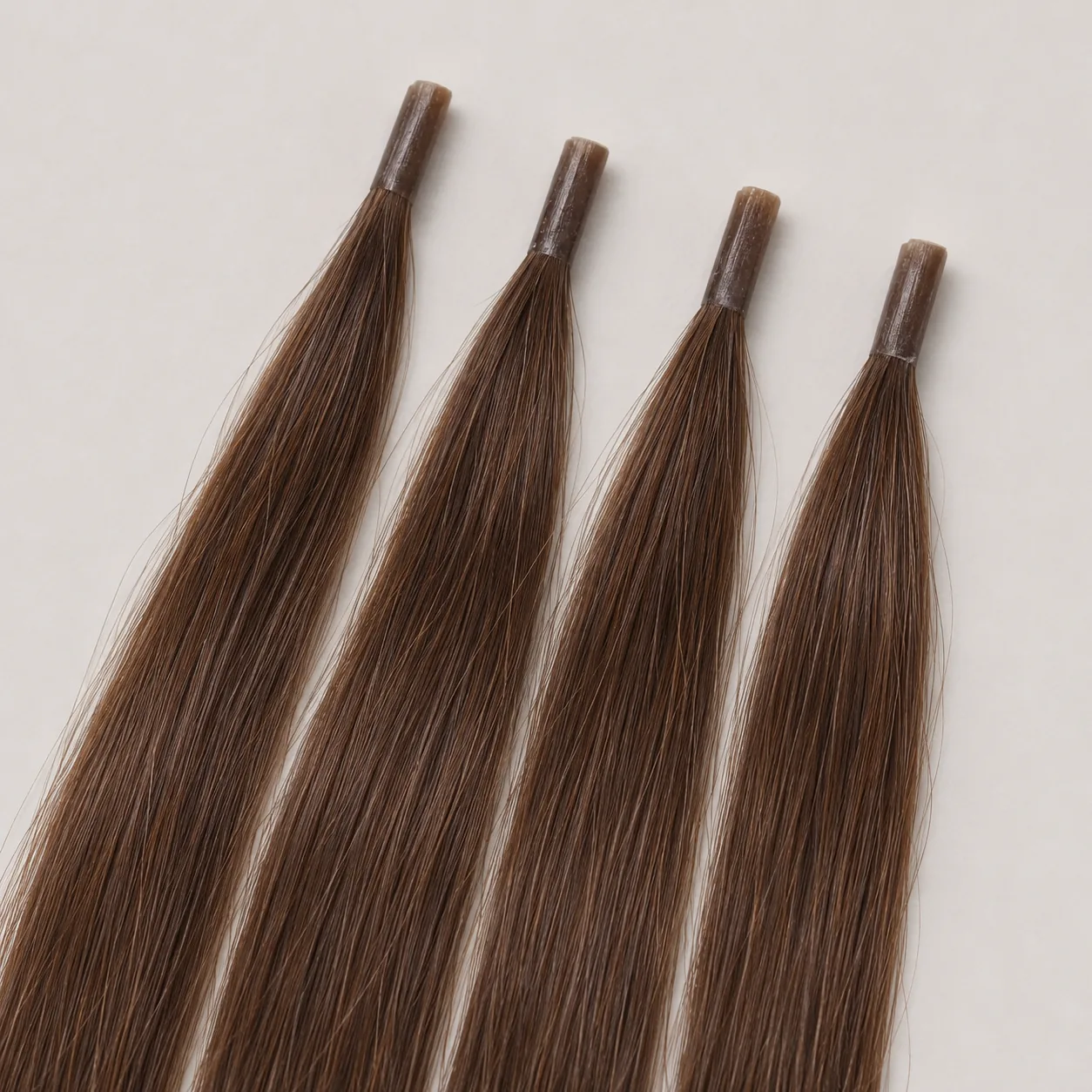
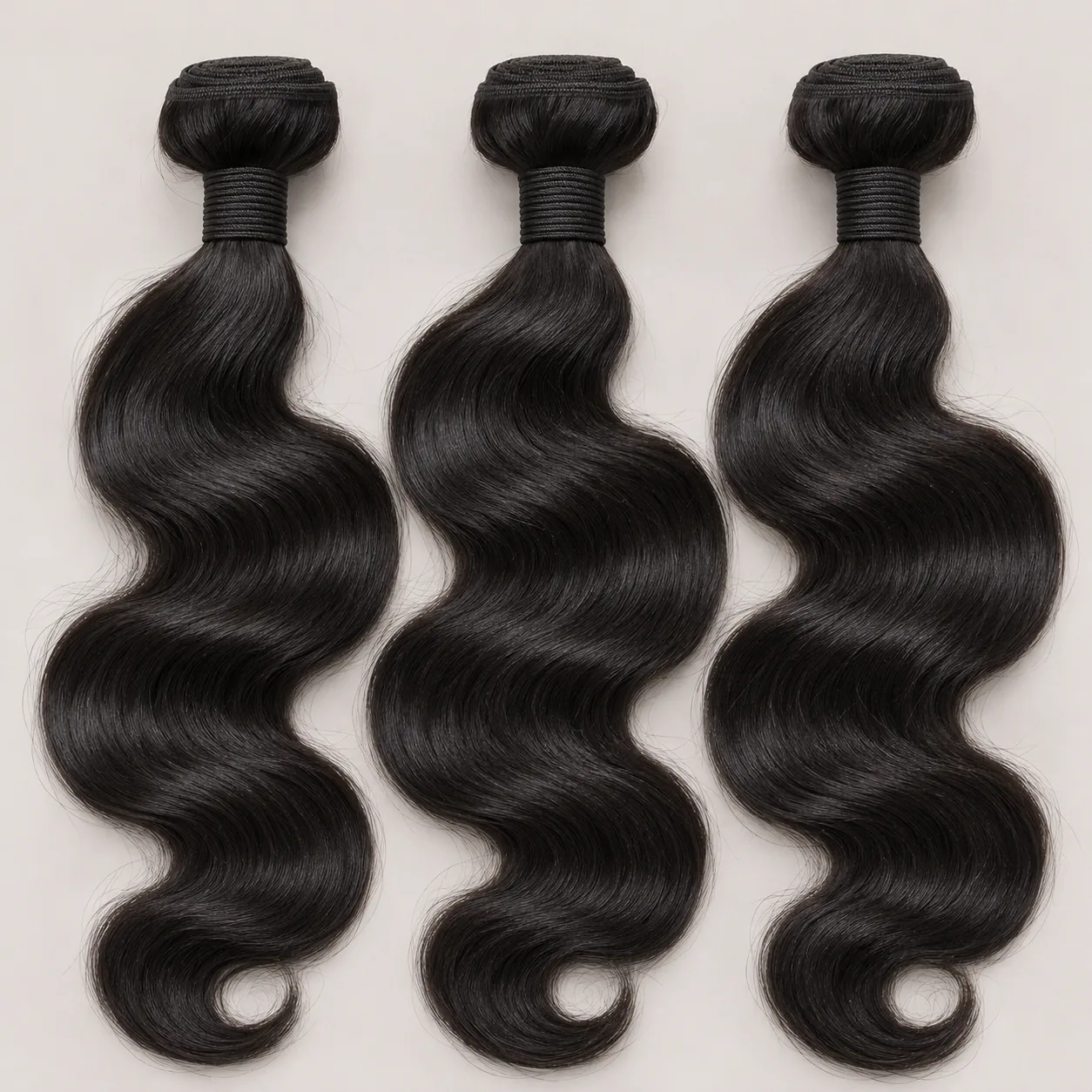

If your rows are already confirmed with us, send the spec codes instead. See Wholesale Hair Extensions for how repeat orders by code work.

Send your tape-in rows through the form or on WhatsApp. Request Samples to see each row as a tape panel, or Get Wholesale Quote with your confirmed codes and quantities.
